Why is there controversy around OpenAI’s Millennium Prize maths breakthrough?
AI’s dramatic acceleration of mathematics research continues apace, with the infamous Navier-Stokes puzzle being the latest and greatest solution yet produced by artificial minds.
When it comes to gigantic predatory dinosaurs one animal reigns supreme: Tyrannosaurus rex, the tyrant lizard king, or T. rex for short. But what if T. rex never existed the way you might picture it? For almost 100 years, we've imagined T. rex as a lone king, an apex predator overseeing their world unchallenged. But that's wrong. A new T. rex fossil has since changed everything we know about this iconic carnivore and revealed something astonishing: the T. rex isn't just one species, but many. Meet Nanotyrannus.
Learn more ➤ https://youtu.be/kX5YWH4CEB4
❤️ Love New Scientist? For a specially discounted New Scientist digital subscription, go to http://bit.ly/3OFhwvL
⭐️ We have a podcast, too: Subscribe to @TheWorldTheUniverseAndUs
🛍️ Check out our shop for the smartest gifts - https://shop.newscientist.com/
MORE FROM NEW SCIENTIST
─────────────────────────────
🌐 Website: https://www.newscientist.com/
📸 Instagram: https://bit.ly/NSYTINSTA
📘 Facebook: https://bit.ly/NSYTFB
🐦 Twitter: https://bit.ly/NSYTTW
📈 LinkedIn: https://bit.ly/NSYTLIN
About New Scientist:
New Scientist was founded in 1956 for “all those interested in scientific discovery and its social consequences”. Today our website, videos, newsletters, app, podcast and print magazine cover the world’s most important, exciting and entertaining science news as well as asking the big-picture questions about life, the universe, and what it means to be human.
New Scientist
https://www.newscientist.com/
00:00:02 Introduction
00:02:03 Was T. rex Ever Really King?
00:06:03 The Mystery of the Baby T. rex
00:12:28 The Fossil That Changed Everything
00:22:35 Lumpers Versus Splitters: The Debate Gets Bigger
00:28:20 The Slow King
00:33:49 Rethinking the End of the Dinosaurs
The first signs of dark matter particles may finally have been spotted
Researchers may have spotted the first signs of a dark matter particle. If the result is confirmed, it could be one of the most monumental discoveries in the history of physics.
Dark matter makes up about 85 per cent of matter in the universe, but for decades physicists have been unable to determine what it itself is made of. Hypotheses have ranged from different sorts of particles and forces to strangely behaving gravity and everything in between – but the leading idea has always been that of the weakly interacting massive particle, or WIMP. As we have built more and more powerful detectors to search for WIMPs, though, their failure to show up has led many to doubt their existence and move on to more exotic ideas.
According to Jim Al-Khalili, the short answer is: yes, at least in principle.
Travelling into the future is already allowed by Einstein’s relativity. Move close enough to the speed of light, or spend time near an extreme gravitational field like a supermassive black hole, and time would pass more slowly for you than for everyone else.
Travelling into the past is where things get much stranger.
Watch the full video at https://youtu.be/IDNCWe3ufCE
This vast Atlantic ocean circulation helps move heat northwards and plays a major role in Europe’s climate. If it weakens dramatically, parts of Europe could face much harsher winters, even as the planet continues to warm.
In a worst-case scenario, temperatures in parts of northern Europe could fall sharply, sea ice could extend much farther south, and agriculture and infrastructure could struggle to cope.
Watch the full video at https://youtu.be/4Auf0KdZ6S0
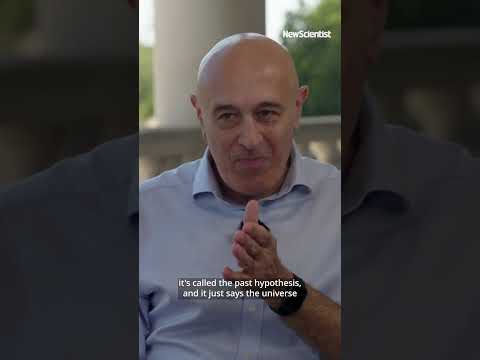
Entropy appears to give us the answer: the universe moves from order to disorder, giving time its familiar arrow from past to future.
But there’s a problem. Most fundamental laws of physics work just as well forwards as they do backwards in time. So if entropy increases toward tomorrow, why shouldn’t it also increase toward yesterday?
Jim Al-Khalili explores the “past hypothesis” - the idea that the universe began in an extraordinarily special, low-entropy state at the Big Bang - and why he thinks that explanation may not be the full story.
The melting of the Greenland ice sheet is causing more extreme heat in Europe, contributing to the major heatwaves experienced there so far this year.
The surge of cold meltwater into the North Atlantic is altering ocean temperatures and shifting the jet stream to favour heatwaves in western Europe and the Mediterranean, a study undergoing peer review has found. As Greenland ice loss accelerates, Europe may suffer more frequent and intense heatwaves than climate models currently predict.
Jim Al-Khalili explores the strange divide between physical time and manifest time, the subjective experience of past, present and future that defines our everyday lives.
A boring half hour can feel endless. A great half hour can disappear instantly. And while we’re told to “live in the now,” physics suggests the present may be nothing more than a boundary between what has happened and what hasn’t.
So why does the present feel so real? And could our experience of time reveal something about reality that our current physics is missing?
Tap the link in bio to watch the full video
Watch the full video at https://youtu.be/IDNCWe3ufCE
Twenty years ago, the widespread adoption of LED light bulbs was a boon for energy efficiency – but it has taken a toll on our health.
These devices emit hardly any red light, longer wavelengths found in sunlight, the glow of a campfire and incandescent bulbs and we’re only just uncovering the consequences.
It turns out red light is key to metabolism, speeding up energy production in our mitochondria. Without it, blood sugar rises, putting us at risk of type 2 diabetes, and reduced daylight has also been linked to dementia, cancer and cardiovascular disease.
Is time real, or is it just an illusion? In our latest video, we meet Jim Al-Khalili, physicist and author of On Time, at the Royal Observatory Greenwich, the home of the Prime Meridian, to explore one of the deepest mysteries in science.
From space-time at the heart of Albert Einstein's theory of relativity to the arrow of time, entropy and the origins of the universe, Al-Khalili explains why physicists remain divided over the true nature of time.
Could the past, present and future all exist at once? And is time travel really possible? Join us for a mind-bending journey through one of physics' greatest puzzles.
Learn more ➤ https://youtu.be/hPMN5IiFHLg
❤️ Love New Scientist? For a specially discounted New Scientist digital subscription, go to http://bit.ly/3OFhwvL
⭐️ We have a podcast, too: Subscribe to @TheWorldTheUniverseAndUs
🛍️ Check out our shop for the smartest gifts - https://shop.newscientist.com/
MORE FROM NEW SCIENTIST
─────────────────────────────
🌐 Website: https://www.newscientist.com/
📸 Instagram: https://bit.ly/NSYTINSTA
📘 Facebook: https://bit.ly/NSYTFB
🐦 Twitter: https://bit.ly/NSYTTW
📈 LinkedIn: https://bit.ly/NSYTLIN
About New Scientist:
New Scientist was founded in 1956 for “all those interested in scientific discovery and its social consequences”. Today our website, videos, newsletters, app, podcast and print magazine cover the world’s most important, exciting and entertaining science news as well as asking the big-picture questions about life, the universe, and what it means to be human.
New Scientist
https://www.newscientist.com/
00:00 - Introduction: Is Time an Illusion?
01:10 - The Nature of Time: Illusion vs. Reality
05:06 - Manifest Time Vs Physical Time
13:30 - Dimensions, Arrows, and Block Time
29:05 - Entropy and the Arrow of Time
44:25 - Is Time Travel Possible?
51:15 - Integrating Physics and Human Experience
Glaciers in the Alps are on track for record-breaking ice loss
A series of heatwaves have hit Europe this season, including the continent’s worst-ever heatwave in June. As a result, more than 9 metres of ice have melted off the surface of the Rhône glacier. Forecasters warn temperatures could remain above average through autumn, and another heatwave is possible. If that happens, glaciers in the Alps will probably experience record ice loss this year.
Andreas Bauder and his colleagues were taking measurements on the Rhône glacier as part of ETH Zurich’s long-term monitoring of more than 100 glaciers. Extreme melt years are occurring more frequently in the Alps, unleashing devastating avalanches of ice and rock and threatening to shrink major rivers.
Climate change may help eliminate malaria from West and Central Africa
By the end of this century, malaria could be eradicated in West and Central Africa, two of the worst-affected regions. A modelling study suggests cases will plummet in these areas if the extreme heat caused by climate change makes them uninhabitable for mosquitoes. But this also means malaria is expected to become more pronounced in the cooler regions of Africa.
“The overall story is that the burden is shifting,” says Tamma Carleton at the University of California, Berkeley.
Over the past 150 years Earth's entire surface has been warming, except for one patch in the North Atlantic, located southeast of Greenland. This so called 'cold blob' could be an indicator of a worrying change in the Atlantic Meridional Overturning Circulation, or AMOC, a vast system of ocean currents that help regulate global temperatures and weather. Changes in the AMOC could have devastating impacts on our climate.
Tap link to watch the full film: https://www.youtube.com/watch?v=4Auf0KdZ6S0
In our latest video, we explore the science of extinction, from the disappearance of dinosaurs to the demise of ancient humans, and ask one question: why does anything survive? This reveals that extinction isn't the disaster in the story – extinction is the story. More than 99 per cent of all species that have ever lived are gone, which makes survival the anomaly that nobody has fully explained, until now.
00:00:00 Intro
00:01:54 We’ve Been Wrong About The Dinosaur Extinction
00:30:54 Why Birds Are The Only Surviving Dinosaurs
01:30:33 One Human Species Ruled Earth for 2 Million Years. It Wasn’t Us
01:55:19 We Might Be Wrong About Humanity’s Near Extinction
Love New Scientist? For a specially discounted New Scientist digital subscription, go to https://www.newscientist.com/youtube
Subscribe ➤ https://bit.ly/NSYTSUBS
Get more from New Scientist:
Official website: https://bit.ly/NSYTHP
Facebook: https://bit.ly/NSYTFB
Twitter: https://bit.ly/NSYTTW
Instagram: https://bit.ly/NSYTINSTA
LinkedIn: https://bit.ly/NSYTLIN
About New Scientist:
New Scientist was founded in 1956 for “all those interested in scientific discovery and its social consequences”. Today our website, videos, newsletters, app, podcast and print magazine cover the world’s most important, exciting and entertaining science news as well as asking the big-picture questions about life, the universe, and what it means to be human.
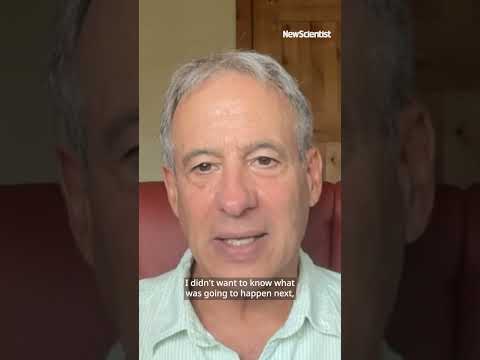
The Dog Stars author Peter Heller on how he didn’t plot or plan before writing his debut novel, a dystopian tale that is about to be released as a film by Ridley Scott.
The New Scientist Book Club has been reading Peter Heller’s post-apocalyptic novel The Dog Stars in August. He joined head of books Alison Flood to discuss the trend for dystopian fiction, how he didn’t plan anything before writing the book – and what it felt like to watch Ridley Scott’s film adaptation, released later this month.
Watch the full interview: https://www.newscientist.com/podcasts/
Extraordinary footage captures the “amazing” moment a baby echidna, the first to ever be born in a university, was removed from its mother’s pouch to be weighed.
Echidnas are a difficult animal to breed in captivity, but scientists in Sydney have now managed it, which could improve our understanding of the evolution of pregnancy in mammals
Tap the link to read more: https://www.newscientist.com/article/2586728-a-baby-echidna-has-been-born-in-a-university-for-the-first-time/
A "postbiotic" supplement boosts the body’s own GLP-1 and weight loss
The daily supplement containing dead bacteria may help people lose weight by boosting the levels of GLP-1 hormone in the body, according to a small trial. The findings suggest it could provide a cheaper, more convenient alternative to drugs like semaglutide – or help to maintain weight loss after stopping these medications.
❤️ Love New Scientist? For a specially discounted New Scientist digital subscription, go to http://bit.ly/3OFhwvL
Picture the world 100 or 200 years from now. What are you imagining? Hotter temperatures, melting glaciers or alpine places without snow? With heatwaves happening across Europe this summer, it's not that hard to visualise.
Now picture Europe in a deep freeze where temperatures hit -20°C in London. Both of these scenarios might be the future we're heading for, thanks to climate change. And there's an even more worrying indicator: while almost the entire planet has been warming, there's one patch in the North Atlantic Ocean just south of Greenland where temperatures have been falling.
Scientists call it the "cold blob", and some think it could be a warning that one of Earth's most important climate systems is beginning to change and may soon hit a tipping point where climate change no longer happens gradually. If this system flips, it could have devastating consequences that change all of our lives as we know them.
Learn more ➤ https://youtu.be/GL3RZsT-Hwg
⭐️ We have a podcast, too: Subscribe to @TheWorldTheUniverseAndUs
🛍️ Check out our shop for the smartest gifts - https://shop.newscientist.com/
MORE FROM NEW SCIENTIST
─────────────────────────────
🌐 Website: https://www.newscientist.com/
📸 Instagram: https://bit.ly/NSYTINSTA
📘 Facebook: https://bit.ly/NSYTFB
🐦 Twitter: https://bit.ly/NSYTTW
📈 LinkedIn: https://bit.ly/NSYTLIN
About New Scientist:
New Scientist was founded in 1956 for “all those interested in scientific discovery and its social consequences”. Today our website, videos, newsletters, app, podcast and print magazine cover the world’s most important, exciting and entertaining science news as well as asking the big-picture questions about life, the universe, and what it means to be human.
New Scientist
https://www.newscientist.com/
0:00 A Tipping Point in the North Atlantic
7:45 A Cold Blob Inside Earth's Heat Engine
17:12 The Dawn of a New Ice Age
26:29 Can We Engineer a Solution?
29:39 The Point of No Return
32:30 The Choice for Future Generations
“It's a tiny cave but you have a record and a fossilisation of something unique, which are the very last moment of the Neanderthal populations”, says palaeoanthropologist Ludovic Slimak.In our latest interview, we explore the overlap between these two human species, what may have led to the Neanderthals' disappearance, and what Grotte Mandrin in France's Rhône Valley can reveal about our deep past.
Tap the link to watch the full interview - https://youtu.be/KXTZt8LG0Lk
What does author of The Dog Stars think of the film adaptation?
The New Scientist Book Club has been reading Peter Heller’s post-apocalyptic novel The Dog Stars in August. He joined head of books Alison Flood to discuss the trend for dystopian fiction, how he didn’t plan anything before writing the book – and what it felt like to watch Ridley Scott’s film adaptation, released later this month.
Watch the full interview: https://www.newscientist.com/podcasts/

 Login
Login