We're joined by Arkady Ostrovsky to discuss Russia’s long history of using sport as a proxy for war and invasion; E. J. Iannelli draws our attention to the rise and (perhaps...) fall of the automobile in the US, and the distinctly American phenomenon of the car as teenage male rite of passage
Books
Machines of Youth: America’s car obsession by Gary S. Cross
The music of Greece is as diverse and celebrated as its history. Greek music separates into two parts: Greek traditional music and Byzantine music, with more eastern sounds. These compositions have existed for millennia: they originated in the Byzantine period and Greek antiquity; there is a continuous development which appears in the language, the rhythm, the structure and the melody. Music is a significant aspect of Hellenic culture, both within Greece and in the diaspora. Greek musical history extends far back into ancient Greece, since music was a major part of ancient Greek theater. Later influences from the Roman Empire, Eastern Europe and the Byzantine Empire changed the form and style of Greek music. Greek folk traditions are said to derive from the music played by ancient Greeks. There are said to be two musical movements in Greek folk music: Acritic songs and Klephtic songs. Akritic music comes from the 9th century akrites, or border guards of the Byzantine Empire. Following the end of the Byzantine period, klephtic music arose before the Greek Revolution, developed among the kleftes, warriors who fought against the Ottoman Empire. Klephtic music is monophonic and uses no harmonic accompaniment.
Dhimotika tragoudhia are accompanied by clarinets, guitars, tambourines and violins, and include dance music forms like syrtó, kalamatianó, tsámiko and hasaposérviko, as well as vocal music like kléftiko. Greek folk music is found all throughout Greece, Cyprus and several regions of Turkey. The island of Cyprus and several regions of Turkey are home to long-standing communities of Greeks in Turkey with their own unique styles of music. Nisiotika is a general term denoting folk songs from the Greek islands, especially the Aegean Islands. Ikariótikos is a traditional type of dance, and also the name of its accompanying type of singing, originating in the Aegean island of Ikaria. The Cretan lyra is the dominant folk instrument on the island of Creta; it is a three-stringed bowed instrument similar to the Byzantine Lyra. It is often accompanied with laouto (laoúto), which is similar to both an oud and a lute. The violin is used also in Cretan music.
Traditional Music Channel is for everyone who has a passion for music.
Music is an expression of human creativity. UNESCO reports that among all the performing arts, music is the most universal and is found in every society, most often as an integral part of other performing art forms and other domains of intangible cultural heritage.
Traditional forms of music are considered carriers of cultural heritage because they represent expressions and traditions transferred through generations of a community.
With recordings from more than hundred nations our collection of traditional music offers a staggering diversity of our humanity.
Moldova is a country in Eastern Europe. Moldovan music is closely related to that of its neighbour Romania. Moldovan folk is known for swift, complex rhythms (a characteristic shared with many Eastern European traditions), musical improvisation, syncopation and much melodic ornamentation. Moldova's traditional folk culture is very rich. Folk traditions, including ceramics and weaving, continue to be practiced in rural areas.
Traditional Music Channel is for everyone who has a passion for music.
Music is an expression of human creativity. UNESCO reports that among all the performing arts, music is the most universal and is found in every society, most often as an integral part of other performing art forms and other domains of intangible cultural heritage.
Traditional forms of music are considered carriers of cultural heritage because they represent expressions and traditions transferred through generations of a community.
With recordings from more than hundred nations our collection of traditional music offers a staggering diversity of our humanity.
We talk to Michael Pollan about his new book How To Change Your Mind: The new science of psychedelics, in which he explores the history and landscape of psychedelic drugs, for therapeutic and personal use.
With Stig Abell and Lucy Dallas. On the first anniversary of Grenfell Tower, Terri Apter tells us about how art can respond to tragedy; former New York prosecutor David Pitofsky assesses the judicial heft of James Comey; and hear a bit of our interview with Michael Pollan on the beneficial return of psychedelic drugs.
The Carpathian Mountains or Carpathians are a mountain range system across Central and Eastern Europe. They are the third-longest mountain range in Europe after the Ural Mountains and Scandinavian Mountains. The Carpathians consist of a chain of mountain ranges that stretch in an arc from the Czech Republic in the northwest through Slovakia, Poland, Hungary and Ukraine, Serbia and Romania in the southeast. The highest range within the Carpathians is the Tatras, on the border of Slovakia and Poland. The second-highest range is the Southern Carpathians in Romania.
The largest range is the Tatras in Poland and Slovakia. A major part of the western and northeastern Outer Eastern Carpathians in Poland, Ukraine, and Slovakia is traditionally called the Eastern Beskids. Section of the Carpathians within borders of Ukraine is commonly known as the Ukrainian Carpathians. Classification of eastern sections of the Carpathians is particularly complex, since it was influenced by several overlapping traditions. Terms like Wooded Carpathians, Poloniny Mountains or Eastern Beskids are often used in varying scopes by authors belonging to different traditions.
Traditional Music Channel is for everyone who has a passion for music.
Music is an expression of human creativity. UNESCO reports that among all the performing arts, music is the most universal and is found in every society, most often as an integral part of other performing art forms and other domains of intangible cultural heritage.
Traditional forms of music are considered carriers of cultural heritage because they represent expressions and traditions transferred through generations of a community.
With recordings from more than hundred nations our collection of traditional music offers a staggering diversity of our humanity.
Jesmyn Ward’s most recent novel Sing, Unburied Sing won the National Book Award in 2017 and was shortlisted for the Women’s Prize for Fiction this year. In this bonus episode, Jesmyn Ward talks to Roz Dineen about fiction, her characters, living through Hurricane Katrina, and the enormous burden of empathy. This continues a conversation started earlier in the year - and included in the podcast of April 26 - when Jesmyn discussed The Fire This Time, a collection of essays she had edited about racial politics and experience in America.
We explore the complex, brutal, swaggering history of pearls and those who found, traded and wore them, with Kathryn Hughes. Sam Byers talks about the self-authored creation that was Michael Jackson and the public's response to him.
Romani music or Gipsy music is the music of the Romani people, who have their origins in northern India, but today live mostly in Europe. Historically nomadic, though now largely settled, the Romani people have long acted as entertainers and tradesmen. In many of the places Romanies live they have become known as musicians. The wide distances travelled have introduced a multitude of influences of Byzantine, Greek, Arabic, Indian, Persian, Turkish, Slavic, Romanian, German, Dutch, French, Spanish and even Jewish musical forms. It is difficult to define the parameters of a unified Romani musical style, as there are many differences in melodic, harmonic, rhythmic and formal structures from region to region. Lyrics to Romani songs are often sung in one or more dialects of the Romani language, and dance frequently accompanies Romani music performance.
The quintessentially Spanish flamenco is to a very large extent the music (and dance, or indeed the culture) of the Romani people of Andalusia. Apart from Romani music for local use, in Eastern Europe a separate Romani music originated for entertainment at parties and celebrations. This music drew its themes from Hungarian, Romanian, Russian and other sources. Later on it gained popularity in Western Europe, where many Romani orchestras were active, playing sophisticated melodies of East European origin. Most Romani music is based on the folk music of the countries where the Romani went through or settled. Local music is adopted and performed – usually instrumental – and, slowly, it is transformed into Romani styles, which are usually more complex than the original styles. In its turn, Romani music has greatly influenced the local music.
Traditional Music Channel is for everyone who has a passion for music.
Music is an expression of human creativity. UNESCO reports that among all the performing arts, music is the most universal and is found in every society, most often as an integral part of other performing art forms and other domains of intangible cultural heritage.
Traditional forms of music are considered carriers of cultural heritage because they represent expressions and traditions transferred through generations of a community.
With recordings from more than hundred nations our collection of traditional music offers a staggering diversity of our humanity.
Bulgarian music uses a wide range of instruments. Some folk instruments are variants of traditional Asian instruments such as the "Saz" (Bulgarian tambura), or the kemençe (Bulgarian gъdulka). Bulgarian folk bands, called bitovi, use instruments that commonly include: The gaida, a traditional goat-skin bagpipe. The kaval, an end-blown flute is very close to the Turkish kaval, as well as the Arabic Ney. The gadulka, a bowed stringed instrument perhaps descended from the rebec, held vertically, with melody and sympathetic strings. The tǔpan, a large drum worn over the shoulder by the player and hit with a beater ("kiyak") on one side and a thin stick ("osier") on the other. The tambura, a long-necked, metal-strung, fretted lute used for rhythmic accompaniment as well as melodic solos. The tarabuka or dumbek, an hourglass-shaped finger-drum. Other instruments arrived in Bulgaria in the 19th century, including the accordion and the clarinet. Regional styles abound in Bulgaria. Dobrudzha, Sofia, the region surrounding Sofia (Shope style), Rhodopes, Macedonia (Pirin), Thrace, Strandzha and the Danube shore all have distinctive sounds. Some folk music revolves around holidays like Christmas, New Year's Day, midsummer, and the Feast of St. Lazarus, as well as the Strandzha region's unusual Nestinarstvo rites. The distinctive sounds of women's choirs in Bulgarian folk music come from their unique rhythms, harmony and vocal production. The tradition of church singing in Bulgaria is more than a thousand years old, and can be traced back to the early Middle Ages.
Traditional Music Channel is for everyone who has a passion for music.
Music is an expression of human creativity. UNESCO reports that among all the performing arts, music is the most universal and is found in every society, most often as an integral part of other performing art forms and other domains of intangible cultural heritage.
Traditional forms of music are considered carriers of cultural heritage because they represent expressions and traditions transferred through generations of a community.
With recordings from more than hundred nations our collection of traditional music offers a staggering diversity of our humanity.
Philip Roth, who died last week aged eighty-five, has left behind a vast literary canon and a complicated legacy. But is there more to this great American novelist than just sordid sex? Ben Markovits shares his thoughts; TLS Features editor, Roz Dineen interviews Man Booker international prize winner Olga Tokarczuk, and her translator, Jennifer Croft; Eric Ormsby explores the significance of context when translating the seemingly immutable text of the Qur’an.
Books
Flights by Olga Tokarczuk
The Koran in English - A biography by Bruce B. Lawrence
The Qur'an - A historical-critical introduction by Nicolai Sinai
The Sanaa Palimpsest - The transmission of the Qur'a n in the first centuries by Asma Hilali
The music of Greece is as diverse and celebrated as its history. Greek music separates into two parts: Greek traditional music and Byzantine music, with more eastern sounds. These compositions have existed for millennia: they originated in the Byzantine period and Greek antiquity; there is a continuous development which appears in the language, the rhythm, the structure and the melody. Music is a significant aspect of Hellenic culture, both within Greece and in the diaspora. Greek musical history extends far back into ancient Greece, since music was a major part of ancient Greek theater. Later influences from the Roman Empire, Eastern Europe and the Byzantine Empire changed the form and style of Greek music. Greek folk traditions are said to derive from the music played by ancient Greeks. There are said to be two musical movements in Greek folk music: Acritic songs and Klephtic songs. Akritic music comes from the 9th century akrites, or border guards of the Byzantine Empire. Following the end of the Byzantine period, klephtic music arose before the Greek Revolution, developed among the kleftes, warriors who fought against the Ottoman Empire. Klephtic music is monophonic and uses no harmonic accompaniment.
Traditional Music Channel is for everyone who has a passion for music.
Music is an expression of human creativity. UNESCO reports that among all the performing arts, music is the most universal and is found in every society, most often as an integral part of other performing art forms and other domains of intangible cultural heritage.
Traditional forms of music are considered carriers of cultural heritage because they represent expressions and traditions transferred through generations of a community.
With recordings from more than hundred nations our collection of traditional music offers a staggering diversity of our humanity.
Written documents exist that describe the musical culture of the Rus'. The most popular kind of instruments in medieval Russia were thought to have been string instruments, such as the gusli or gudok. Other instruments in common use include flutes (svirel), and percussive instruments such as the treshchotka and the buben. Novgorod republic (a medieval East Slavic state) had deep traditions in music. The most popular form of music, however was singing. Bylinas (epic ballads) about folk heroes were often sung, sometimes to instrumental accompaniment.
Traditional Music Channel is for everyone who has a passion for music.
Music is an expression of human creativity. UNESCO reports that among all the performing arts, music is the most universal and is found in every society, most often as an integral part of other performing art forms and other domains of intangible cultural heritage.
Traditional forms of music are considered carriers of cultural heritage because they represent expressions and traditions transferred through generations of a community.
With recordings from more than hundred nations our collection of traditional music offers a staggering diversity of our humanity.
We’re joined by the novelist Margaret Drabble, whose books have for decades chronicled the difficult path to selfhood, particularly for women, and the actor and writer Robert Webb, whose recent memoir How Not To Be a Boy, focuses on how notions of masculinity shape identity. Recorded in front of a live audience at Bath Festival.
The world is being slowly poisoned, the environment destroyed. Why don’t we care about such an apocalypse more? Clare Saxby joins us to discuss; Mary Beard considers the cultural legacy of Caligula, that most reviled of all emperors, via a revisionist work of fiction told from the perspective of the emperor's exiled sister; as Arsène Wenger's twenty-two year tenure as Arsenal manager draws to a close, the TLS's History editor and Arsenal fan David Horspool shares his thoughts on football's modern myth-making
Books
Mourning Nature: Hope at the heart of ecological loss and grief, edited by Ashlee and Karen Landman Cunsolo
Walking on Lava: Selected works for uncivilised times, edited by Charlotte Du Cann, Dougald Hine, Nick Hunt and Paul Kingsnorth
Energy Humanities: An anthology, edited by Imre Szeman and Dominic Boyer
Real-life millennial Samuel Earle pops in to consider the status of young people in an unequal society, keeping avocado references to a minimum; Ruth Scurr analyses the role of mothers in life and literature; and Madeline Miller talks about inhabiting the role of Circe.
Stefan Schmitz is a photographer living in Northern France and specializing in sensual and nude portraits.
I stumbled upon his work during one of my searches for photographers using Free Software on Flickr, and as someone who loves shooting portraits his work was an instant draw for me.
He’s a member of the forums here (@beachbum) and was gracious enough recently to spare some time chatting with me. Here is our conversation (edited for clarity)…
Are you shooting professionally?
Nope, I’m not a professional photographer, and I think I’m quite happy about that. I do happen to photograph my surroundings for ±40 years now, and I have a basic idea about camera-handling and light. Being a pro is about paying invoices by shooting photos, and I fear that the pressure at the end of some months or quarters can easily take the fun out of photography. I’m an engineer and photography is my second love behind wife and kids.
Every now and then some of my pictures are requested and published by some sort of magazine, press or web-service, and I appreciate the attention and exposure, but there is no (or very little) money in the kind of photography I specialize in, so … everything’s OK the way it is.
Starting with photographers: Andreas Feininger, Peter Lindbergh and Alfred Stieglitz. Check out the portrait of Georgia O’Keeffe by Alfred Stieglitz: it’s 100 years old and it’s all there. Pose, light, intensity, personality - nobody has invented anything [like it] afterwards. We all just try to get close. I feel the same when I look at images taken by Peter Lindbergh, but my eternal #1 is Andreas Feininger.
Georgia O’Keeffe by Alfred Stieglitz
I got the photo-virus from my father and I learned nearly everything from daddy’s well-worn copy of The Complete Photographer[amzn] (Feininger) from 1965. Every single photo in that book is a masterpiece, even the strictly “instructional” ones. You measure every photo-book in the world against this one and they all finish second. Get your copy!
How would you describe your own style overall?
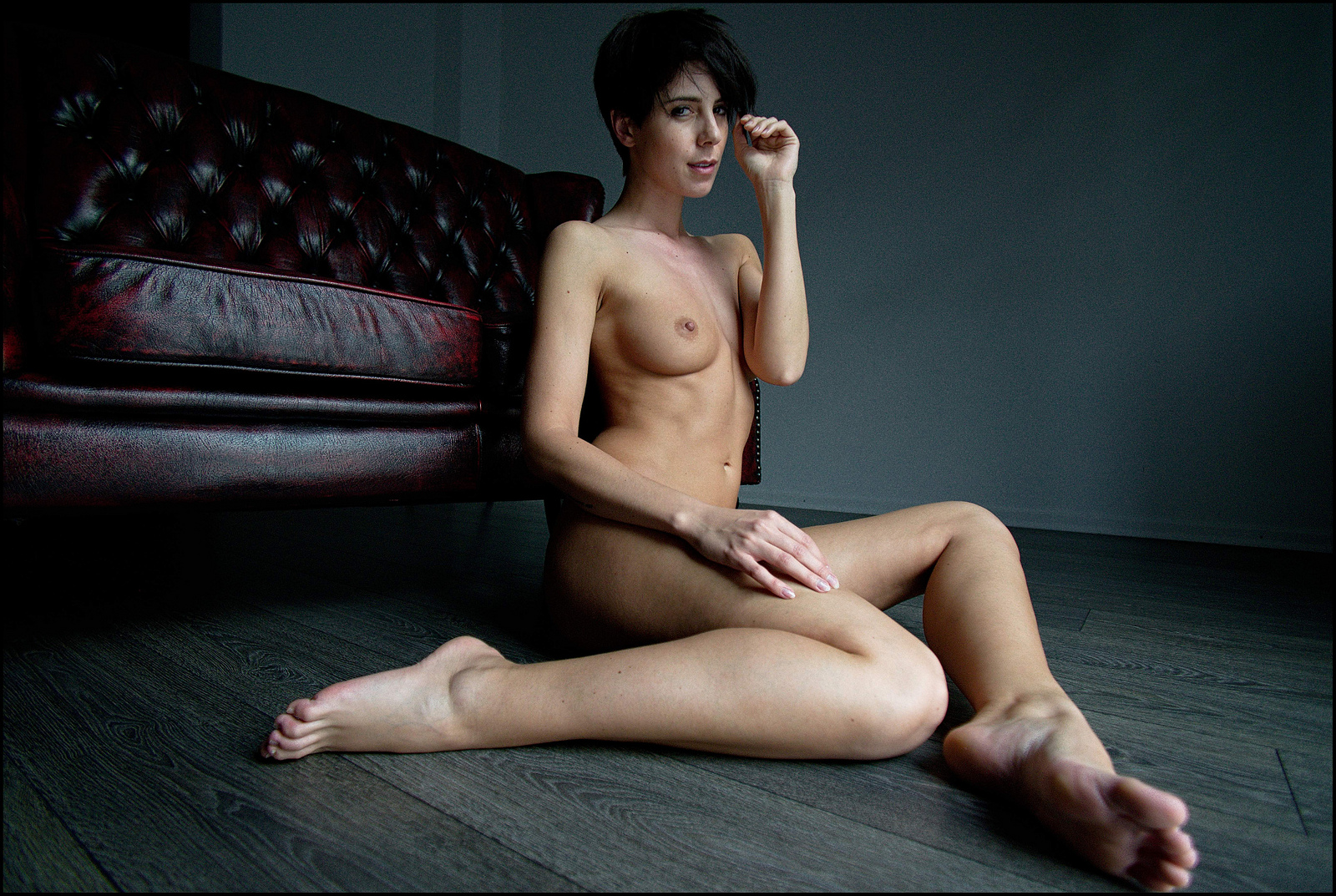
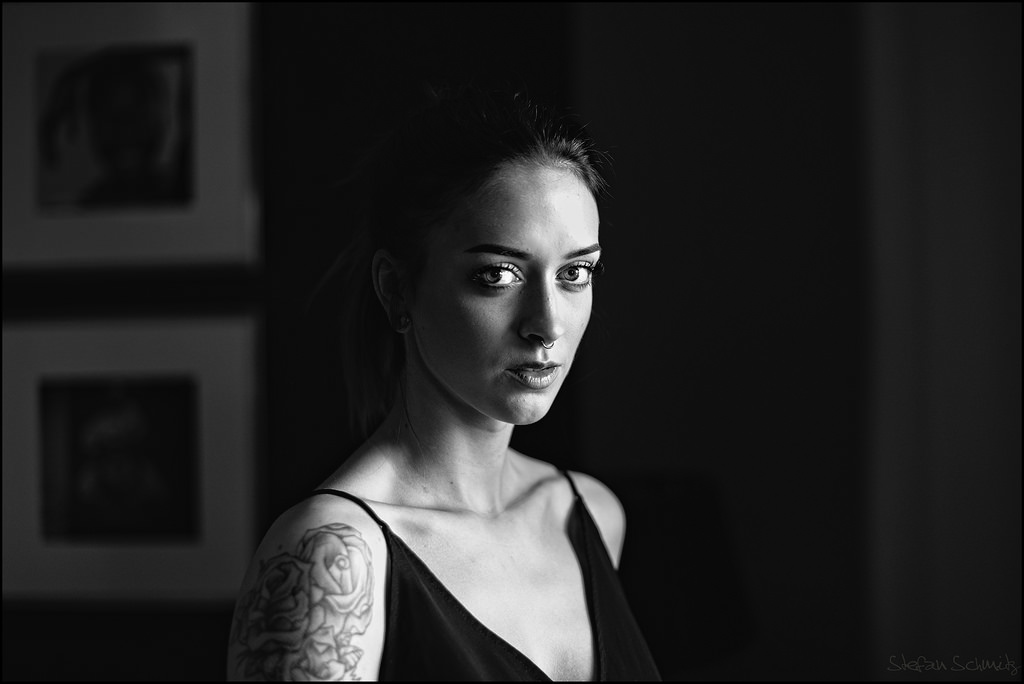
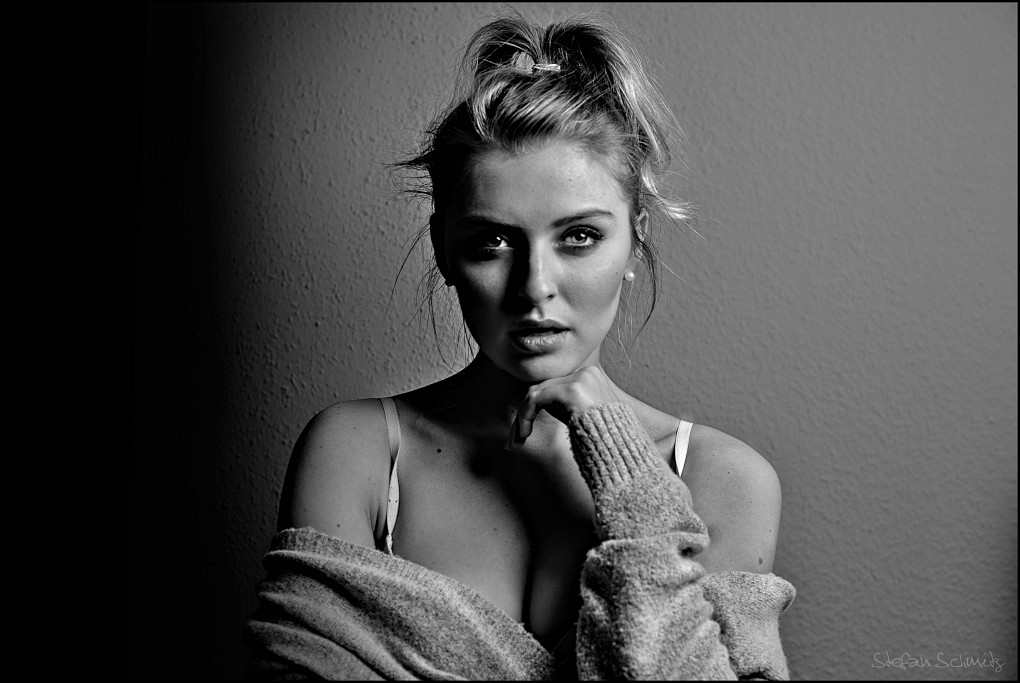
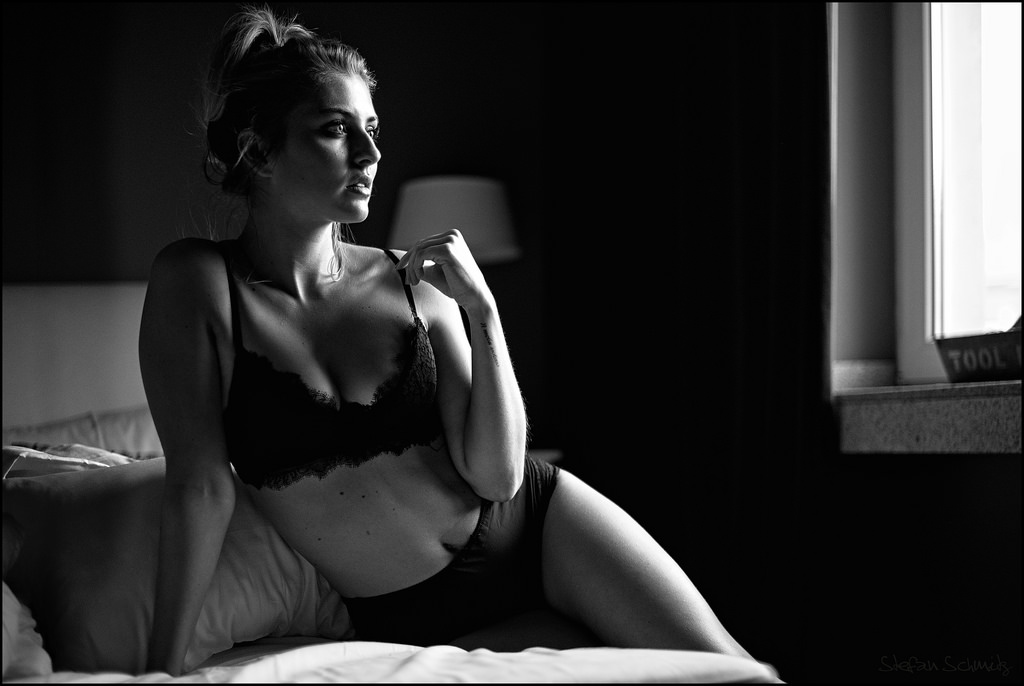
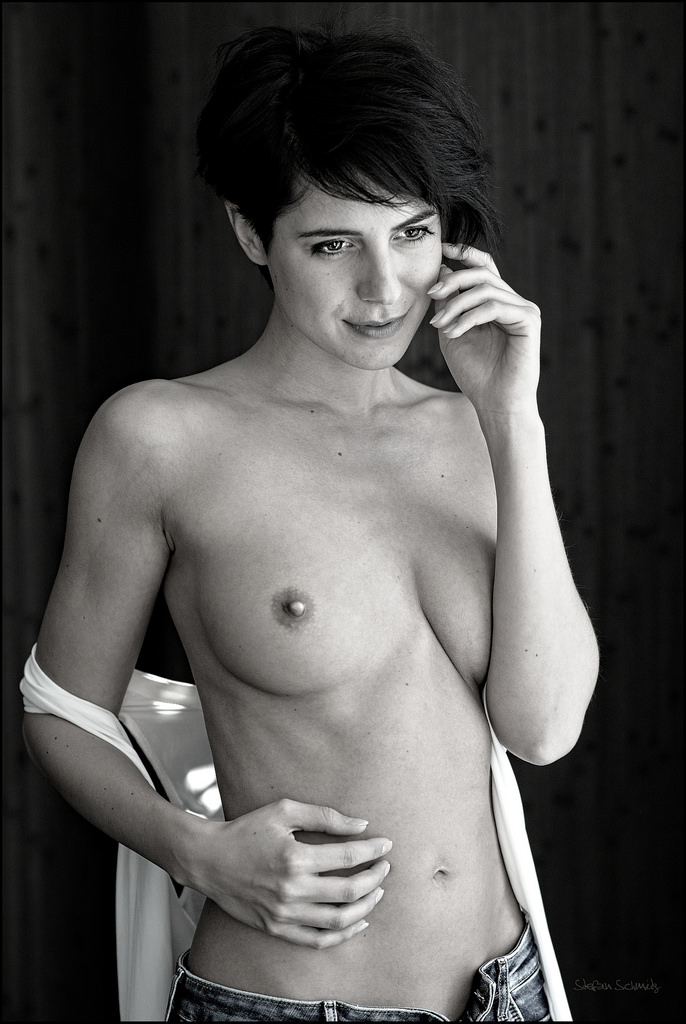
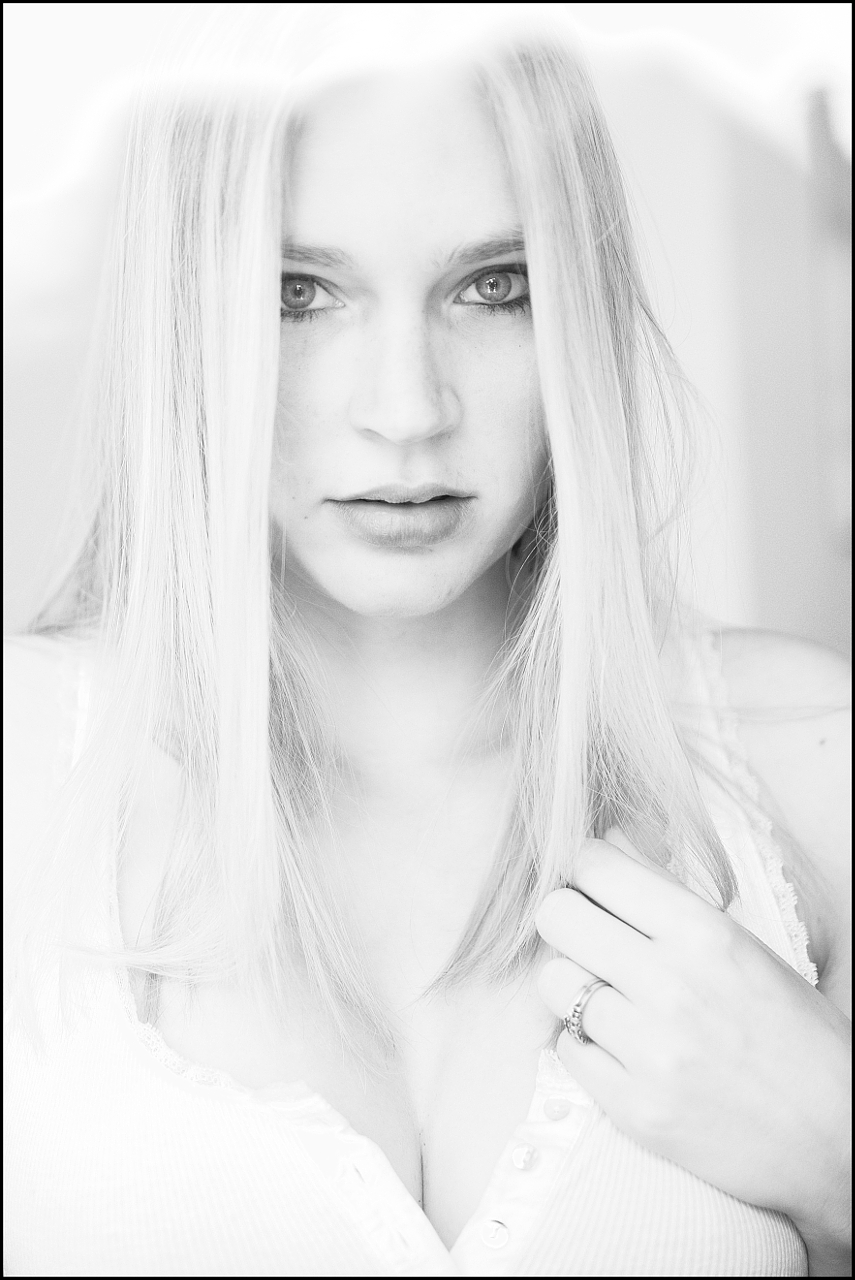
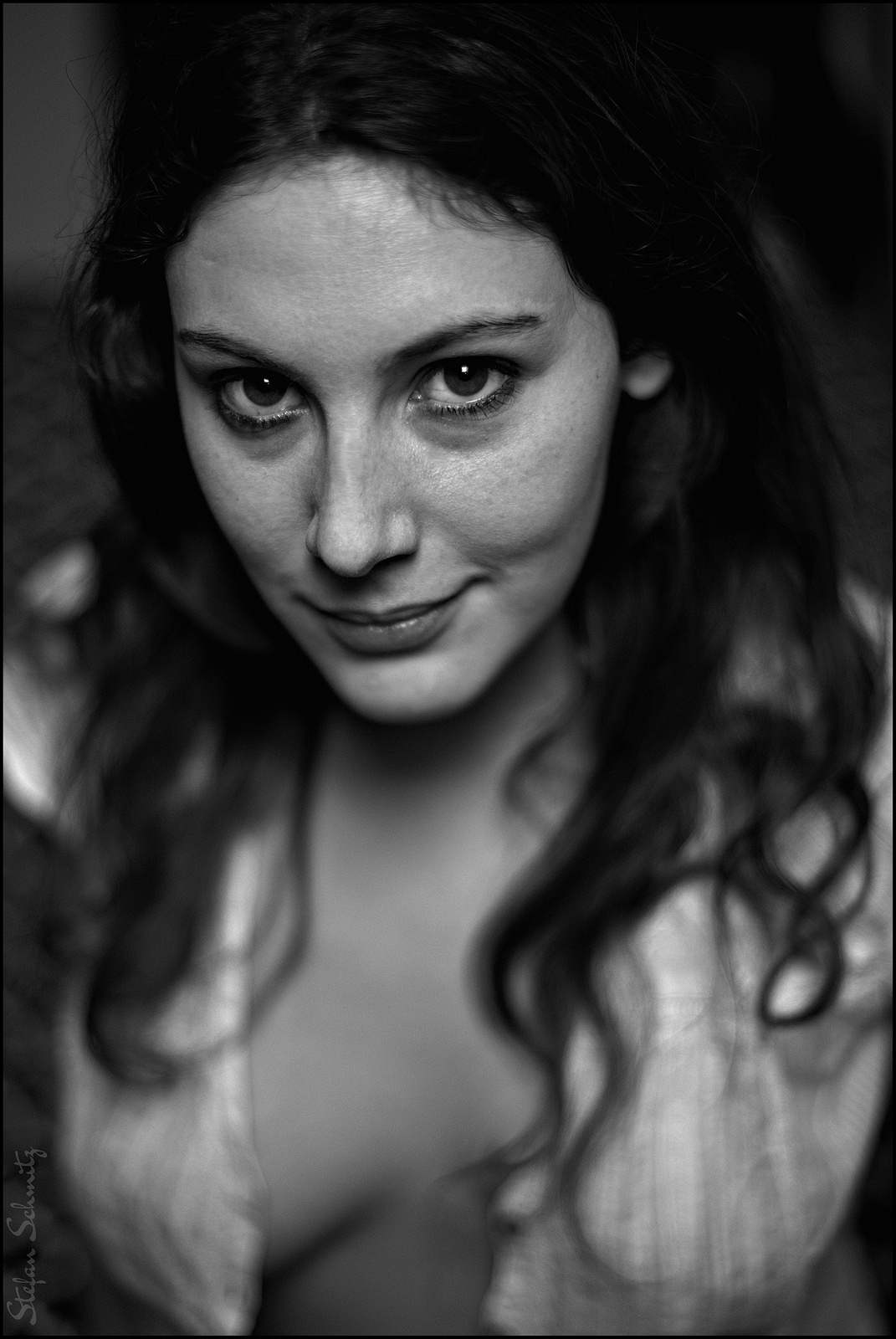
I shoot portraits of women and most of the time they don’t wear clothes. The portrait-part is very important for me: the model must connect with the viewer and ideally the communication goes beyond skin-deep. I want to see (and show) more than just the surface, and when that happens, I just press the shutter-button and try to get out of the way of the model’s performance.
What motivates you when deciding what/how/who to shoot?
I like women, so I take photos of women. If I were interested in beetles, I’d buy a macro lens and shoot beetles. All kidding aside, I think it’s a natural thing to do. I am married to a beautiful woman, an ex-model, and when she got fed-up with my eternal “can we do one more shoot” requests, we discussed things and she allowed me to go ahead and shoot models. Her support is very important to me, but her taste is very different from mine.
I really never asked myself “why” I shoot sensual portraits and nudes. It just feels like “I want to do that” and I feel comfy with it. Does there have to be a reason?
The location is very important for me. Nothing is more boring than blinding a person with a flashlight in front of a gray wallpaper. A room, a window-sill, a landmark - there’s a lot of inspiration out there, and I often think “this is where I want to shoot”. Sometimes my wife tells me of some place she has been to or seen, and I check that out.
If you had to pick your own favorite 3 images of your work, which ones would you choose and why?
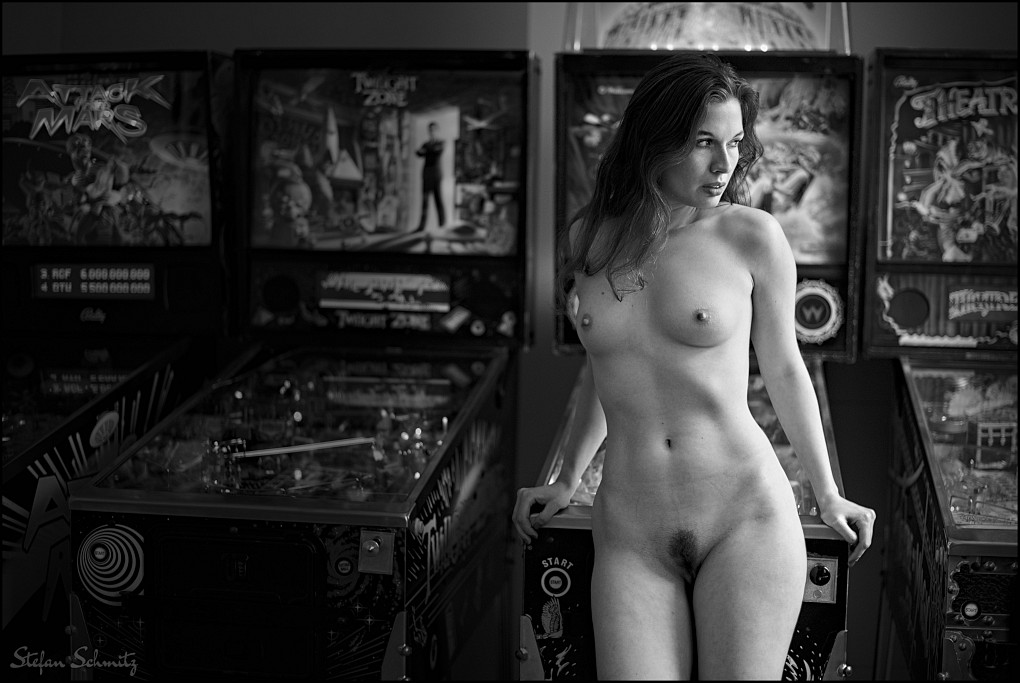
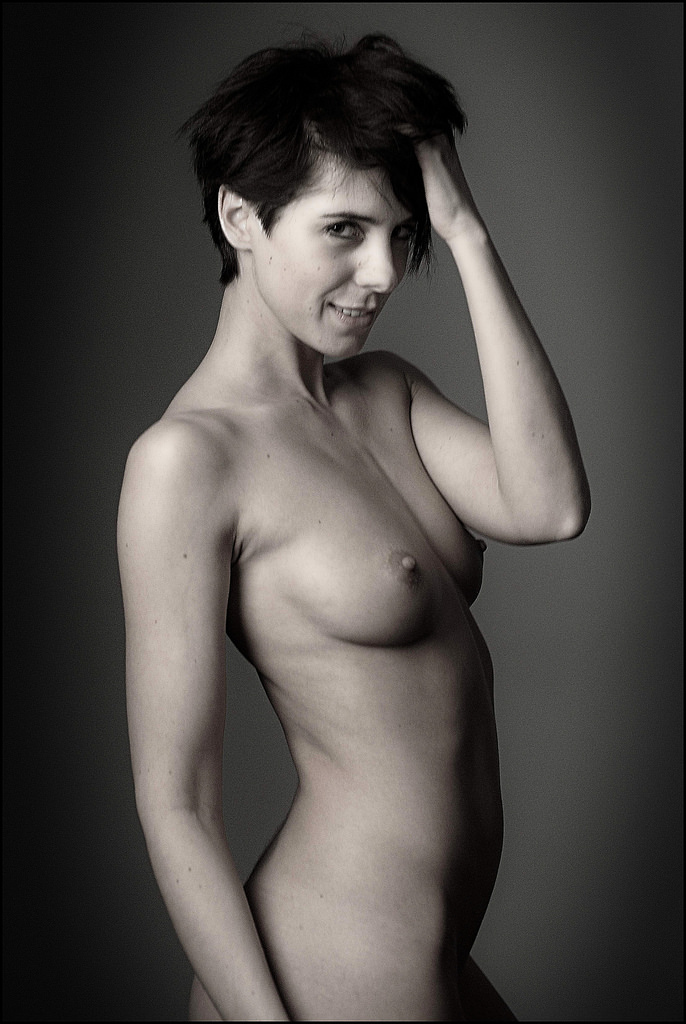
Jennifer is a very professional and inspiring model. We’ve worked together quite a number of times and while you may think that this shot was inspired by The Who’s “Pinball Wizard”, I’d answer “right band, wrong song”. It’s The Who, alright, but the song’s “A quick one while he’s away”.
I chose this photo because it’s all about Jennifer’s pose and facial expression. It’s sensual, even sexy, but looking at Jennifer’s face you forget about the naked skin and all. There’s beauty, there’s depth … that’s what I’m after.
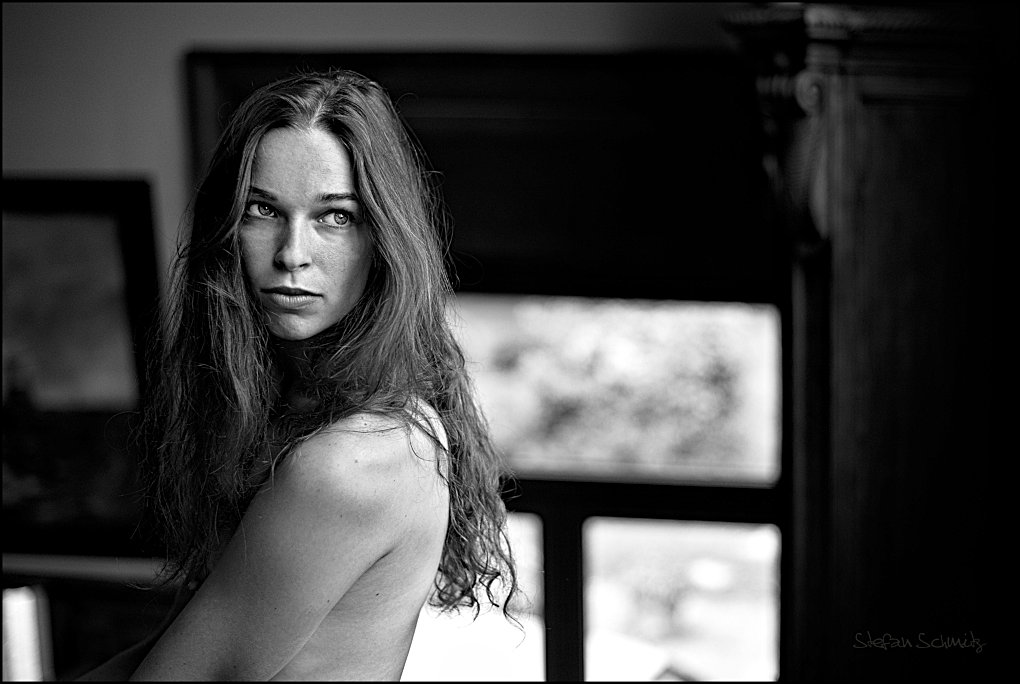
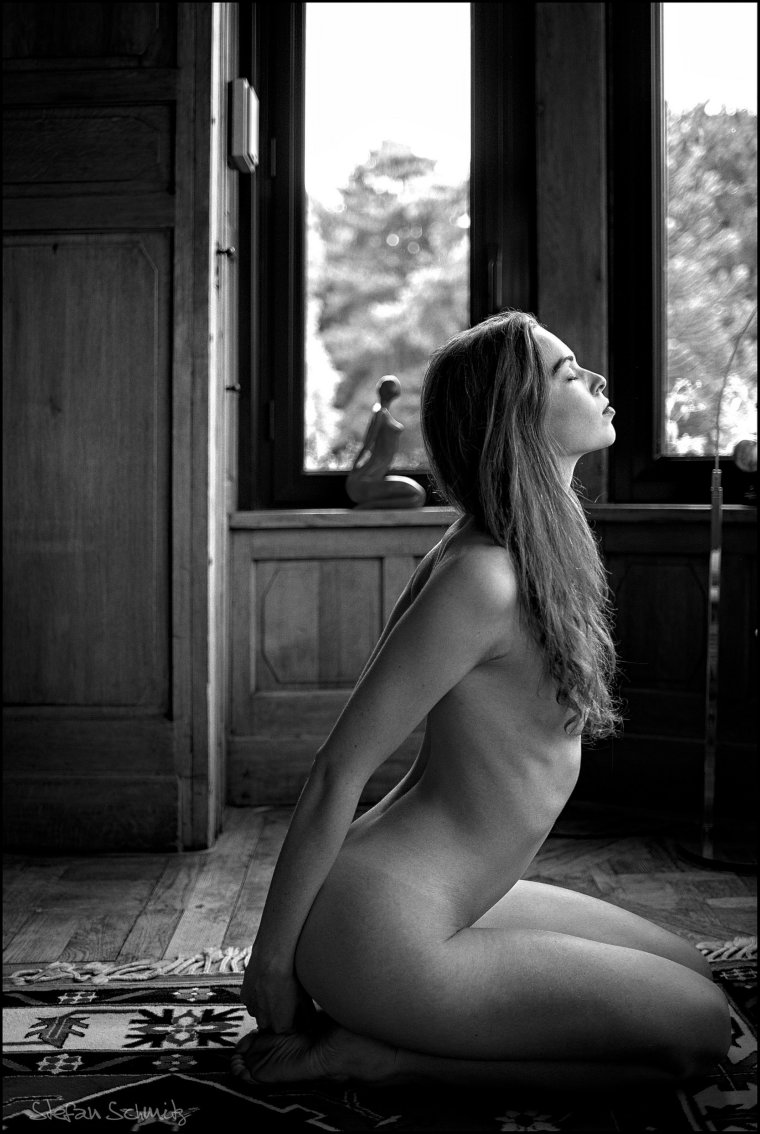
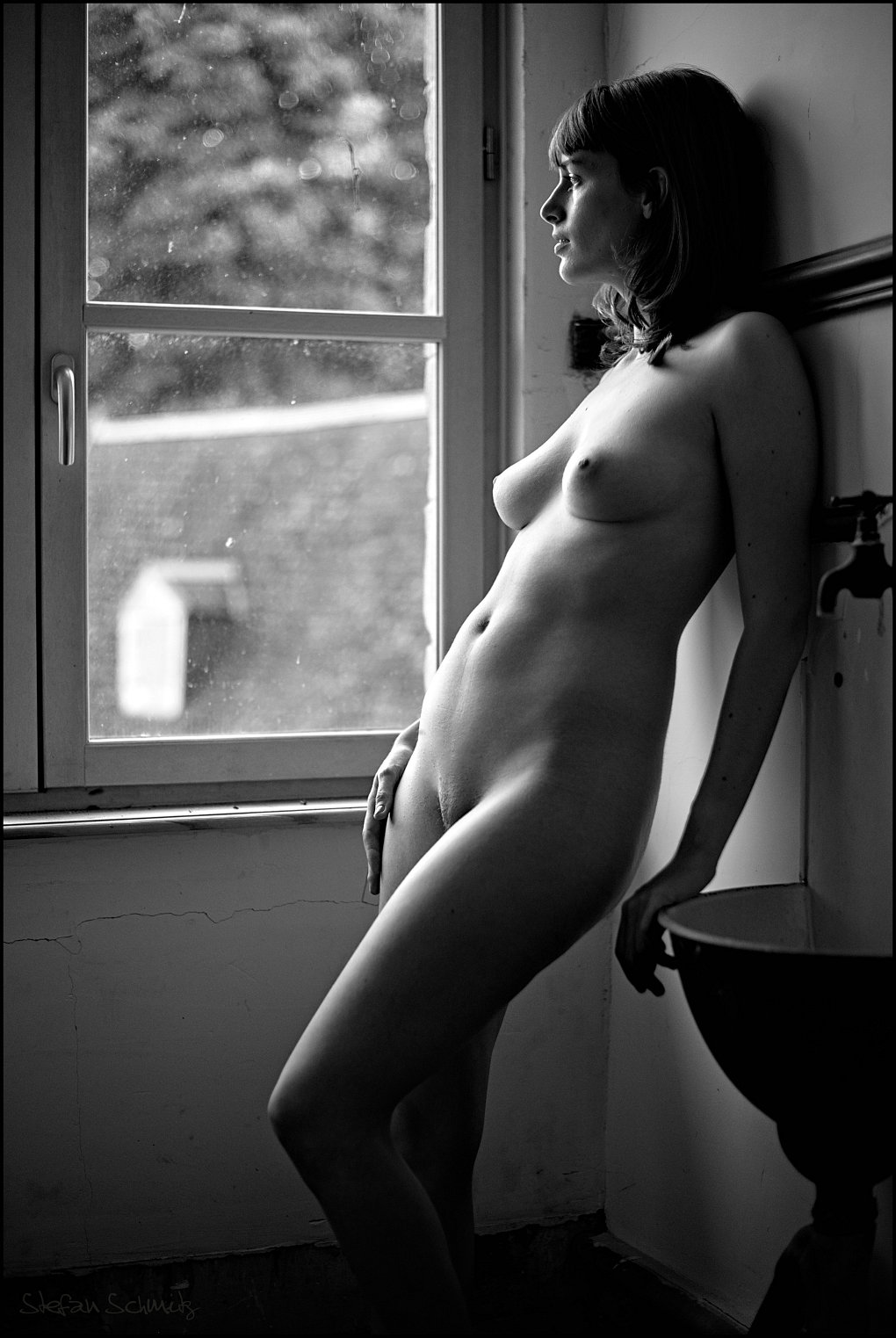
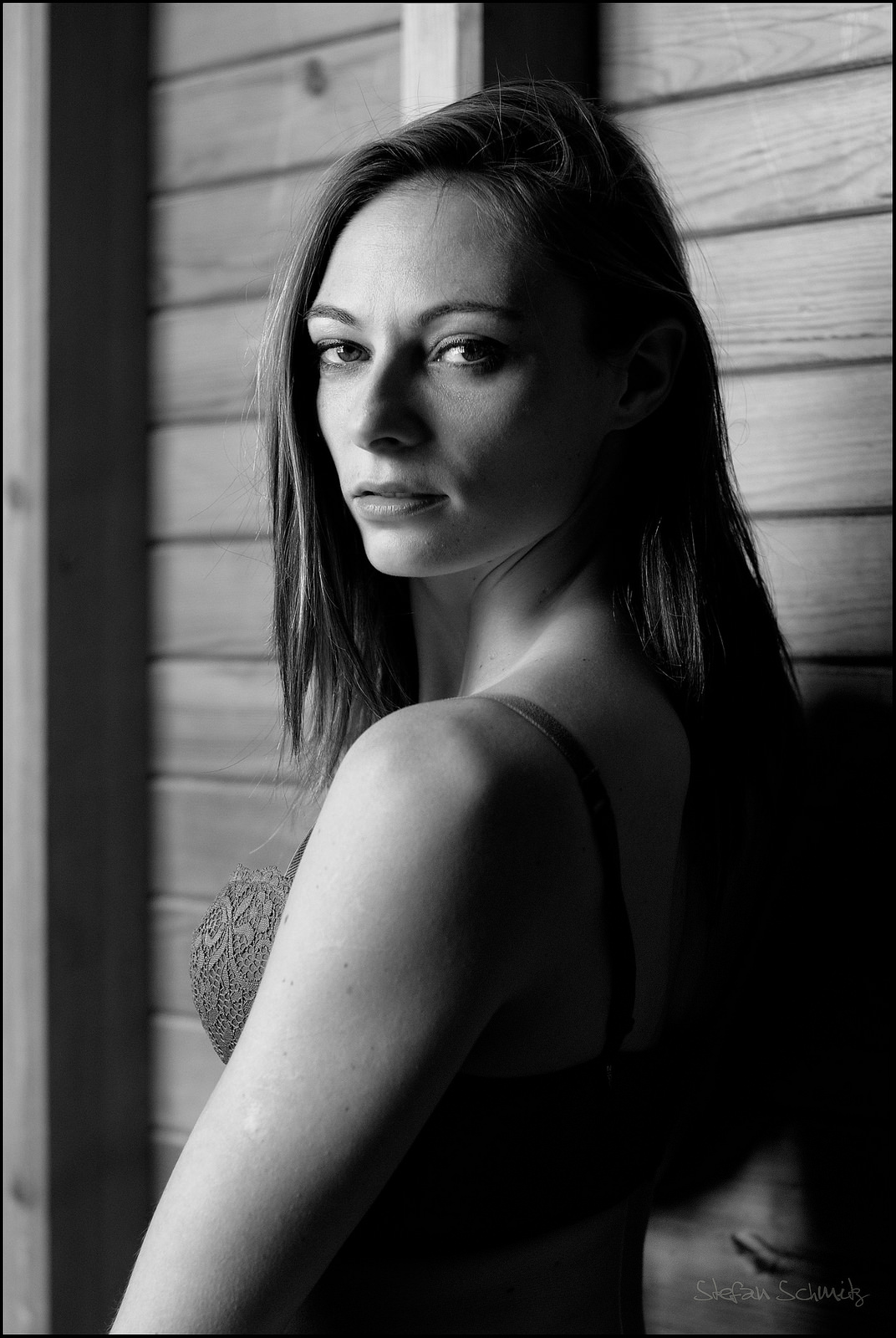
This shot of Alice is an example for the importance of natural light. There are photographers out there who can arrange light in a similar way, but I doubt that Alice would express this natural serenity in a studio setup with cables and stands and electric-transformers humming.
She’s at ease, the light is perfect - I just try to be invisible because I don’t want to ruin the moment.
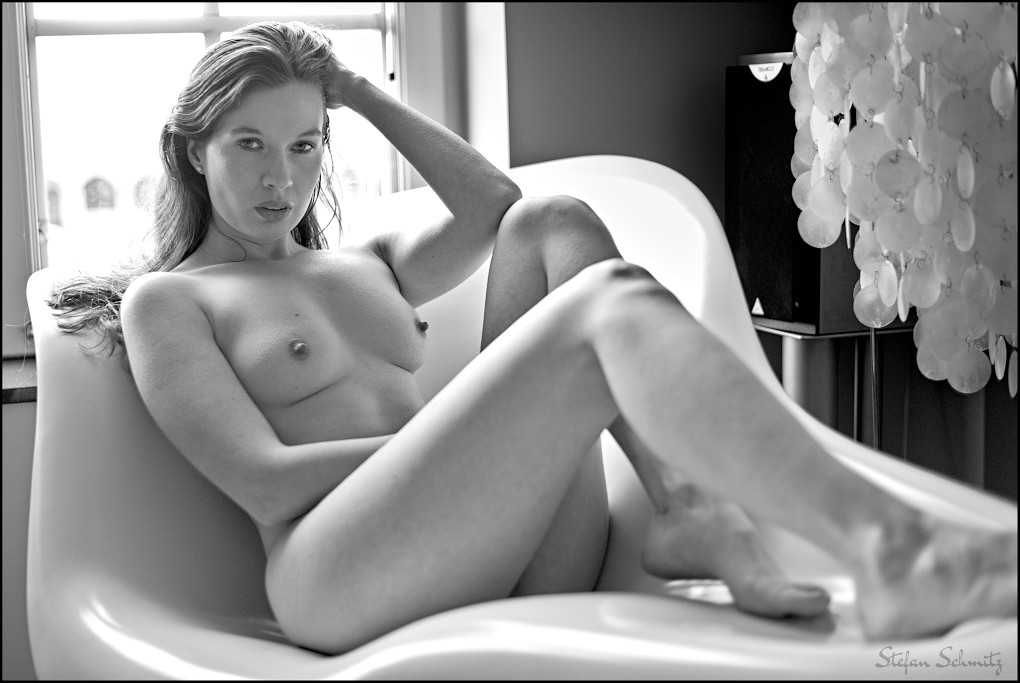
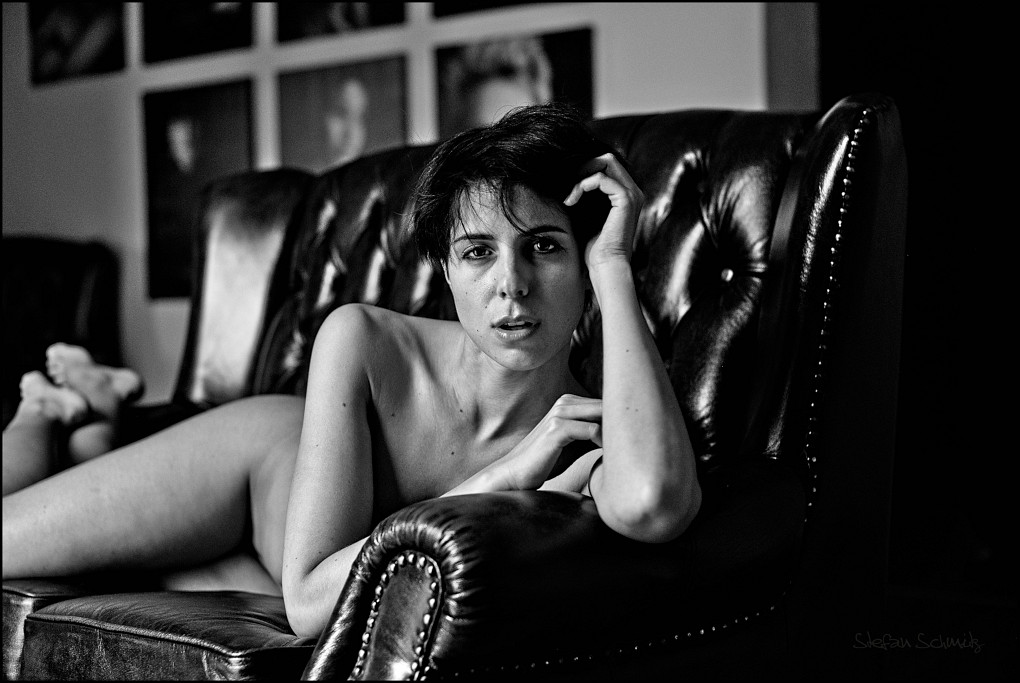
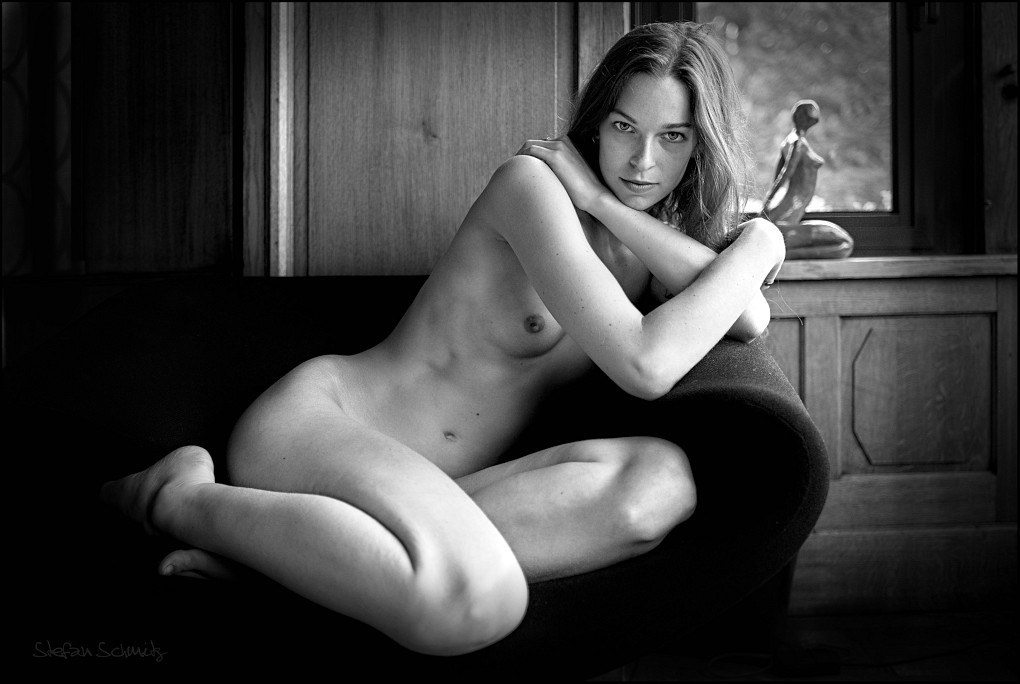
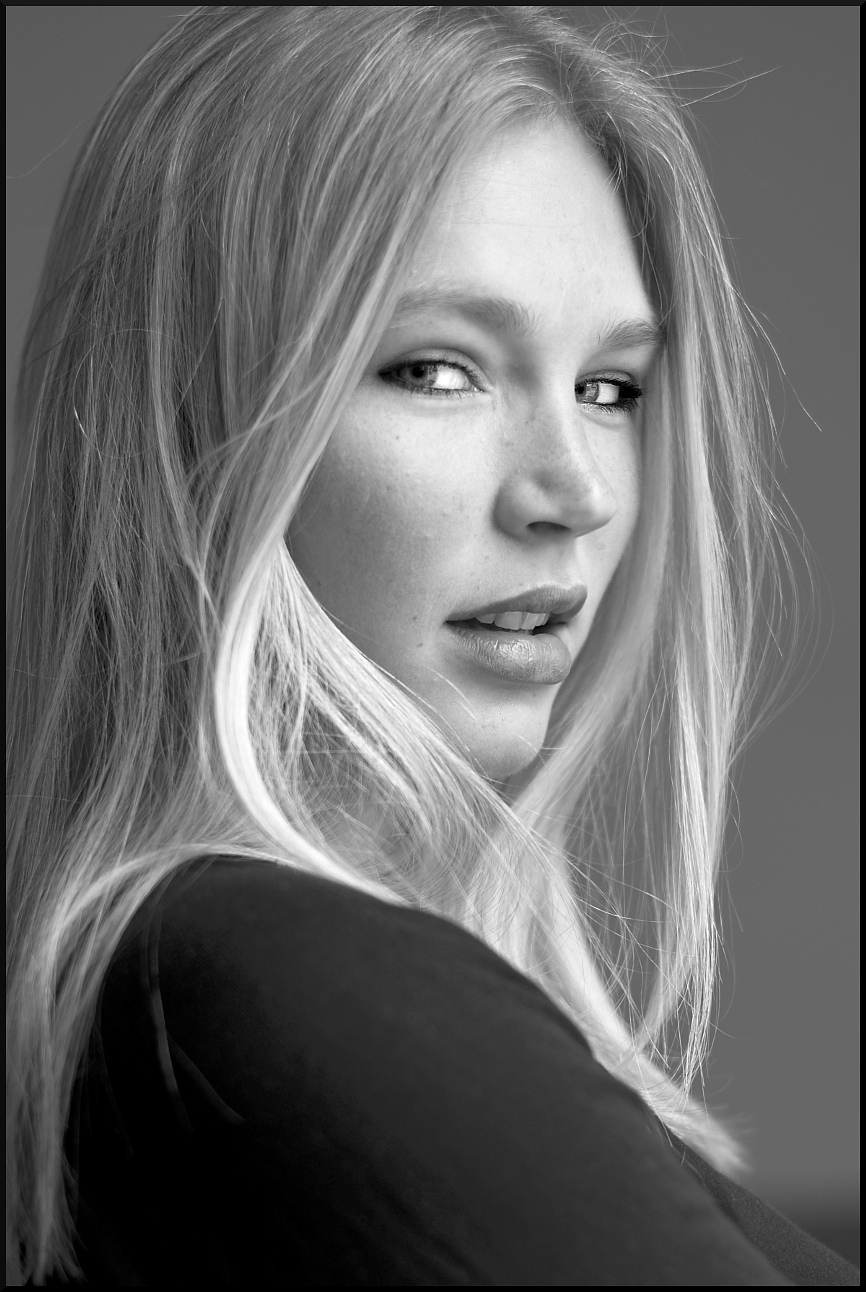
Try to escape Khiara’s eyes. Go, do it. It’s all there, the pose, the room, the ribbon-chair and the little icon, but those eyes make the picture. I did NOT whiten the eyeballs nor did I dodge the iris, and of course it’s all natural/available light.
If you had to pick 3 favorite images from someone else, which ones would you choose and why?
I already named Stieglitz’ Georgia O’Keeffe as an inspiration further up - next to that there’s Helmut Newton’s Big Nude III, Henrietta and Kim Basinger’s striptease in 9 1⁄2 weeks (white silk nighty and all). Each one a masterpiece, each one very influential for me. Imagine the truth and depth of Georgia with the force and pride of Henrietta and the erotic playfulness of Kim Basinger. That photo would rule the world.
Is there something outside of your comfort zone you wish you could try/shoot more of?
I would like to work more with women above the age of 35, but it’s hard to find them. In general they stop modeling nude when the kids arrive.
Shooting more often outdoors would be cool, too, but that’s not easy here in northern France - there is no guarantee for good weather, and it’s frustrating when you organize a shoot two weeks in advance just to call it off in the very last minute due to bad weather.
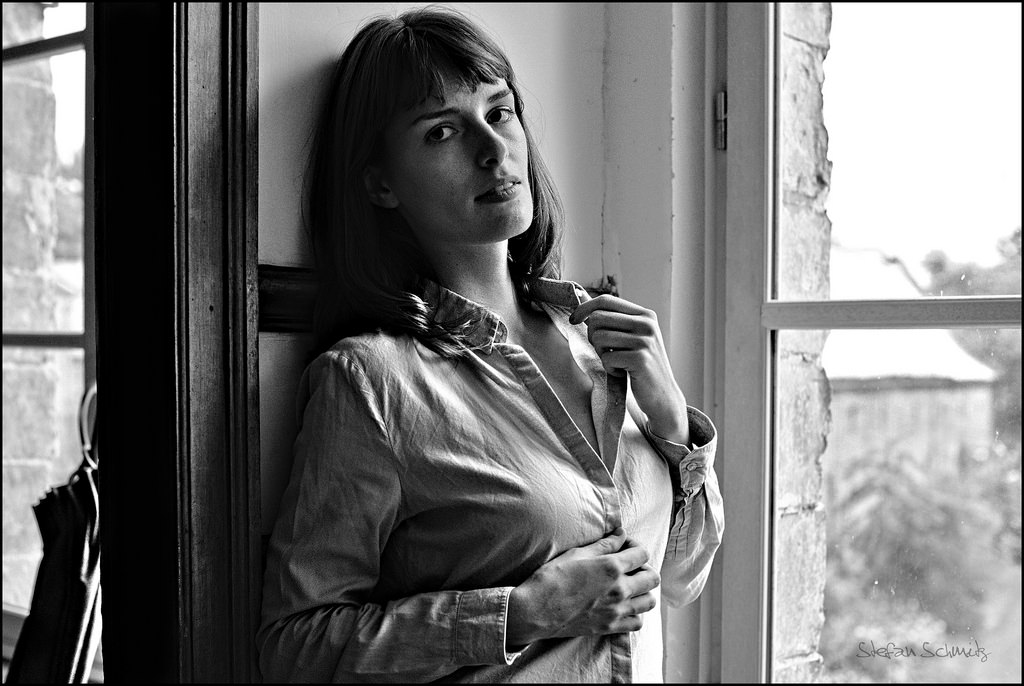
Last but not least there’s a special competition among photographers; it’s totally unofficial and called “the white shirt contest”. Shoot a woman in a white shirt and make everybody “feel” the texture of that shirt. I give it a try on every shoot and very few pictures come out the way I wish. Go for it - it’s way harder than I thought!
There are websites where models and photographers can present their work and get in contact. The biggest-one worldwide is modelmayhem.com, and I highly recommend to become a member. Another good place is tumblr.com, but you have to go through a lot of dirt before you find some true gems. I have made contact via both sites and I recommend them.
You will need some pictures in your portfolio in order to show that you are - in fact - a photographer with a basic idea of portrait-work. If you shoot portraits (I mean really portraits, not some snapshots of granny and the kids under the Christmas-tree), you probably have enough photos on your disk to state the point. But if you don’t and you want to start (nude) portraits, spend some money on a workshop. I did that twice and it really helped me in several ways: communication with the model, how to start a session, do’s and don’ts - and at the end of the day you will drive home with a handful of pictures for your portfolio.
Speaking of gear, what are you shooting with currently (or what is your favorite setup)?
Gear is overrated. I am with Nikon since 1979 and today I own and use two bodies: a 1975 Nikon F2 photomic (bought used in 82), loaded with Kodak Tri-X and a Nikon D610 DSLR. 90% of my pictures are shot with a 50mm standard lens. Next on the list is the 35mm - you will need that in small rooms when the 50mm is already a bit too long and you want to keep some distance. I happen to own a 85mm, but the locations I book and shoot rarely offer enough space to make use of that lens.
There are these cheap, circular 1m silver reflectors on amazon. They cost about 15 €/$ and you get a crappy stand for the same price. That stuff is pure gold - I use the reflector a lot and I highly recommend to learn how to work with it. It’s my little secret weapon when I shoot against the light (see Alice here above).
A camera with a reasonably fast standard lens, a second battery and a silver reflector is all I need. The rest is luxury for me, but I am pretty much a one-trick-pony. Other photographers will benefit more from a bigger kit.
Most of your images appear to be making great use of natural light. Do you use other lighting gear (speedlights, monoblocks, modifiers, etc)?
Right - available light is where it’s at. I very rarely shoot with a flash kit today because it distracts me from the work with the model. I’m a loner on the set, no assistants or friends who come and help, so everything must be totally simple and foolproof.
Saying that, I own an alarming number of speedlights, umbrellas, triggers and softboxes, but I don’t need that gear very often. I try to visit the locations before I shoot. I check the directions and plan for a realistic timeframe, so today I will neither find myself in a totally dark dungeon nor in a sun-filled room with contrasts à gogo. Windows to the west - shoot in the morning, windows facing south-east: shooting in the (late) afternoon.
Here’s a shot of Karolina Lewschenko. We took this photo in a hotel room by the end of October and the available (window) light got too weak, so I used an Aurora Firefly 65 cm softbox with a Metz speedlight and set-up some classic Rembrandt-Light. I packed that gear because I knew that our timeframe wasn’t guaranteed to work out perfectly. “Better be safe than sorry”.
Do you pre-visualize and plan your shoots ahead of time usually, or is there a more organic interaction with the model and the space you’re shooting in?
Yes, I do. When I visit a place, a possible location, I have some Ideas of where to shoot, what furniture to push around and what pose to try. I can pretty much see the final picture (or my idea of it) before I book the model. Having said that, you know that no battle-plan has ever survived the first shot fired…
When the model arrives, we take some time to walk around the locations and discuss possible sets. We will then start to shoot fully clothed in order to get used to another and see how the light will be on the final shots. It’s very important for me to get feedback from the model. She might say that a pose is difficult for her or hurts after a few seconds, that she’s not comfy with something or that she would like to try a totally different thing here. I always pay a lot of attention to those ideas and - out of experience - those shots based on the model’s ideas are in general among the best of the day.
I mean we’re not here because I shoot bugs or furniture, you don’t give me the opportunity to express myself here because you are a fan of crickets; all the attention is linked to the beautiful women on my photos and how they connect with the beholder. I am just the one who captures the moments, it’s the models who fill those moments with intensity and beauty. It would be very stupid of me not to cooperate with a model who knows how to present herself and who comes up with her own ideas.
Always listen to the model, always communicate, never go quiet.
The discussion with the model also includes what degree of nudity we consider. So the second round of photos starts with the “open shirt” or topless shots before the model undresses completely. If we take photos in lingerie, we do that last (after the nudes) because lingerie often leaves traces on the skin and we don’t want that to show.
It is important to know what to do and in what order. You don’t want to have a nude model standing in front of you, asking “what’s next?” and you answer “I dunno - maybe (!) try this or that again”. If you lose your directions for a moment, just say so or say “please get your bathrobe and let’s have a look at the last pictures together”. If you are “not sure”, the model might be “not comfy”, and that’s something we want to avoid.
Would you describe your workflow a bit? Which projects do you use regularly?
A typical session is 90 to 120 minutes and I will end-up with about 500 exposures on the SD-card and maybe a roll of exposed Kodak Tri-X. The film goes to a lab and I will get the negatives and scans back within 15 to 30 days.
There’s two SD-cards, one with RAW files that I import with gThumb to /photos/year/month/day. The other card holds fine-quality JPG and those go to /pictures/year/name_of_model. My camera is already set to monochrome, I get every picture I shoot in b/w on the camera-screen and the JPG-files are also monochrome.
Next step is a pre-selection in Geeqie. That’s one great picture viewer and I delete all the missed shots (bad framing, out of focus etc.) and note/mark all the promising/good shots here. This is normally the end of day one.
Switching from RAWstudio to darktable has been a giant step for me. dt is just a great program and I still learn about new functions and modules every day. The file comes in, is converted to monochrome and afterwards color saturation and lights (red and yellow) are manipulated . This way I can treat the skin (brighter or darker) without influencing the general brightness of the picture. Highlights and lowlights may be pushed a bit to the left and I add the signature and a frame 0,5% wide, lens correction is set automatically. That’s the whole deal. On very rare occasions I add some vignette or drop the brightness gradually from top to bottom, but again: it doesn’t happen all that often. I never cut, crop or re-frame a shot. WYSIWYG. Cropping something out, turning the picture in order to get perfectly vertical lines or the likes - it all feels like cheating. I have no client to please, no deadline to meet, I can take a second longer and frame my photo when I look through the viewfinder.
The photos will then be treated in the GIMP. Some dodge and burn (especially when there are problematic, very high or low contrasts), maybe stamp an electric plug away and in the end I re-size them down to 2560 on the long side (big enough for A3 prints) and (sometimes) apply the sharpening tool with value 20 or 25. Done. I can’t save a crappy shot in post-prod and I won’t try. Out of the 500 or so frames, 10 to 15 will be processed like that and it feels like nothing has changed over the last 40 years. The golden rule was “one good shot per roll of film” and I happen to be there, too. Spot-on!
I load those 15 pictures up on my Flickr account and about once or twice a week I place a shot in the many Flickr groups. Also once a week (or every ten days) I post a photo on my Tumblr account. Today I have about 5k followers and my photos are seen between 500’000 and one million times a month, depending on the time of year and weather. There’s less traffic on warm summer days and more during cold and rainy winter-nights.
It takes me some time before I add a shot to my own website. In comparison I show few photos there, every one for a reason and I point point people to that address, so I hope I only show the best.
Is your choice to use Free Software for pragmatic reasons, or more idealistic?
I owned an Apple II in 1983 and a digital MicroVax in 1990 or so. My way to FOSS started out pragmatic and it became a conviction later on. In the late 90’s and early 2000’s I had my own small business and worked with MS Office on a Win NT machine. Photos were processed with a Nikon film-scanner through the proprietary software into an illegal copy of Adobe PS4. It was OK, stable and I didn’t fear anything, but I wasn’t really happy neither. One day I swung over to Star-Office/OpenOffice.org for financial reasons and I also got rid of that unlicensed PS and installed the GIMP (I don’t know what version, but I upgraded some time later to 1.2, that’s for sure). I had internet access and an email address since 1994, but in the late 90’s big programs still came on CDs attached to computer-magazines. Downloading the GIMP was out of question.
Gaming was never my thing and when I installed Win XP, all hell broke lose - keeping a computer safe, virus-free and running wasn’t easy before the first service pack, but MS reacted way too slow in my opinion - I tried debian (10 CD kit) on my notebook, got it running, found the GIMP and OOo - and that was it. It took a bit of trial and error and I had to buy a number of W-Lan sticks because very few were supported and so on, but in the end I got the machines running.
Later on I got hold of an Ubuntu 7.10 CD, tried that and never looked back. The few changes on my system were from Gnome to XFCE desktop and from Thunderbird to a browser-based mail-client. Xubuntu is a no-brainer, it runs stable and fast. I contribute every December 100.- € to FOSS. That’s in general 50 and 40 to two projects and a tenner to Wikipedia. I’d spend an extra tenner to any project that helps to convert old star-office files (.sdw and so on) to today’s standards (odt…), but nobody seems interested.
What is one piece of advice you would offer to another photographer?
Don’t take any advise from me, i’m still learning myself. Or wait: be kind and a gentleman with the models. They all - each and everyone of them - have had bad experiences with photographers who forgot that the models are nude for the camera, not for the man behind it. They all have been in a room with a photographer who breathes a bit too hard and doesn’t get his gear working … don’t be that arsewipe!
Arrange for a place where the model can undress in privacy - she didn’t come for a strip-show and you shouldn’t try to make it one. Have some bottles of water at hand and talk about your plans, poses and sets with the model. Few people can read minds, so communication works best when you say what you have in mind and the model says how she thinks this can be realized. The more you talk, the better you communicate, the better the pictures. No good photo has ever been shot during a quiet session, believe me.
In general the model will check your portfolio/website and expect to do more or less the same kind of work with you. If you want to do something different, say so when booking the model. If your website shows a lot of nude portraits, models will expect to do that kind of photos. They may be a bit upset if you ask them out of nowhere to wear a latex suit because it’s fetish-Friday in your world. The more open and honest you are from the beginning, the better the shooting will go down.
Don’t overdo the gear-thingy. 90% of my photos are taken with the 50mm standard lens. Period. Sometimes I have to switch to 35mm because the room is a bit to small and the distance too close for the one four-fifty, so everything I bring to an indoor-shooting is the camera, a 50, a 35, an el-cheap-o 100cm reflector from amazon (+/- 15 €/$) and an even cheaper stand for the reflector. Gear is not important, communication is.
Want to spend 300 €/$ on new gear? Spend it on a workshop. Learn how to communicate, get inspiration and fill your portfolio with a first set of pictures, so the next model you email can see that you already have some experience in the field of (nude) portraits. That’s more important than a new flashlight in your bag.
I want to thank Stefan again for taking the time and being patient enough to chat with me!
Stefan is currently living in Northern France. Before that he lived and worked in Miami, FL, and Northern Germany where he is from, went to school, and met his wife. His main website is at https://whatstefansees.com/, and he can be found on Flickr, Facebook, Twitter, Instagram, and Tumblr.
Unless otherwise noted, all of the images are copyright Stefan Schmitz (all rights reserved) and are used with permission.
In popular science books, including 'Seven Brief Lessons on Physics' and 'Reality Is Not What It Seems', the Italian theoretical physicist Carlo Rovelli has studied the phenomena – namely time and space – that structure our very existence. In doing so, he has become something of a phenomenon himself, praised for his charm, clarity and humour – things we might not immediately associate with the field of quantum gravity. Here, the TLS's Samuel Graydon asks him about his new book The Order of Time

 Login
Login