 Login
LoginPhil Donahue and Marlo Thomas Fall in Like - Clear and Vivid Patreon Extra
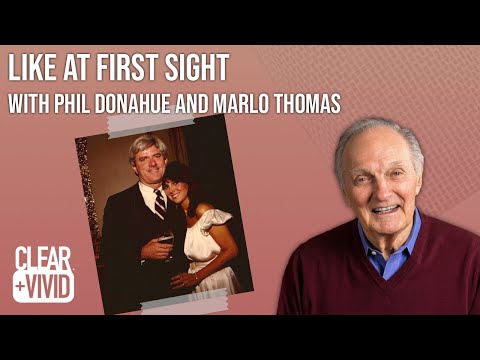
This clip is an excerpt from a Patreon video available early to Patreon members. To sign up for the Patreon and support the podcast visit: patreon.com/clearandvivid

Por ocasião do lançamento de biografia escrita por Júlio Maria, Ney Matogrosso repassa fatos importantes em seus 80 anos de vida e 50 de carreira. Neste episódio especial de aniversário, o 451 MHz também traz um quadro novo com indicações do melhor da literatura LGBTI+.
Seja um Ouvinte Entusiasta e apoie o podcast 451 MHz: https://bit.ly/Assine451


This week, Thea Lenarduzzi and Lucy Dallas are joined by the novelist Margaret Drabble to consider the ‘curiously free-floating reputation’ of Russell Hoban, whose adult novels, including ‘Riddley Walker’, now appear as Penguin Modern Classics; as twin exhibitions mark the centenary of the birth of the English sculptor, painter, writer, designer and illustrator Michael Ayrton, the critic Boyd Tonkin delves into the myth-laden maze of the artist’s thought
‘From Oprah to Medusa: The endlessly various world of Russell Hoban’ by Margaret Drabble: www.the-tls.co.uk
‘Michael Ayrton: A singular obsession’, Fry Art Gallery Too, Saffron Walden, until October 31st
‘Michael Ayrton Centenary: Ideas, images, reflections’, edited by Justine Hopkins
‘Celebrating Michael Ayrton: A centenary exhibition’, the Lightbox, Woking, until August 8th
A special subscription offer for TLS podcast listeners: www.the-tls.co.uk/buy/pod
Producer: Ben Mitchell
Hosted on Acast. See acast.com/privacy for more information.

We’ve been bundling block patterns with all of our themes for quite a while now, but recent improvements to the Template Part and Query Loop blocks has opened up a whole new world for how patterns can be used.
Both blocks can now display a carousel of block patterns in their setup state, allowing users to choose between a menu of pre-designed versions of these blocks. These patterns can be bundled with your theme, so that users have a wide range of pre-designed header, query, and footer options available to choose from in the Site Editor:
The only difference between these and other patterns you’d build is that they include a special blockTypes property to let Gutenberg know which block to associate them with. Here’s a simplified example:
register_block_pattern(
	'theme/pattern-slug',
	array(
		'title'       => _x( 'Pattern Title' 'theme-slug' ),
		'blockTypes'  => array( 'core/template-part/header' ),
		'content'     => '<!-- Your Pattern Markup -->'
	)
);
The markup above specifies that this pattern should be surfaced for a Header template part block. The value there would core/template-part/footer or core/query if you were designing a pattern for those blocks instead. (This property also powers pattern transforms, but that’s a topic for another time).
Once you register a pattern that way, it will show up in the carousel for the specified block. It’s as simple as that!
There are already a few Query Loop patterns bundled with Core today that use this method, and the header patterns shown in the video above are actually from a Gutenberg PR I’m working on as well. I’ve prepared a quick code example using our in-progress Quadrat theme to show how they could be bundled — we definitely plan on including a handful of these sorts of patterns in our block themes moving forward.
https://github.com/Automattic/themes/pull/4104
When combined together, Header, Query Loop, and Footer patterns allow you to mix-and-match pre-designed sections to create your entire website. I’m truly excited to see not only how themes use this feature, but how the Pattern Directory might provide hundreds more options for these blocks. This feels groundbreaking for WordPress, and I can’t wait to see how it turns out.


Um mergulho sonoro pelo estranho universo de uma escritora que abriu caminhos e desafiou convenções literárias e sociais. No segundo episódio da série Narradores do Brasil, o 451 MHz desvenda os enigmas de Lygia Fagundes Telles e convida a ouvir um texto inédito da autora.
Participação especial de Adriana Esteves. Depoimentos de Lucia Telles, Nilton Resende, Ignácio de Loyola Brandão, Giovana Madalosso, Cidinha da Silva, Marcelino Freire, Julián Fuks e Tércia Montenegro, Letícia Chagas e Tamy Ghannam. Ilustrações sonoras: Maria Beraldo.
Seja um Ouvinte Entusiasta e apoie o podcast 451 MHz: https://bit.ly/Assine451
O instituto Atlas Intel finalizou esta semana a primeira pesquisa de cenário eleitoral no Estado do Rio. Nesse momento, as sondagens de intenções de voto têm pouca precisão sobre a disputa que ocorrerá somente no próximo ano, quando as campanhas estarão oficialmente na rua.
Os cenários testados agora ajudam mais os partidos e lideranças na construção das estratégias. Se olharmos com essa devida cautela, as várias combinações de possíveis candidaturas mostram o deputado Marcelo Freixo (PSB) liderando a disputa, com índices que vão de 32% a 33%. O atual governador do Rio, Cláudio Castro (PL), aparece em segundo lugar, variando entre 19% e 20%.
Como o Atlas também mediu a avaliação do governador e do presidente Bolsonaro no Estado do Rio, reuni esses dois dados em um conjunto de gráficos interativos.
Como sabemos, o presidente deve apoiar Castro ao Governo do Rio e espera que isso também resulte em apoios locais. A comparação das avaliações ajuda a verificar qual faixa do eleitorado apresenta proporções parecidas ou muito diferentes sobre Castro e Bolsonaro.
Esses cruzamentos, no entanto, têm alguma imprecisão porque a margem de erro geral da pesquisa (+ ou – 3 pontos percentuais) costuma ser mais que o dobro, sobrepondo, muitas vezes, os percentuais das categorias como escolaridade, renda, faixa etária, entre outros. Por conta disso, é mais interessante considerar quando há mais diferenças em pontos percentuais entre as categorias.
O primeiro dado que chama atenção é que Bolsonaro tem uma avaliação positiva no Rio bem superior ao registrado por Castro. Cerca de 46% dos eleitores aprovam Bolsonaro, enquanto o governador tem apenas 24%. Ou seja, aparentemente Castro tem mais a ganhar colando com o presidente do que o contrário. Sua desaprovação é bem superior também que a de Bolsonaro no Rio.
O recorte por escolaridade mostra uma distribuição da avaliação de Castro e Bolsonaro muito parecida no grupo que tem apenas o ensino fundamental: aprovação maior que a desaprovação. Entre aqueles que têm o ensino médio, o comportamento é parecido, mas com sentido invertido. Mais reprovação que aprovação. No caso de Bolsonaro, esse dado é um pouco mais equilibrado (45% aprovam e 54% desaprovam). Essa distribuição é parecida entre os eleitores com ensino superior. Tanto Castro como Bolsonaro são mais reprovados que aprovados nesse grupo.
Já avaliação do governador e do presidente por faixa de renda do eleitor mostra que Castro é reprovado entre aqueles que ganham até R$ 2 mil (51%), enquanto Bolsonaro tem mais aprovação (53%) nesse grupo do que reprovação (36%). Tanto Bolsonaro quanto Castro são mais reprovados do que aprovados na faixa que ganha entre R$ 2 mil e R$ 3 mil.
A maior reprovação de Castro e Bolsonaro ocorre entre aqueles que ganham acima de R$ 10 mil. Castro é reprovado por 80% desses eleitores, enquanto Bolsonaro, 70%.
Cláudio Castro e Bolsonaro são reprovados entre os eleitores de 16 a 24 anos (64% e 53%). Bolsonaro, no entanto, tem um percentual elevado de aprovação nesse grupo: 43%. O governador e o presidente registram aprovação maior que a reprovação no grupo que tem entre 25 e 44 anos (42% e 60%). A maior reprovação de Castro por faixa etária do eleitorado ocorre entre aqueles que têm entre 35 e 44 anos (75%), já Bolsonaro entre os que têm de 16 a 24 anos (53%)
A religião costuma ser um recorte importante no Rio, especialmente no grupo dos evangélicos. Aparentemente, Castro pode se beneficiar colando sua imagem em Bolsonaro. Ele é aprovado por 67% dos evangélicos do Rio, enquanto Castro é mais reprovado (41%) do que aprovado (32%). Entre os católicos, tanto Castro (64%), quanto Bolsonaro (62%) são amplamente reprovados.

This week: How far off is a world in which robots do most of our jobs? Thea Lenarduzzi and Lucy Dallas are joined by Benjamin Schneider, a DPhil Candidate in Economic and Social History at Merton College, Oxford, to explore Artificial Intelligence, societal change, real and imagined, and the future of work; what will our writers, from Andrew Motion to Joyce Carol Oates, be reading this summer?; plus, it’s Independent Bookshop Week and the nominations came thick and fast…
'Summer books 2021 – Our contributors provide their seasonal reading lists' www.the-tls.co.uk/articles/summer-books-2021
A special subscription offer for TLS podcast listeners: www.the-tls.co.uk/buy/pod
Producer: Ben Mitchell
Hosted on Acast. See acast.com/privacy for more information.
With the Full Site Editing project well underway, theme developers need to be thinking about what the future holds for themes.
To take advantage of the Site Editor, themes need to be built out of blocks – this is why we need block themes. Block themes are an entirely new way of creating themes. Classic themes bundle all of the code needed to control the presentation and functionality of the site, with the theme itself. This often means that themes contain extra code to add features (e.g. a slideshow) as well CSS to control the layout.
With block themes, much of the theme’s functionality and presentation is provided by Gutenberg. This means that themes have a shared set of features and style rules, which brings several benefits for users:
There are also some benefits for developers:
Block themes are the future and they will provide users great tools when Full Site Editing launches. For now, only those who are running the latest Gutenberg plugin and are willing to use experimental features like the Site Editor are able to use block themes.
Although the Site Editor is not yet ready, many aspects Full Site Editing will be available in WordPress 5.8. There is an opportunity to start building some form of block themes before Site Editor is ready.
Full Site Editing brings a new editing mode for themes. For the sake of this article we’ll call the current editing mode, “classic” (Site Editor disabled) and the Full Site Editing mode, “FSE” mode (Site Editor enabled).
Users with classic themes will (probably) need to switch themes if they want to start using the Full Site Editing features. However if we can build block themes in a way that works in “classic” mode, then users will be able to take advantage of Full Site Editing once the tools are available. We have been calling themes like this “universal” themes.
The vision for universal themes is that a user could create a site using WordPress without the Site Editor enabled. Then, when the Site Editor is more mature, users could switch to using that, with all the extra tools that Full Site Editing will bring.
A universal theme would work in both editing modes. A user should be able to build a site in classic mode and switch to FSE mode when the Site Editor is more mature or when they are ready to try all the extra tools that Full Site Editing will bring. Changes to a theme in classic mode should be reflected when I enable the Site Editor.
Side note: It is not expected that users would toggle between these two modes. The plan will be for everyone to migrate to the Site Editor at some point. The intention of universal themes is to allow people to easily migrate from classic to FSE, not to encourage switching between them.
We that know that the Site Editor is coming. Building themes in this way will allow users to transition from classic themes to block themes when they are ready without requiring them to switch themes.
To achieve this we need to consider several aspects of themes:
In classic themes, templates live in the root directory and, by convention, `template-parts`. In block themes they live in `block-templates` and, by convention, `block-template-parts`. We could build templates for both classic and block themes and put them in the respective directories but the problem with this approach is that if users make changes to their templates when in classic mode they will not be reflected if they switch to the Site Editor.
To use the same templates when in classic and FSE mode we can put our templates in the `block-template-parts` directory. We can include them in our block templates in our template file like this:
block-templates/page.html:

<!-- wp:template-part {"slug":"page"} -->
For classic templates we can include the same file using `gutenberg_block_template_part`, which will execute `do_blocks` on this template:
/page.php:

echo gutenberg_block_template_part( 'page' );
This approach means that users can switch from classic to FSE mode without losing their changes.
Classic themes use `wp_nav_menu` to render theme navigation elements, which can be customised in the Dashboard, or in the Customizer. On the other hand, Block themes rely on the Navigation block to display their navigation. A recent change to the Navigation block means that we can connect these interfaces together:
By passing the navigation block an `__unstableLocation` attribute with the location of the classic menu, we can display classic menus inside the Navigation block:
<!-- wp:navigation {"__unstableLocation":"primary"} --><!-- /wp:navigation -->This allows us to edit menus in the Customizer and the Dashboard when in classic mode, and in the Navigation block when in FSE mode.
Sidenote: A short-coming of this approach is that once the navigation has been edited in FSE mode, it will not be possible to edit it in classic mode.
In classic mode, the Customizer is the main tool for editing theme settings. Aside from Menus (see above), by default the Customizer allows users to edit Site Identity and Homepage Settings. These are WordPress settings that are editable elsewhere in the Dashboard, and are also available to block themes. The exception to this is “Additional CSS” which is not editable when the Site Editor is enabled. The hope is that the Site Editor will allow users to edit their site directly so that they won’t need to use additional CSS.
Often themes add more customisation options – for example colors and fonts. Global Styles offers some of the same customisations. Using the Global Styles API it is possible to make changes to Global Styles in the Customizer. This would allow users to customise their site using both the Customizer and Global Styles. We’ve been playing with this idea in this PR: Quadrat: Add color customization.
One unresolved challenge for universal themes is how to opt-in users to the Site Editor. At present the Site Editor is enabled for all block themes, which includes universal themes (if your theme has a file in the location `block-templates/index.html` it will be treated as block theme).
To be able to launch universal themes before the Site Editor is ready, we will need a mechanism to temporarily disable it. There is more discussion on this issue.
At the moment universal themes are just an idea; there are still many unresolved questions about how we could achieve this vision. For an example of a theme that tries to take a universal approach see Quadrat.
Look out for more posts about this idea as we keep experimenting with it.
O Estado do Rio tem hoje um conjunto de 106 obras paralisadas em áreas como urbanização, saneamento e transporte. Esses projetos somam mais de R$ 3,2 bilhões, dos quais mais de 71% já foram desembolsados pelo governo.
É um canteiro com obras iniciadas, na maior parte das vezes, há mais de dois anos (98% dos casos), e que pararam pelos mais diversos motivos. Quanto mais tempo paradas, maiores os prejuízos: sem o serviço, deterioração do material e maior custo para reiniciar as obras.
Os dados organizados neste post fazem parte de um levantamento produzido pelo Tribunal de Contas do Estado do RJ (TCE-RJ). O estudo demostra bem uma das dimensões da crise pela qual passa o Rio.
Pelo dados, o maior pico de obras paradas ocorreu em 2015, quando 21 foram suspensas. Aquele ano expressou uma tendência iniciada em 2013, quando houve um aumento substantivo das obras paralisadas (total 17 e 19/ano) . Esse período coincide com a crise política no Estado do Rio, início da Operação Lava-Jato e a crise política e econômica em nível federal.
Além da perda de tempo e do serviço, os projetos paralisados já custaram R$ 2,3 bilhões do total de R$ 3,2 bilhões contratados. Ou seja, em média, para cada R$ 10 reais do projeto, R$ 7 já foram repassados para as empresas contratadas.
Do total contratado, 50% tem como principal financiador o “contratado de financiamento”; outros 26% são resultado de convênios assinados com o Governo Federal; enquanto 22% são diretamente contratados pelo Governo do Rio.
Chama atenção as obras da “administração” e “transporte” que, embora paralisadas, já tiveram mais desembolsos que o restante dos projetos.
Há tantos motivos de paralisação que a base do TCE precisou criar uma categoria “Outro” para designar o maior conjunto de justificativas para a suspensão dos projetos. Nesse grupo, estão mais de R$ 2,2 bilhões do valor total dos contratos.
Em segundo lugar, vem “fatores vinculados à gestão/administração”, com um total de R$ 520 milhões dos projetos. O terceiro maior motivo de paralisações, segundo o valor dos contratos, foi o “bloqueio do repasse de convênios”, com R$ 167 milhões.
Já as paralisações das obras segundo seu objeto principal e o valor dos contratos indicam que a maior parte foi de ações voltadas para “urbanização”, com mais de R$ 1,4 bilhão. O abastecimento de água vem em segundo lugar com R$ 523 milhões, seguido de mobilidade urbana com R$ 335 milhões. Há também obras do setor de saúde, com R$ 61,7 milhões em projetos paralisados.

Autoras de um romance e de uma crônica que narram um estupro e as suas consequências na vida de duas mulheres, Tatiana Salem Levy e Paloma Franca Amorim conversam sobre as representações literárias da violência sexual.
This week, Lucy Dallas and Toby Lichtig are joined by Paul Griffiths to discuss the beauty and grace of Mozart, the untortured genius; David Edgerton talks us through the decline and fall of British coal mining and its relationship with the Labour Party; plus, new discoveries about Locke and Leviathan, obituary codes and the Buddha's wife
'La Clemenza di Tito' by Wolfgang Amadeus Mozart
'Mozart in Prague' by Daniel E. Freeman
'Mozart: The reign of love' by Jan Swafford
'The Shadow of the Mine: Coal and the end of industrial Britain' by Huw Beynon and Ray Hudson
'Yasodhara and the Buddha' by Vanessa R. Sasson
A special subscription offer for TLS podcast listeners: www.the-tls.co.uk/buy/pod
Producer: Ben Mitchell
Hosted on Acast. See acast.com/privacy for more information.


