Login
LoginTUDO SOBRE BOMBA DE ÓLEO!


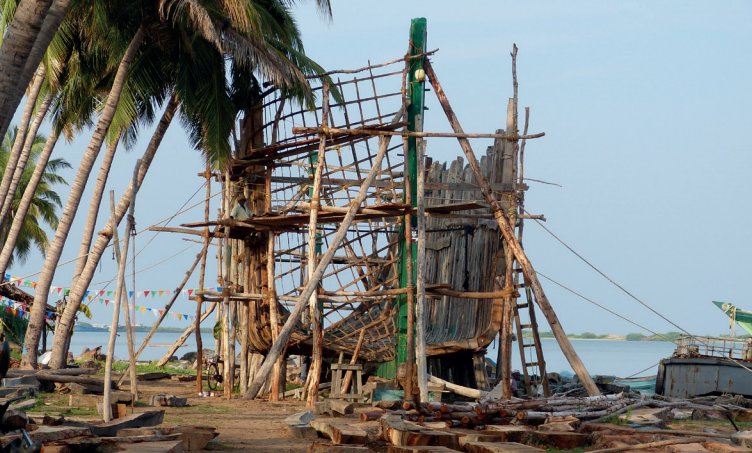
Giant wooden cargo ships that braved the oceans for thousands of years are still being made in the South Indian state of Tamil Nadu. Even as metal motorised ships became the norm, some shoreline communities in South India continue to craft this wooden cargo ship. In a blend of reason, creativity and hard work the communities engineered their past to forge a future. This book traces the transition of this tradition over time.
The authors have created a photo documentation using hundreds of images that capture the shipyard’s atmosphere to offer a narrative and the manufacture of these ships at each step of their construction. It analyzes the conditions of their economic viability and how it has evolved over time. Through visual anthropology this book offers a narrative of wooden cargo ship building and craftsmanship in south Asia.
The open access book can be downloaded from https://www.ifpindia.org/bookstore/wild-craft/.
There is also a video about the project: Of Wind and Wood. Sustainable cargo ships in France and in India.
Today’s episode is another big early twentieth-century counterfactual: David talks to the historian of Russia Edward Acton about how the Russian Revolution might have unfolded if the Left SRs and not the Bolsheviks had come out on top. Could Lenin have been sidelined? Might the Terror have been avoided? And what would it have meant to the wider world if revolutionary socialism had been liberated from Marxist communism?
To hear the second part of David’s conversation with Chris Clark about the fateful origins of the First World War sign up now to PPF+ and get ad-free listening and all our other bonuses too: £5 per month or £50 a year for 24 bonus episodes https://www.ppfideas.com/join-ppf-plus
Next time: What if… The 1919 Paris Peace Conference Had Actually Kept the Peace?
Hosted on Acast. See acast.com/privacy for more information.
Learn more about your ad choices. Visit podcastchoices.com/adchoices
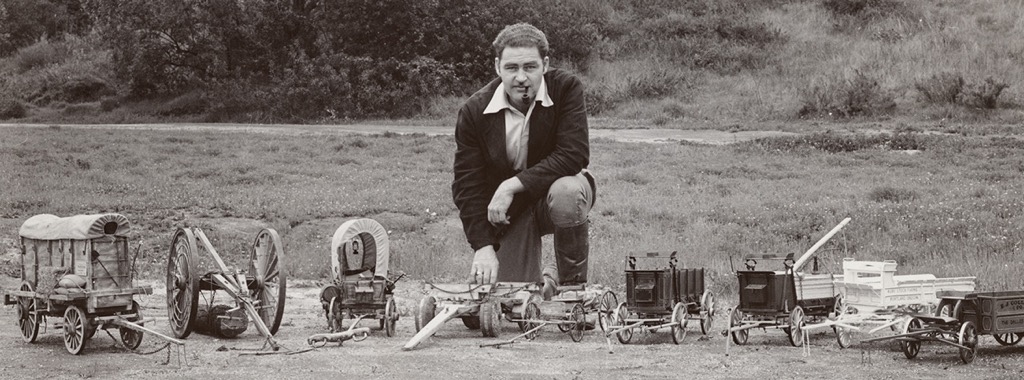
Ivan L. Collins created historically accurate models of horse-drawn vehicles using painstaking research to ensure that every detail was authentic. Built at one-eighth scale, these models represent transportation technology before the automobile. Collins saw this work as more than a hobby; his models were a way to preserve history for future generations.
See and read more:
https://www.ohs.org/museum/exhibits/models-in-motion-ivan-collins-miniature-vehicles.cfm
http://www.scalemodelhorsedrawnvehicle.co.uk/(Ivan%20Collins).htm
Thanks to David Barnes.
Image: Oregon Historical Society.

This week, Mary Beard joins us to explain why two recently discovered fragments of Euripides are big news; and an interview with director James Macdonald and actor Lucian Msamati on their new production of Waiting for Godot.
'Ino' and 'Polyidus', by Euripides
'Waiting for Godot', by Samuel Beckett, at the Theatre Royal Haymarket, London, until December 14 2024
Produced by Charlotte Pardy
Hosted on Acast. See acast.com/privacy for more information.
We return to our series on historical counterfactuals with the big one: how might WWI have been avoided? David talks to Chris Clark, author of The Sleepwalkers, the definitive history of the July crisis of 1914, to explore how it might have turned out differently. What would have happened if Franz Ferdinand had survived the assassination attempt in Sarajevo? Why did his death spark the greatest European conflict of them all?
To hear the second part of this conversation – where David and Chris discuss how the great powers responded to the assassination – sign up now to PPF+ and get ad-free listening and all our other bonus episodes https://www.ppfideas.com/join-ppf-plus
Part 2 with Chris Clark will be out on PPF+ tomorrow.
Next time: What if… The Russian Revolution Hadn’t Been Bolshevik?
Hosted on Acast. See acast.com/privacy for more information.
Learn more about your ad choices. Visit podcastchoices.com/adchoices
Este episódio é a segunda parte da minissérie Dois Rios.
Uma história que envolve um presídio em uma ilha, uma vila misteriosa, um punhado de pessoas sendo injustamente despejadas, um professor idealista, uma defensora pública engajada, um espertalhão semeador de discórdia, e uma possível conspiração que se aproxima de algumas das pessoas mais poderosas da política brasileira.
Episódios relacionados
120: Dois Rios: O caldeirão do inferno
Ficha Técnica
Apoio de edição: Matheus Marcolino.
Mixagem de som: Vitor Coroa.
Trilha sonora tema: Paulo Gama.
Design das capas dos aplicativos e do site: Cláudia Furnari.
Direção, roteiro e edição: Tomás Chiaverini