 Login
LoginA new “quartet of chaos” threatens America
The rulers of China, Iran, North Korea and Russia are growing worryingly close

For the first episode in our new series on the history of thinking about thinking machines, David talks to philosopher Shannon Vallor about Fritz Lang’s Metropolis (1927). The last great silent film is the most futuristic: a vision of robots and artificial life, it is also about where the human heart fits into an increasingly mechanised world. Is it prophetic? Is it monstrous? And who are the winners and losers when war is declared on the machines?
To hear a bonus episode on Mary Shelley’s Frankenstein to accompany this series sign up now to PPF+ and get ad-free listening and all our other bonuses too: £5 per month or £50 a year for 24 bonus episodes. https://www.ppfideas.com/join-ppf-plus
Next time: Isaac Asimov’s ‘Franchise’
Hosted on Acast. See acast.com/privacy for more information.
Learn more about your ad choices. Visit podcastchoices.com/adchoices
“Researchers have argued that wealthy nations rely on a large net appropriation of labour and resources from the rest of the world through unequal exchange in international trade and global commodity chains. Here we assess this empirically by measuring flows of embodied labour in the world economy from 1995–2021, accounting for skill levels, sectors and wages.
We find that, in 2021, the economies of the global North net-appropriated 826 billion hours of embodied labour from the global South, across all skill levels and sectors. The wage value of this net-appropriated labour was equivalent to €16.9 trillion in Northern prices, accounting for skill level. This appropriation roughly doubles the labour that is available for Northern consumption but drains the South of productive capacity that could be used instead for local human needs and development.
Unequal exchange is understood to be driven in part by systematic wage inequalities. We find Southern wages are 87–95% lower than Northern wages for work of equal skill. While Southern workers contribute 90% of the labour that powers the world economy, they receive only 21% of global income.”
Read more (open access): Hickel, J., Hanbury Lemos, M. & Barbour, F. Unequal exchange of labour in the world economy. Nat Commun 15, 6298 (2024). https://doi.org/10.1038/s41467-024-49687-y
Earlier this year Rachel Donald interviewed me for her podcast “Planet: critical”. Here’s the video. Also check out the other episodes, there’s lot of interesting stuff there. https://www.planetcritical.com.
One of Low-tech Magazine’s readers, Arie James Dallas, has started making audio versions of articles. Three articles are available at the moment. Find their playlist here.
This week, Toby Lichtig previews the season’s fictional highlights; and Ann Manov on Sally Rooney’s latest gambit.
‘Creation Lake’, by Rachel Kushner
‘Intermezzo’, by Sally Rooney
Produced by Charlotte Pardy
Hosted on Acast. See acast.com/privacy for more information.

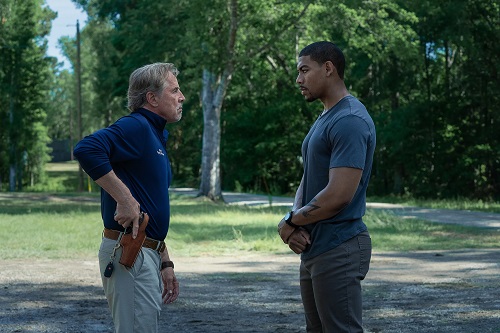
Rebel Ridge has its fair share of cheap thrills and provocative imagery, it is indeed predicted in the meeting at both, an exploitation movie for progressives who want to get some ACAB catharsis with Netflix sheen and not too disturbing politics. There’s a lot to like about it, but it’s a movie that brings out my inner Pauline Kael, which is not something I particularly enjoy, as I much rather trust movies than suspect them, but Saulnier’s film project, the fact that it sticks very closely to an abrasive genre cinema I like while mostly making sure it domesticates its rougher edges, that it keeps bringing political imagery to the fore while keeping it contained, make me very unsure of what I’m seeing. Rebel Ridge feels like a phony movie, even if its spare parts can often be good.
And they are, what is more annoying about Rebel Ridge is that unlike Saulnier’s early work it feels like half of a good movie, I was even willing to go along with some of its more questionable choices until around Anna Sophia Robb gets conveniently kidnapped to set the latter stages in motion. That so much of the back half of the movie hangs around Robb whose performance is alright but who functions as a mix of exposition delivery machine and damsel that serves to sentimentalize and sidestep the political grenades Saulnier toys with setting up, is indicative of the movie limitations. The way it keeps setting up righteous political scenarios and they personalizing them away from politics is one of Rebel Ridge more insidious qualities.
It is very skillfully made, the civil forfeiture conspiracy is careful setup and detailed in a way that is satisfying (Saulnier’s script has that meaty best seller that wants to be sure its reader learned a few things about the territory it is covering quality to it). Andre Pierre as the veteran hero and Don Johnson as the corrupt sheriff are wonderful. Saulnier gets the value of their presences, whatever else he gets credit for understanding that a movie like this need people who just stand out and make you believe in the bigger than life logic of their confrontation. Pierre commands the screen so much he patches up a lot of the holes and Johnson is so loathsome as the face of power disregard for people suffering, he becomes a problem later on when Saulnier decides he can’t actually cash the chips he earned. Pierre’s character is a highly decorated martial arts instructor and the movie is packed with great hand-to-hand combat, fast, precise and brutal.
I should make clear that my problem is not that the ending is safe, of course it is, that’s the compromise that was made for a movie such as this to get support, yeah, there is no doubt that authorities will listen, that evidence of Johnson’s misdeeds will guarantee some punishment, that is true of this, or of Lee’s BlacKKKlansman or Bigelow’s Strange Days. Official ideology won’t allow one to make a movie about tearing down the police in the US any more than it does in China, but can’t it like let it burn a little? Why can’t this conjure some of what Clint Eastwood’s does in The Gauntlet’s climax as his character drives over an entire corrupt police force? The images too clean, the cathartic violence sanitized. Rebel Ridge is one of the better Netflix movies of late, but it feels very much like one.
I’m often reminded of something Molly Haskell wrote about how she loved many classic American movies about women that dealt with its characters freedom and then in the final scenes sent them off to the family prison, making sure they can’t get away with it, those final scenes can be disappointing but they were made with the censors in mind, and who cares about them when the real meaning is in the liberated scenes that come before? Something like Rebel Ridge could operate like this, but its compromises are woven into the movie itself, which is why it limps so much.
The commissioner that will clean up the force in Strange Days feels divorced from everything else in the movie, he is a last second piece of fiction that allows the movie to stage the precipice of social revulsion and back off, the ending here is the opposite, just a natural extension of its careful setup political images. The weirdest thing about Rebel Ridge is how often it indulge in unnecessary both sideisms, does any movie like this one need to repeat multiple times that those guys are family men too? It made me think about how the current American political climate both helps promote a movie like Rebel Ridge as relevant as it makes it hard for it to actually be incisive. Corrupt cops used to be pretty standard villains for a movie like this (think something like the original Road House), but they are now so loaded that someone like Saulnier can canny exploit them while remaining very straitjacket about doing anything interesting with their image.
The movie plays around with its cathartic violence, its meaning is tied up in scenes of Andre Pierre beating up bad cops, that its violence is limited to broken bones and black eyes, that its retribution must always clarify nothing too serious is happening slowly deflates any force it might have. One rarely gets to watch a violent movie so neurotic about its own violence. It is telling that Saulnier sets Pierre up as Rambo with no kills (the promotional materials try hard to draw the comparison) but doesn’t seem interested in even dwelling on what that might mean; if the non-lethal approach to violence is made into a character beat it might break the illusion of retribution. Pulp can’t really work as catharsis if pulp isn’t allowed to overflow with liberated desire. A movie whose libido is continuously cut short.
It makes sense that Rebel Ridge goes from suggesting the whole town is complicit in the damage done by its police force to scapegoat a very corrupt sheriff and this one racist deputy. The movie is predicted in a narrow down of possibilities, phony images of revolt.
Rebel Ridge tem sua cota justa de momentos excitantes e imagens provocativas, é de fato previsto no encontro de ambos, um filme de exploitation para progressistas que querem ter alguma catarse anti-policia com o lustre da Netflix e uma política não muito perturbadora. Há muito o que gostar nele, mas é um filme que traz à tona minha Pauline Kael interior, o que não é algo de que eu goste particularmente, pois prefiro confiar nos filmes do que suspeitar deles, mas o projeto cinematográfico de Saulnier, o fato de que ele se mantém muito próximo de um estilo de cinema de gênero abrasivo do qual sou atraído por, ao mesmo tempo em que se assegura de domesticar suas bordas mais ásperas, que continua trazendo imagens políticas à tona, ao mesmo tempo em que as mantém contidas, me deixa com um pé atrás sobre tudo o que estou vendo. Rebel Ridge parece um filme falso, mesmo que suas partes muitas vezes sejam boas.
E elas são, o que é mais irritante em Rebel Ridge é que, ao contrário dos primeiros trabalhos de Saulnier, ele parece a metade de um bom filme. Eu estava até disposto a aceitar algumas de suas escolhas mais questionáveis até que, por volta de Anna Sophia Robb, é convenientemente sequestrada para dar início ao climax do filme. O fato de a maior parte da segunda metade do filme girar em torno de Robb, cuja atuação é correta, mas que funciona como um misto de máquina expositora e donzela indefesa que serve para o filme sentimentalizar e desviar das granadas políticas que Saulnier brinca com, é um indicativo das limitações do filme. A maneira como ele continua criando cenários políticos pertinentes e os personaliza, afastando-os da própria política, é uma das qualidades mais insidiosas de Rebel Ridge.
Ele é muito habilidoso. A conspiração sobre confisco civil é cuidadosamente montada e detalhada de uma forma muito satisfatória (o roteiro de Saulnier tem a cara de um desses best-seller gordos que quer ter certeza de que o leitor aprendeu algumas coisas sobre o território que está cobrindo). Andre Pierre, como o herói veterano militar, e Don Johnson, como o xerife corrupto, são excelentes. Saulnier valoriza a presença deles e merece crédito por entender que um filme como esse precisa de pessoas que simplesmente se sobressaem e fazem com que acreditemos na lógica grandiloquente de seu confronto. Pierre tem tanto carisma que preenche muitas das lacunas que o filme deixa para trás, e Johnson é tão repugnante como a face do poder que despreza o sofrimento das pessoas ao seu redor que se torna um problema mais tarde, quando Saulnier decide que precisar por limites ao cenário que tão bem preparou. O personagem de Pierre é um instrutor de artes marciais altamente condecorado e o filme é repleto de ótimas cenas de combates corpo a corpo, rápidos, precisos e brutais.
Preciso deixar claro que meu problema não é com o desfecho bastante seguro e sem sal, é claro que ele é, esse é a concessão que foi feita para que um filme como esse obtivesse respaldo para existir no tamanho que tem. Sim, não há dúvida de que as autoridades escutarão, que as evidências dos delitos de Johnson garantirão alguma punição, o que é verdade para esse filme, ou para Infiltrado no Klan, de Lee, ou Estranhos Prazeres, de Bigelow. A ideologia oficial não permite que se faça um filme sobre a extinção da polícia nos EUA, assim como não permite na China por exemplo, mas será que não se pode deixar ela ser depredada um pouco? Por que esse filme não pode evocar um pouco do que Clint Eastwood faz no clímax de Rota Suicida, quando seu personagem atropela toda uma força policial corrupta? As imagens são limpas demais, a violência catártica é sanitizada. Rebel Ridge é um dos melhores filmes da Netflix recentes, mas nunca deixa de se assemelhar a um deles.
Sempre me lembro de algo que Molly Haskell escreveu sobre como ela adorava muitos filmes americanos clássicos sobre mulheres que lidavam com a liberdade de suas personagens e, nas cenas finais, as trancafiavam de volta na instituição familiar, assegurando que elas não pudessem se safar com seu comportamento. Essas cenas finais podem ser decepcionantes, mas foram feitas com os censores em mente, e quem se importa com elas quando o verdadeiro significado está nas cenas emancipadas que vêm antes? Algo como Rebel Ridge poderia funcionar dessa forma, mas suas concessões estão embutidas no próprio filme, e é por isso que ele claudica tanto.
O comissário que limpará a tropa em Estranhos Prazeres é divorciado de todo o resto do filme, ele é uma peça de ficção que surge no último suspiro e permite que o filme encene o precipício de revulsão social e recue, enquanto o final aqui é o oposto, apenas uma extensão natural de suas imagens políticas cuidadosamente controladas. O mais estranho em Rebel Ridge é a frequência com que ele se entrega a desnecessários dois ladismos. Será que um filme como esse precisa repetir várias vezes que esses caras também são homens de família? Isso me fez pensar em como o atual clima político americano tanto ajuda a promover um filme como Rebel Ridge como relevante quanto dificulta que ele seja realmente incisivo. Policiais corruptos costumavam ser vilões bastante comuns em um filme como esse (pense em algo como o Matador de Aluguel original), mas agora eles estão tão sobrecarregados de significado que alguém como Saulnier pode explorá-los enquanto permanece numa camisa de força para fazer algo minimamente interessante com a sua imagem.
O filme joga com esta sua violência catártica, todo o seu significado está atrelado a cenas de Andre Pierre espancando maus policiais, que sua violência se limita a ossos quebrados e olhos roxos, que sua retribuição deve sempre esclarecer que nada de muito grave está acontecendo, é o que lentamente esvazia qualquer força que possa ter. Raramente se assiste a um filme violento tão neurótico quanto à sua própria violência. É revelador o fato de Saulnier apresentar Pierre como um Rambo que não mata (os materiais promocionais se esforçam para fazer a comparação), mas não parece interessado nem mesmo em pensar no que isso pode significar; se a abordagem não letal da violência for transformada em uma característica do personagem, isso poderá quebrar a ilusão de retribuição. O pulp não pode realmente funcionar como catarse se não for permitido ao pulp extravasar o desejo liberado. Um filme cujo libido é constantemente interrompido.
Faz sentido que Rebel Ridge passe da sugestão de que toda a cidade é cúmplice dos danos causados por sua força policial para o bode expiatório de um xerife muito corrupto e de um policial racista. O filme é previsto em uma redução de possibilidades, falsas imagens de revolta.
For our last episode in this series of historical counterfactuals, David talks to the historian Ben Jackson about what might have happened if the 2014 Scottish Independence referendum had gone the other way. How close was the vote and what could have swung it differently? Were the dark warnings about the consequences of independence likely to have been borne out? And what would an independent Scotland mean for the world today?
To hear the second part of David’s conversation with Chris Clark about the fateful origins of the First World War sign up now to PPF+ and get ad-free listening and all our other bonuses too: £5 per month or £50 a year for 24 bonus episodes https://www.ppfideas.com/join-ppf-plus
Coming next: a new series on the history of thinking about thinking machines, from films to novels to short stories, with Shannon Vallor, author of The AI Mirror. First up: Metropolis.
Hosted on Acast. See acast.com/privacy for more information.
Learn more about your ad choices. Visit podcastchoices.com/adchoices

Este episódio é a terceira parte da minissérie Dois Rios.
Uma história que envolve um presídio em uma ilha, uma vila misteriosa, um punhado de pessoas sendo injustamente despejadas, um professor idealista, uma defensora pública engajada, um espertalhão semeador de discórdia, e uma possível conspiração que se aproxima de algumas das pessoas mais poderosas da política brasileira.
Episódios relacionados
120: Dois Rios: O caldeirão do inferno
Entrevistados do episódio
Mestra em História, Doutora em Meio Ambiente, professora associada e pró-reitora de extensão e cultura da Universidade do Estado do Rio de Janeiro (UERJ).
Doutor em História, professor do departamento de Ciências Humanas da Universidade do Estado do Rio de Janeiro (UERJ), e diretor do Ecomuseu Ilha Grande.
Ficha Técnica
Apoio de produção, edição e reportagem: Matheus Marcolino.
Mixagem de som: Vitor Coroa.
Trilha sonora tema: Paulo Gama.
Design das capas dos aplicativos e do site: Cláudia Furnari.
Direção, roteiro e edição: Tomás Chiaverini

