Jacquelyn Martin took this photo for AP. A resident gazes down at the Black Lives Matter mural as workers demolish it on March 10, 2025, in Washington, D.C. The White House, alongside the Republican-controlled Congress, threatened to withhold millions in federal funding unless D.C. destroyed the mural and renamed Black Lives Matter Plaza as Liberty Plaza. Created in June 2020 following George Floyd's murder, the plaza stood as an act of defiance against then-President Trump.
Our video examines how this powerful bird's-eye view captures more than a simple demolition—it documents the dismantling of a promise. We analyze how the photographer creates a sense of solidarity by positioning viewers alongside the observer, offering a more generous perspective. The discussion frames the image as a rare glimpse into Trump's rapid-fire assault on institutions, actions occurring so swiftly that they escape full public attention. Our analysis also highlights the symbolism behind the word "matter" and the striking irony of the extensive cost and labor to remove what matters.
Sign up at our new newsletter platform, ReadingthePictures.media, for our latest posts and videos.
“Just like the arts-and-crafts movement was a reaction against industrialization, we’re now experiencing a reaction against the smart home. People are looking for more manual, less complicated places to live.”
Today’s episode is the second of our two recent live recordings of PPF, this one in front of an audience at the Bath Curious Minds Festival. David talks to historian Robert Saunders about the life of Winston Churchill and all its twists and turns of fortune: from disgrace in WWI, economic disaster in the 1920s, wilderness in the 1930s, through to redemption in 1945 and rejection by the voters in the same year. How to make sense of it all? Is there a thread that connects the ups and downs? Has there ever – anywhere – been another political life like it?
Out now on PPF+: David discusses the influence of Marinetti’s Futurist Manifesto (1909) – from cars to cod liver oil, from fascism to techno-optimism, from the madness of pre-WWI Europe to the craziness of Silicon Valley today. To get this and all our bonus episodes plus ad-free listening sign up to PPF+ https://www.ppfideas.com/join-ppf-plus
Next time: The History of Revolutionary Ideas: Lenin and Trotsky
To try everything Brilliant has to offer—free—for a full 30 days, visit https://brilliant.org/ChronovaEngineering/ . You’ll also get 20% off an annual premium subscription.
In this video, Mike designs and builds a dual-direction servo-driven actuator for a project in collaboration with the University of Southampton.
Additional footage of the biomechanics experiments can be viewed for free on our Patreon page: https://www.patreon.com/c/ChronovaEngineering
Patreon subscribers can also access drawings for this project and other bonus content.
FTC disclaimer: This video was sponsored by Brilliant.
A mitad del siglo XIX, en un rincón apartado del litoral uruguayo, nacería lo que para muchos fue la primera empresa alimentaria multinacional del mundo.
Durante la Primera y la Segunda Guerra Mundial un producto en particular colocaría el nombre de Fray Bentos en el imaginario de millones de personas: el Corned Beef.
***
Este es un episodio especial de Gastropolítica en colaboración con el Programa Rutas Culturales y Creativas del Ministerio de Educación y Cultura.
También está disponible en la app Rutas Culturales junto a otros recorridos del Patrimonio uruguayo
***
Narración y edición: Maxi Guerra Música original: Maxi Martínez Música adicional: Se utilizó música libre de derechos de Dan Lebowitz, NEFFEX, Chris Haugen y un extracto de "Milonga del solitario", de Alfredo Zitarrosa. Bibliografía citada:"Lemco. Un gigante de la industria cárnica en Fray Bentos, Uruguay", Ana Lewowicz "Economía comestible", Ha-Joon Chang "Fray Bentos: cómo una pequeña ciudad de Uruguay revolucionó nuestra forma de comer", artículo de Shafik Meghji para BBC Mundo. La instalación sonora en la Playa de Faena es obra de Ricardo Arbiza y Tae Hong Park La transmisión deportiva pertenece a Impacto FM 98.9 de Fray Bentos Agradecimientos: Museo de la Revolución Industrial Mauro Delgrosso Camila Liuzzi Marfrig Lucía Aguilar Mauricio Fernández Emiliano Zecca Mauricio Fonrodona Daniel Gasaniga
Na última segunda, dia 14, o deputado Sóstenes Cavalcante (PL-RJ) protocolou um requerimento de urgência para levar ao plenário o projeto que concede anistia aos envolvidos nos ataques golpistas de 8 de janeiro de 2023.
Diante deste cenário de pressão para anistiar crimes contra o Estado e as possíveis consequências para a democracia, o Pauta Pública desta semana entrevista o filósofo Vladimir Safatle, professor livre-docente da Universidade de São Paulo que, em 2018, no período em que Jair Bolsonaro viria a ser eleito presidente, havia alertado que “quando você não acerta as contas com a história, a história te assombra”, em referência a outra Anistia, a de 1979, que concedeu perdão a todos os que cometeram crimes políticos ou conexos na Ditadura Militar (1964-1985).Safatle defende que conceder perdão a golpistas agora seria repetir o erro histórico de garantir impunidade para ações antidemocráticas.
Ouça o episódio completo e conte o que achou nos comentários. não deixe também de seguir, curtir e compartilhar o Pauta Pública.
Saiba que você pode ser aliado da Agência Pública e colaborar com esse trabalho. Saiba mais em apoie.apublica.orgou faça um pix de qualquer valor para contato@apublica.org. Contamos com seu apoio!
“Suppose Schopenhauer is right that life boils down to a flight from either boredom or pain. Insofar as the vast material abundance of wealthy, industrialised society has had an analgesic effect (there is simply less physical pain than in the past, before fluoride and anaesthesia and sedentary lives), it would seem to have solved one problem only to amplify the other. In place of pain, we have ennui, the quintessential modern condition. It follows directly from overabundance: an endless stream of video “content” or chocolate cake or edibles or any other indulgence cannot deliver lasting satisfaction. Everything gets old eventually, leaving one to grope around for the next fix.”
This week, Peter Holland treads the boards in Elizabethan London in search of Shakespeare before the Globe; and Muriel Zagha on a captivating tale of cheese-making in the Jura.
'The dream factory: London’s first playhouse and the making of William Shakespeare', by Daniel Swift
Our third Parisian revolution is another explosive night in the theatre, this time in the world of dance. David talks to Dominic Dromgoole about Stravinsky’s The Rite of Spring, which provoked absolute outrage when it premiered in 1913. Is that what its impresario Diaghilev wanted? How did Nijinsky cope? Did the response foreshadow the trauma to come in 1914? And how did the set designer Roerich end up playing a part in American presidential history?
Out this weekend: a new bonus episode on PPF+ exploring the far-reaching impact of Marinetti’s Futurist Manifesto (1909), from pre-WWI Europe to Silicon Valley. Sign up now to get this and all our bonus episodes plus ad-free listening https://www.ppfideas.com/join-ppf-plus
Next time: PPF Live: Churchill – The Politician With Nine Lives
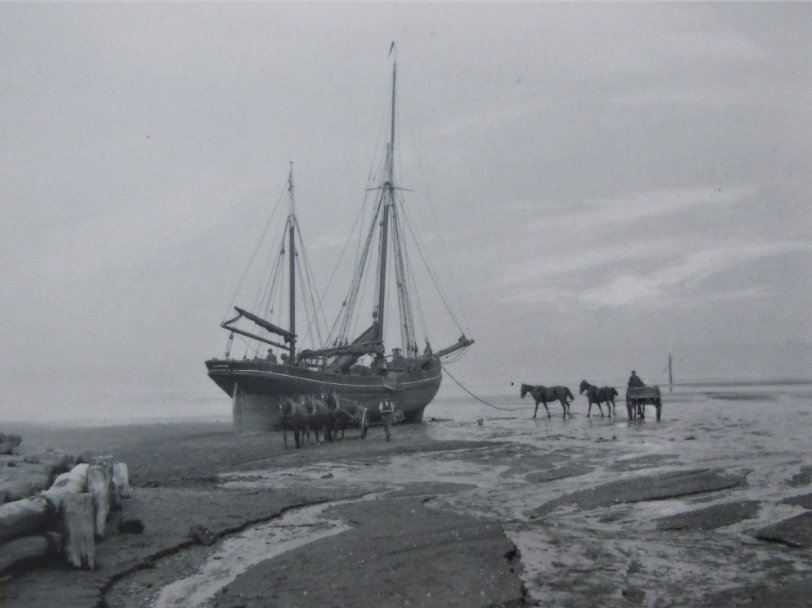
A Collier problem occurs whenever a new technology requires the technology it nominally replaces to function due to efficiency limits. Steam ships replaced sailing ships, but without windjammers the steamships could not function. This led to worldwide exports, paradoxically with large sailing vessels often transporting the coal needed by steamships, as they were more economical to operate on long oceanic sea routes.
Today’s Parisian revolution is a theatrical performance that produced a riot. David talks to theatre director Dominic Dromgoole about Alfred Jarry’s Ubu Roi (1896), which only ran for a couple of nights but left an indelible mark on the culture of the age and has resonated ever since. Why did a play effectively written by children provoke such a storm among the adults? What made it it blow the mind of W. B. Yeats who was in the audience? How can something so bad be so liberating?
Este episódio mergulha no universo das apostas esportivas e tenta entender o fenômeno das bets no Brasil.
As bets foram eleitas pela opinião pública como as grandes vilãs do Brasil. De acordo com o Banco Central, beneficiários do Bolsa Família depositaram R$3 bilhões em casas de apostas somente em agosto de 2024. Foram 5 milhões de pessoas apostando, 10% das mais de 50 milhões beneficiadas pelo programa.
Os números são alarmantes, e, ao menos desde 2018, as casas de aposta vêm ganhando muito dinheiro dentro do nosso país. Apesar disso, a discussão sobre o mercado de apostas no Congresso e na sociedade civil pouco avançou desde 2018, quando as apostas foram legalizadas em território nacional.
Se 80% dos apostadores ficam no prejuízo, por que tantos seguem apostando? Como o Brasil, de acordo com pesquisa da H2 Gambling Capital, se tornou o sétimo maior mercado de apostas no planeta?
Neste episódio de podcast, fazemos um mergulho no universo das apostas esportivas, e buscamos entender o porquê de os humanos se interessarem por apostas.
Doutorando em educação física pela Universidade de Brasília (UNB). Autor do artigo “Em busca de mais excitação: reflexões acerca das apostas esportivas”.
Tem dias em que a cidade parece estar suando por dentro. O asfalto ferve, o corpo responde, e a música que toca na rua não é trilha sonora - é termômetro. "Aquitaquente", a nova faixa do Barbarize, nasce dessa temperatura, desse colapso entre calor e urgência, entre festa e revolta.
Leia mais (04/14/2025 - 15h17)

 Login
Login