This photo by Leila Navidi for the Minneapolis Star Tribune captures St. Paul residents on February 11, 2026, using their phones to confront militarized immigration enforcement. On a Cathedral Hill sidewalk, neighbors stand shoulder to shoulder, recording heavily armed agents and, together, shaping a counternarrative to state power. At the center is Minnesota Public Radio News reporter Sam Stroozas, still in her bathrobe and slippers after realizing the ICE raid was unfolding just blocks from her home. The image provides a new level of visibility for community witness and observation networks.
In the video, we explore how the public’s organization and solidarity made this moment resonate—and the small but striking details that helped it go viral, from the bathrobe to the collective presence of the camera as a democratic eye.
Sign up at our new newsletter platform, ReadingthePictures.media, for our latest posts and videos.
Today’s episode is the third and final of David’s conversations with S. M. Amadae about nuclear weapons and nuclear war, this time looking to the future. What are the prospects for nuclear disarmament in the 21st century? How does the risk of nuclear war intersect with other existential risks, from climate change to AI? Is the world more dangerous than it has ever been? What are the grounds for hope we might still get out of this alive?
Out tomorrow on PPF+: a bonus episode to accompany this series of conversations in which David explores John Hersey’s Hiroshima (1946), the definitive account of what it’s actually like to be on the receiving end of a nuclear attack. To get this and all our bonus episodes plus ad-free listening sign up to PPF+ now https://www.ppfideas.com/join-ppf-plus
Tickets are on sale now for our new film season at the Regent Street Cinema in London – starting on 19th March with James Marriott talking to David about Whit Stillman’s Metropolitan. All the details are here https://www.ppfideas.com/events
You can find out everything you need to know about this podcast – who we are, what we do, plus merch, events and full lists of our episodes and PPF+ bonus episodes on our website https://www.ppfideas.com
In this episode of Tips From A Shipwright, Lou walks through how he modified our new Powermatic 20-inch Bandsaw for precision progressive beveling.
Progressive beveling is a critical step in traditional wooden boatbuilding, and Lou breaks down the setup so it can be applied to any bandsaw — not just a dedicated shipwright’s saw. He explains the angle adjustments, alignment considerations, and workflow needed to achieve consistent, repeatable bevels with accuracy and efficiency.
This demonstration sets the stage for the next major phase of the Orca build, where we’ll begin fabricating molds. Proper bevel preparation now ensures tight fits, clean glue lines, and fair lines down the road.
If you’re interested in boatbuilding, advanced bandsaw setup, or refining your shop processes, this is a detailed, practical walkthrough you won’t want to miss.
Subscribe and follow along as we move deeper into the Orca project.
Check out our new merchandise, including our limited run of ORCA Plaques, at our webstore:
https://tipsfromashipwright.com/store-2/
We want to thank all our supporters and followers for helping us get this far! A special thanks to Powermatic for the bandsaw! Keep following us on this journey and check out our website and social feeds for additional content.
A legislative battle is under way over gaps that allow companies to collect and sell students’ personal information.
Students in a classroom in Sacramento on May 11, 2022.
Miguel Gutierrez Jr., CalMatters
For every aspect of a student’s life, there’s a tech company trying to digitize it. Inside the classroom, online tools proctor exams, create flashcards and submit assignments. Outside, technology coordinates school sports, helps bus drivers find the right route and maintains students’ health records.
California has a number of laws aimed at protecting children’s data privacy, but those laws have exceptions that allow many tech companies to continue packaging and selling students’ personal information.
This year, Assemblymember Dawn Addis, a San Luis Obispo Democrat, is carrying a high-profile state bill that would add new protections for students. She says it’s important, especially as the Trump admin is trying to collect data about California residents’ immigration status, gender identity, and their use of certain public benefits.
Historically, California has been a leader in data privacy. In 2014, California passed a landmark student privacy law that prohibited technology companies from selling students’ data, targeting students in advertising, or disclosing their personal information. Then in 2018, the state passed another unprecedented bill that required all companies give California users certain privacy rights, such as a chance to opt out of data collection and delete some of their information.
But as technology evolved and proliferated, privacy laws repeatedly fell short in protecting California’s students — at the same time that the federal government has tried to collect increasing amounts of personal information, Addis said.
Her bill would restrict how AI companies use student data and create new data protections for college students. Some of Sacramento’s most powerful players are paying close attention to the measure, including the California Labor Federation, which supports the bill, and the California Chamber of Commerce, which opposes it. Combined, these two groups spent nearly $8 million on campaign donations to state legislators or other political activities in 2024, according to the CalMatters Digital Democracy database. TechNet, a trade association that represents many of the most powerful tech companies, also opposes the bill.
The proposal, Assembly Bill 1159, would close certain loopholes in the state’s 2014 education privacy law, but experts say it may not be enough to prevent companies from selling students’ data.
A privacy expert struggles to keep her information private
Jen King is a privacy and data policy fellow at Stanford’s institute for AI, where she studies the tricks that companies use to gather users’ data and prevent them from opting out, sometimes known as “dark patterns.” In her personal life, she’s vigilant about avoiding online data tracking and maintains a landline in her Bay Area home to avoid giving out her cell phone number.
King doesn’t want her children’s information available online or for any company to sell, though sometimes it happens before she can stop it.
In the fall, King got an email about a platform called TeamSnap, which her 12-year-old son’s cross country coaches were using to manage the team’s roster. The company wanted her information, including her name, date of birth, gender, email address, and phone number. Once she logged in to the platform, she could see some of her son’s information, such as his name, email, and date of birth, were already listed. Photos and personal information from all of her son’s teammates were also available for her to see.
“I was super irritated,” she said. “You don’t need my birth date — I’m a freaking parent.” She acknowledged some personal information could be useful for a coach but said that other questions seem designed to help the platform sell information to data brokers and ultimately, to advertisers.
Her 17-year-old son’s data is also on TeamSnap, she later learned, because his robotics team uses it. This month, when King tried to show The Markup and CalMatters her TeamSnap account, a pop-up appeared, asking her if the company could track her activity across other apps and websites.
Federal law requires companies to get parental consent before knowingly collecting or selling data from children 12 and under, but once a child turns 13, their data is generally treated much like an adult’s information, especially when that child is interacting with tech platforms outside of school. TeamSnap’s privacy policy says it doesn’t knowingly collect personal information about users under 13 “without express parental consent,” though it says in some cases a team or organization may provide information on behalf of the child.
The policy also says that TeamSnap has “not sold the personal information of any consumer for monetary consideration” in the last 12 months, but that its “use of cookies and other tracking technologies may be considered a sale of personal information under the CCPA (California privacy law).” Information sold to advertisers and marketers included users’ names, contact information, purchase history and geolocation, the policy says.
California privacy law specifically requires certain large for-profit companies to get consent to collect data from anyone under 16. Often, consent happens when a user first opens a website and a pop-up appears, asking if the website can sell your data or track your cookies.
If a teacher, coach, or other authority figure tells a student that they have to use a website or an app, then the student cannot realistically opt out, King said. They may be too young to understand how to opt out, she added. “Most 15-, 16-year-olds don’t have any idea what this is about.”
Even older college students may have little agency in the technology they use, especially if it’s required for class or residential life. At Stanford, for example, King said her undergraduate students are often required to create Facebook accounts for student groups.
The same is true for parents. King said she reluctantly gave TeamSnap her personal information, including her name, email, date of birth, and the landline number for her home, because it was the only way to get updates about her son’s team.
How companies get around California’s education privacy laws
In 2014, California became the first state in the country to regulate education technology companies directly, but being first comes with its drawbacks. “We didn’t have examples of what best practice was,” said Amelia Vance, the president of the Public Interest Privacy Center, a nonprofit organization. The law only applies to products that “primarily” serve K-12 schools and that are designed and marketed for students.
Many tech companies argue that their products aren’t primarily intended for students or at least that they were not designed or marketed that way. The language-learning app DuoLingo, for example, has a version for schools, but the app is also popular for adults. Apps or technologies serving extracurricular programs or sports teams can claim they weren’t designed and marketed for the classroom, or that their use isn’t mandatory, said Vance. “You have this sort of black hole where there haven’t been protections.”
Addis’ bill expands the number of education technology companies that fall under the state’s student privacy laws, but the language is murky when it comes to apps or online services used outside of class.
In the case of TeamSnap, Addis’ communications director Alexis Garcia-Arrazola said the company would “most likely” fall under the scope of the bill if its technology is marketed to schools, if schools direct students to use it, and if the sports team is sponsored by the school.
Public records show that Piedmont Unified School District in Alameda County, Tamalpais Union High School District in Marin County, and Santa Monica Malibu Unified School District all purchased versions of TeamSnap, but only the Santa Monica Malibu district responded to questions about any privacy restriction imposed on the company. Brandyi Phillips, the chief communications officer for the Santa Monica Malibu schools, said the district has an annual subscription with TeamSnap, which is only available to sports staff and parents. She said there’s an agreement with the company “to protect District information and to prevent unauthorized access” but did not clarify if that agreement prevents the district from selling students’ information.
Berkeley Unified School District, where King’s children attend school, did not respond to questions about any contracts, purchase orders or agreements with TeamSnap.
Locally, school districts and colleges have the power to negotiate the privacy terms of any contract they make with a technology company, but many websites and apps offer free versions that a teacher or coach might recommend without getting formal approval from their district.
Last year, the California State University system signed a nearly $17 million contract with Open AI, the company that operates ChatGPT, including an agreement that the company will not train its models on student data. Advocates for Addis’ bill say the same privacy restrictions should apply to any AI company with access to California student data, regardless of whether the company has an agreement with the student’s school district or college.
Are privacy laws getting stricter or looser?
Addis’ bill comes as privacy laws in California and across the country are in flux. In 2020, California voters approved a proposition to create a new state agency to enforce data privacy rules and regulate the businesses that collect data. Advocates for the proposition contributed over $6.7 million to the campaign, compared to just over $50,000 contributed by the opposition, according to state data. The state agency that the proposition formed, now known as CalPrivacy, released new rules this year, restricting the use of automated decision-making technology, such as the use of AI to make admissions or hiring decisions. Those rules were originally stricter but businesses, lawmakers and Gov. Gavin Newsom pressured the CalPrivacy board to water them down.
In Washington D.C., Congress is considering changing federal law to limit how companies interact with children under 17. Separately, Congress is considering a bill that would require social media companies to prevent and mitigate children’s sexual exploitation, bullying, and self-harm. California Attorney General Rob Bonta is concerned that one version of the social media bill contains language that could erode existing protections in California law.
Bonta’s office is responsible for enforcing many of the state’s existing privacy laws. In November, he said the state worked with Connecticut and New York to reach $5.1 million in settlements against Illuminate, an education technology company that uses data to track and evaluate students’ progress, such as their testing scores and developmental milestones. The company had a data breach, exposing “sensitive information” from over 434,000 California students, the state attorney general’s office said in a statement.
It was the first time California successfully went after a company for violating the state’s landmark 2014 education privacy law.
To increase enforcement, Addis’ bill contains a new provision — the right for students and parents to sue tech companies in certain cases for privacy violations. Business and technology groups have opposed the bill, arguing that the new regulations and the right to sue would stifle investment in AI-powered learning tools.
King said that giving consumers the right to sue is often the only way to increase enforcement. Otherwise, the onus is on individual consumers to find concerning practices and try to opt out.
Despite being an expert in data privacy, King said that she struggled at first to figure out how to delete her TeamSnap account, only later to discover that she needed to send an email to the company. She laughed at the irony, since it’s these kinds of dark patterns in user design that fuel part of her research.
In academia, the strategy of trapping customers is sometimes called the “roach motel,” she explained, a reference to a popular television ad from the late 1970s for a cockroach trap.
“You can check in,” she said, “but you can never check out.”
Artist: Yuri Arutyunyan
Title: The Man from Olympus
Year: 1974 (taken from the film "Մարդն Օլիմպոսից" / "The Man from Olympus" / "Человек из Олимпа" dir. Dmitry Kesayants)
Genre: library music, soundtrack, jazz, orchestral
Country: Armenia, USSR
Reading the classics doesn't have to be hard. In this week's video, I'll put on my English major hat and tackle a key reframe that'll help you read the classics with ease.
Want more exercises & mindsets to become a better reader? You can now get a free 7-day email course on deeper reading plus a weekly newsletter that takes you further. Sign up now at: https://www.amugofinsights.org/
Ready to read literature like an English major?
My members' workshop: The 5 Master Keys to Unlocking Difficult Literature, teaches you exactly what to look for in fiction, how to navigate complex texts, and how to build a lifelong love of reading. Access it here: https://www.amugofinsights.org/session-3-the-5-master-keys-to-unlocking-difficult-literature/
The milky way galactic core is rising into the early morning sky at present, so I decided to go in search of trees to complement the foreground part of my compositions. I wanted to shoot at longer focal lengths during this night so I packed the 50mm & 85mm lenses.
It's a lot harder to work out the compositions at these focal lengths but the extra details really make it worth the effort.
Direct Paypal Payment Link: https://paypal.me/nightscapeimages?locale.x=en_AU
Video Equipment:
Sony A7siii https://amzn.to/3z7LZ8q
Sony 20mm f1.8 G https://amzn.to/3Bc9sam
Sony 24mm f1.4 GM https://amzn.to/3xMTMYY
Tamron 28-75 f2.8 Sony https://amzn.to/3es44Gw
Tamron 28-200 Sony https://amzn.to/3zeqtz1
DJI Osmo Pocket 3 Combo Kit https://amzn.to/3QYSjuk
Z96 video lights https://amzn.to/2LYYey6
Yongnuo YN300 video lights https://amzn.to/2qTfU6V
Rode Wireless Go ii Radio Microphones https://amzn.to/3wROry9
Magmod Flash Modifiers https://amzn.to/2ElgBZD
As an Amazon Associate I earn from qualifying purchases. I earn a very small commission on the above links if you decide to purchase the item. This commission slowly adds up and greatly helps me to continue creating content for this channel. I very much appreciate your support!
Faz duas semanas, num voo entre Porto Seguro e São Paulo, um homem teve uma parada cardíaca fulminante e morreu antes de podermos pousar em Vitória. Eu estava na frente do avião e demorei a entender por que alguns passageiros corriam para o fundo, com os celulares na mão e as câmeras ligadas, depois de um dos tripulantes invocar, pelo alto-falante, a presença de um médico.
Leia mais (02/20/2026 - 10h00)
Nesta quinta-feira, 19, Juca Kfouri noticiou em primeira mão no Brasil a punição da jogadora de vôlei de praia Carol Solberg pela Federação Mundial de Vôlei. Também nesta quinta, Sócrates Brasileiro completaria 72 anos de idade.
Há 40 anos, em meados da década de 1980, o Magrão e a Isabel Salgado, da seleção feminina de vôlei e mãe da Carol, eram dois dos maiores ídolos em atividade do esporte no Brasil: ele no campo, ela na quadra, os dois engajados na campanha das Diretas, entre 1983 e 1984.
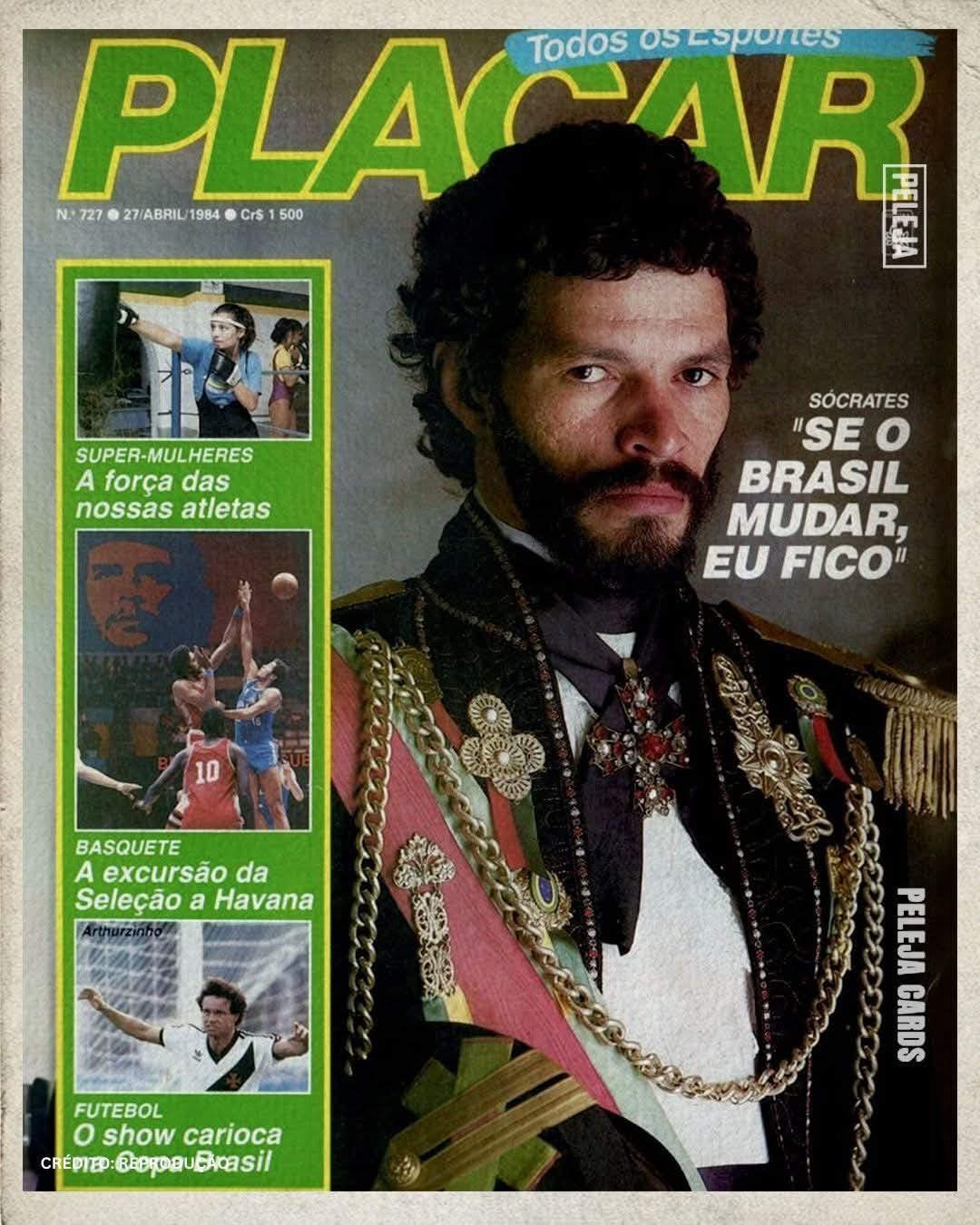
Em janeiro de 1984, a revista Placar pôs na capa o Magrão e a Isabel (além da Hortência, do basquete, e do William, do vôlei masculino) e a manchete: “nossos ídolos apostam em 1984”. Pela frente havia as Olimpíadas de Los Angeles e a votação da emenda Dante de Oliveira, com suas célebres palavras finais:
“A nós basta um mínimo de patriotismo, de honestidade e de sentimento humano, para entendermos que é hora de mudar.”
Na época, o diretor da Placar era Juca Kfouri. Meses depois, em abril de 1984, Sócrates voltou à capa da revista, agora sozinho, caracterizado como Dom Pedro I e dizendo: “se o Brasil mudar, eu fico”. A emenda Dante de Oliveira foi rejeitada pelo Congresso ainda em abril e em maio e o Magrão foi jogar na Itália, vestindo a camisa viola da Fiorentina.
Sócrates morreu em 2011. Isabel morreu em 2022, de síndrome respiratória aguda. Carol Solberg foi punida pela Federação Mundial de Vôlei pela coisa horrível de comemorar, no final do ano passado, após conquistar a medalha de bronze na Copa do Mundo da Austrália, a prisão do ex-presidente que debochou de quem morreu na pandemia de síndrome respiratória aguda e chefe da organização criminosa que tentou dar um golpe no Brasil no ano em que Isabel se foi.
Consta que certa vez Eduardo Galeano disse o seguinte, brincou assim sobre os encontros com seu grande amigo Sócrates Brasileiro:
“Era horrível. Eu só queria falar de futebol e ele só queria falar de política.”
As ações afirmativas no Brasil ampliaram o acesso de pessoas negras às universidades e cargos públicos. Também conhecida como Lei de Cotas, esse conjunto de políticas, implementado a partir de 2012, é resultado de décadas de luta técnica e política dos movimentos negros, aliados a governos comprometidos com a redução da desigualdade racial. Uma pauta ainda em disputa e que segue sob pressão. Recentemente, uma tentativa do governo de Santa Catarina de barrar o critério racial no acesso às universidades do estado reacendeu o debate sobre a garantia desses direitos.
Para falar sobre o tema, Andrea Dip recebe Hélio Santos no Pauta Pública desta semana. Educador, economista e um dos pioneiros das ações afirmativas no país, ele comenta sobre o caso de Santa Catarina e reflete sobre as conquistas das cotas, além dos desafios que dificultam a permanência de estudantes negros em Universidades e sua valorização no mercado de trabalho.
Ouça o episódio completo e deixe seu comentários sobre o assunto. Não esqueça de curtir e compartilhar o Pauta Pública.
Saiba que você pode ser aliado da Agência Pública e colaborar com esse trabalho. Saiba mais em apoie.apublica.orgou faça um pix de qualquer valor para contato@apublica.org. Contamos com seu apoio!
Artist: Ramiz Mirishli
Title: The Man in the House
Year: 1978 (taken from the film "Evin kişisi" / "The Man in the House" / "Мужчина в доме" dir. Tofig Taghizade)
Genre: library music, soundtrack, jazz
Country: Azerbaijan, USSR
Como a sala de aula pode combater o racismo? Este episódio reúne as escritoras Lavínia Rocha e Andressa Marques em uma conversa sobre a educação antirracista, um tema urgente nas escolas e na nossa sociedade. As convidadas, que também são professoras, apresentam formas de desfazer preconceitos e estereótipos sobre a negritude a partir do ensino da literatura e revelam as histórias reais por trás de seus livros mais recentes, o infantojuvenil O Que Você Pensa Quando Falo África? (Yellowfante), de Rocha, e o romance A Construção (Nós), de Marques. O encontro aconteceu durante A Feira do Livro 2025, com mediação da jornalista e historiadora Paula Carvalho.
Apoio: Lei Rouanet – Incentivo a Projetos Culturais
Introduction to Friction Graphics, a powerful motion graphics tool for Linux, Windows & mac OS. This covers, importing media, combining scenes, using expressions, navigating compositions, workflow, managing multiple scenes.
Expect a lot of tips and trick along the way.
► Support the channel: https://ko-fi.com/nuxttux
Chapters:
0:00 Opening
0:17 Examples
0:27 Download Friction
2:25 First look
4:30 UI
8:18 Keyboard Shortcuts
12:12 Properties Filters
13:00 Object to path
15:00 Create water drop
15:55 Global Pivot
17:20 Transform Gizmo
18:00 Snapping & Grid
18:22 Animate
23:24 Graph Editor
25:22 Save Project
25:38 Part Two
25:44 New Scene
26:20 Import Media
27:10 Layers
28:49 Create Text Object
29:55 UI Tips
30:42 Blend Modes
33:36 Visibility Range
35:01 Import Scenes
36:22 Manage Multiple Scenes
39:14 Loop Expression
41:29 Disable Preview Cache
42:03 Raster Effects Shadow
43:09 Auto Save
43:48 Scene Clipping
45:28 Resolution
46:33 Duplicate Layers
46:49 Visibility Range Offset
47:51 Loop Speed Change
48:58 Z-Index Blend Effects
51:11 Copy Effects Properties
52:31 Navigation Tips
52:51 Part Three
53:36 Quick Transform
54:04 Blend Modes
54:31 Isolate Blend Mode
55:05 Noise Fade
56:52 Organise Scenes
59:17 Part Four
59:50 Tips
1:00:09 Line Spacing
1:02:25 Masking
1:04:00 Layer Navigation
1:06:55 Key Frames
1:07:55 Easing with Graph
1:15:53 Drop Shadow
1:16:58 Parenting
1:18:58 Wipe Transition
1:25:22 Render Settings
1:29:24 Tips Visibility Range
1:31:22 Brightness and Contrast Effect
1:32:03 Outro
||
Some of the links below are affiliate links, meaning I may earn a small commission at no extra cost to you if you make a purchase.
Explore the internet with total privacy: https://go.getproton.me/SH2f7
||
Download Kdenlive & Friction:
https://kdenlive.org/
https://friction.graphics
=============================
#motiongraphics #Nuxttux #frictiongraphics
=============================
Subscribe for more content
=============================
Where to find me:
Website: https://www.nuxttux.com/
Llega el momento de abrirse, pero lo justo y necesario. Porque en este capítulo sin invitades, al estilo ya conocido como "TODO SOBRE NOSOTRES", Frank T, Asaari Bibang y Lamine Thior desvelan algunos de sus secretos dignos de esta clase de capítulos. Eso sí, sin abandonar las puyas, locura y risas habituales, que aparecen entre reflexiones que van desde la autoconstrucción de masculinidades y el machismo, hasta las separaciones, lo que pasa cuando los problemas del primer mundo le llegan a Asaari, o la verdad.
Eso sí, no te pierdas el inicio del episodio y la versión con matices venecianos de Curro, la mascota de la Expo92 de Sevilla, que presenta Lamine. Además, conocerás el lugar exacto en el que nació este pódcast, las sensaciones que ha tenido Frank al descubrir (a su edad) la expresión "PEC", y os quedaréis boquiabiertos cuando Lamine explica su teoría que convierte a Henry Cavill en la fantasía sexu@l de los hombres heterosexu@les.
00:00 Bienvenides al Tíbet
03:35 Los problemas del primer mundo alcanzan a Asaari
08:08 Lamine no lava los platos, los compra
12:35 ¿Comer carne es poco ecológico?
17:05 Cuando Frank T. descubrió la expresión PEC
28:45 Este pódcast nació en una cafetería
30:00 Debate sobre la construcción de masculinidades
33:17 Henry Cavill es la fantasía sexu@l de los hombres hetero, según Lamine
47:30 La deconstrucción de Frank T.
A CAPES vem firmando diversos "acordos transformativos" com grandes editoras, que permitem que pesquisadores(as) das instituições brasileiras possam publicam em acesso aberto sem pagar taxas! (a CAPES vai pagar essas taxas).
No vídeo eu explico como isso funciona, e quais passos você precisa fazer para garantir o pagamento.
Página da CAPES com a lista dos acordos vigentes: https://www-periodicos-capes-gov-br.ez67.periodicos.capes.gov.br/index.php/informativos/136-acordos-transformativos.html
Página "meusdados" na CAPES - IMPORTANTE! você precisa cadastrar seu ORCiD aqui: https://meusdados.capes.gov.br/
Página com o link para TREINAMENTOS - https://www.gov.br/capes/pt-br/centrais-de-conteudo/portal-de-periodicos/2026
O SPAMLab é o Laboratório de Análise e Modelagem Espacial do Instituto de Astronomia, Geofísica e Ciências Atmosféricas (IAG) da USP.
Inscreva-se no canal: https://www.youtube.com/spamLabUSP/?sub_confirmation=1
Siga-nos nas redes sociais e acompanhe nosso trabalho:
Instagram: https://www.instagram.com/spamlab.usp
Site: https://spamlab.github.io/
Sketchfab: https://sketchfab.com/spamlab
Lou from Tips From The Shipwright is stepping out of the boatyard and into the garage to offer something special for sale — his customized 1958 Harley-Davidson Panhead.
In this video, Lou walks you through the entire bike, detailing the motor, frame, custom components, upgrades, and the craftsmanship that makes this classic Panhead stand out. He covers the build history, condition, performance, and the small details that only a true enthusiast would appreciate. If you know vintage Harleys, you know how rare and iconic a ’58 Panhead is — and this one has been thoughtfully customized while keeping the spirit of the original machine alive.
This motorcycle is for sale. Serious inquiries only. If you’re interested, call the phone number below to discuss details.
1 (401) 684-2032
Thanks for watching, and stay tuned for more hands-on boatbuilding!
We want to thank all our supporters and followers for helping us get this far! Keep following us on this journey and check out our website and social feeds for additional content.
This week, Peter Filkins, winner of the inaugural Freudenheim Translation Prize, joins us with chair of the judges Boyd Tonkin to talk about the mercurial genius of Elias Canetti; and a poem in praise of Tuesdays by Jamie McKendrick.
'The Book Against Death', by Elias Canetti, translated by Peter Filkins

 Login
Login