Some saw Huang’s resignation as an opportunity for culture change at the chip giant. “If Jensen comes back, I’m not doing any HR trainings ever again,” one employee said.
Prediction market traders profited from the Nvidia CEO’s comeback by following the White House’s lead. “It’s 2026 and Trump is president, scandal schmandal,” says one winner.
Last week, the University of Michigan’s board of regents approved the construction of a $1.25 billion data center that will power American nuclear weapons research. The regents voted 7 - 1 in a public meeting on November 19 to move forward with the project despite widespread opposition from faculty, staff, and the residents of Ypsilanti Township, Michigan where the data center will operate. A few hours after the vote, the leaders and citizens of the Township gathered to discuss how to stop it.
U of M and Los Alamos National Laboratories (LANL) first announced plans to build what the University then called an “AI research facility” in 2024. U of M now calls the project a “research computing center” and, if all goes to its plan, construction will begin on a 125,000 square foot facility in late 2027. The data center could expand to “no more than 300,000 square feet,” according to a U of M blog post.
During the regent’s meeting, faculty, staff, and members of the community shared their thoughts on the data center’s construction.
“It is widely promoted as the next step in furthering novel research taking place at this University. What is conveniently left out on flyers and pamphlets is that this is only part of the proposition, 10% in fact, the other 90% is being used by Los Alamos — a nuclear weapons developer,” a sophomore studying biochemistry told the board before the vote. “We already have three existing high tech data centers used for research. Why must we push forward with another one that is promoting nuclear warfare?”
An electrician from Ypsilanti Township, a representative of the International Brotherhood of Electrical Workers (IBEW) union, supported the construction project. “This will create 300 plus jobs for our members, all local, [and] give back to the community,” he said. “IBEW is in favor of the data center, excuse me, ‘high compute research center.’”
People who attended the regent’s meeting to discuss other topics referenced the vote during their presentations. “You voted today to fund a $785 million data center project in Ypsilanti, much to the opposition of the residents of the area, acting against what many residents in the area are calling environmental racism. I think I can speak for many students when I say I am frankly appalled by this decision,” a student who was there to discuss carbon emissions said.
A library worker present to talk about how the University treats its workers invoked the data center. “I’m not sure I can confidently appeal to your sense of compassion around this. The officials and residents of Ypsi Township are saying ‘stop,’ saying ‘no,’ saying ‘this hurts.’ And you and others responsible for this nuclear weapons data center project have shown you don’t care about the basic issue of consent as you plow ahead,” he said.
Ypsilanti Township is at the tip of the spear in the new nuclear arms race.
Despite the opposition in the room, the regents approved the project. “It’s been very controversial [...] For me, this is all about an investment in the community and it’s an investment, in many different ways,” regent Denise Ilitch said just before the vote. “The community will be enhanced — they may not feel it now, some, but I venture to say that there will be much good that will come from this.”
Many in Ypsilanti Township disagree. After the regents voted, the leadership and residents of the Township gathered for a panel discussion about the data center. One of the speakers that night was Jay Coghlan, the executive director of Nuclear Watch of New Mexico, a watchdog group that tracks Los Alamos. “The data center issue here in Ypsilanti is unique in that it is the clearest example of the pending merger of AI and nuclear weapons, which doesn’t bode well,” Coghlan told 404 Media.
Coghlan told 404 Media that he shared the Township’s concerns about how the data center will use water and electricity but said he thinks its construction will have farther reaching consequences. “Our nation is transforming from the military-industrial complex that Eisenhower warned us about to a Silicon Valley-Pentagon-Wall Street complex that closely links economics, economic inequality, increasing militarism, and I dare say the rise of techno-fascism,” he said.
U of M has repeatedly said the data center will mostly be used to power medical breakthroughs and conduct cancer research, something it’s highlighted in flyers and pamphlets it’s mailed to people in the Township. LANL sent a letter to the people of the community in September that promised it wouldn't build nuclear weapons in their backyard.
“I'm going ‘Duh, yeah, you're not going to bring plutonium to Ypsilanti in Michigan,” Coghlan said. “But I expect this data center to have a lot to do with the design of new nuclear weapons. So, in that way, Ypsilanti Township is at the tip of the spear in the new nuclear arms race.”
Coghlan said he finds hope in the opposition to the project. “I’m very impressed by the intensity of opposition that I have witnessed. There seems to be a pretty widespread public awareness of the data center in Ypsilanti, Township.”
During the Township meeting on November 19, after the regents voted, Ypsilanti Township attorney Douglas Winters said he was mad. “What did we learn on November 3rd? Two weeks ago and two days, voters around this country loudly declared that they were sick and tired of government corruption. They were tired of secrecy. They were tired of abuse of power. They were tired of threats to democracy and the disregard of governmental accountability. And, importantly, they also said they were sick and tired of these data centers,” he said. “Somehow that message did not make it to Ann Arbor. That message did not make it to the board of regents.”
Winters and other leaders vowed to keep fighting the data center’s construction. In May, the community’s water authority voted to restrict new construction on infrastructure to data center projects while it conducts a review of their impact on the Township’s water supply. The University called the move “unlawfully discriminatory.” In August, the Township passed a six month moratorium on new electrical infrastructure, a move aimed at delaying the project.
The US Army plans to blow up 9,500 pounds of lead azide held at an Iowa ammunition plant. Local officials say they learned most of the details through a press release.
Nieves Concostrina habla sobre cómo, en 1921, el director general de Seguridad, Millán Millán de Priego, ordenó separar por sexos a los espectadores en los cines españoles para evitar conductas pecaminosas. La medida generó un enorme caos logístico, fuertes críticas de la prensa y rechazo generalizado debido a su absurda rigidez y falta de sentido práctico.
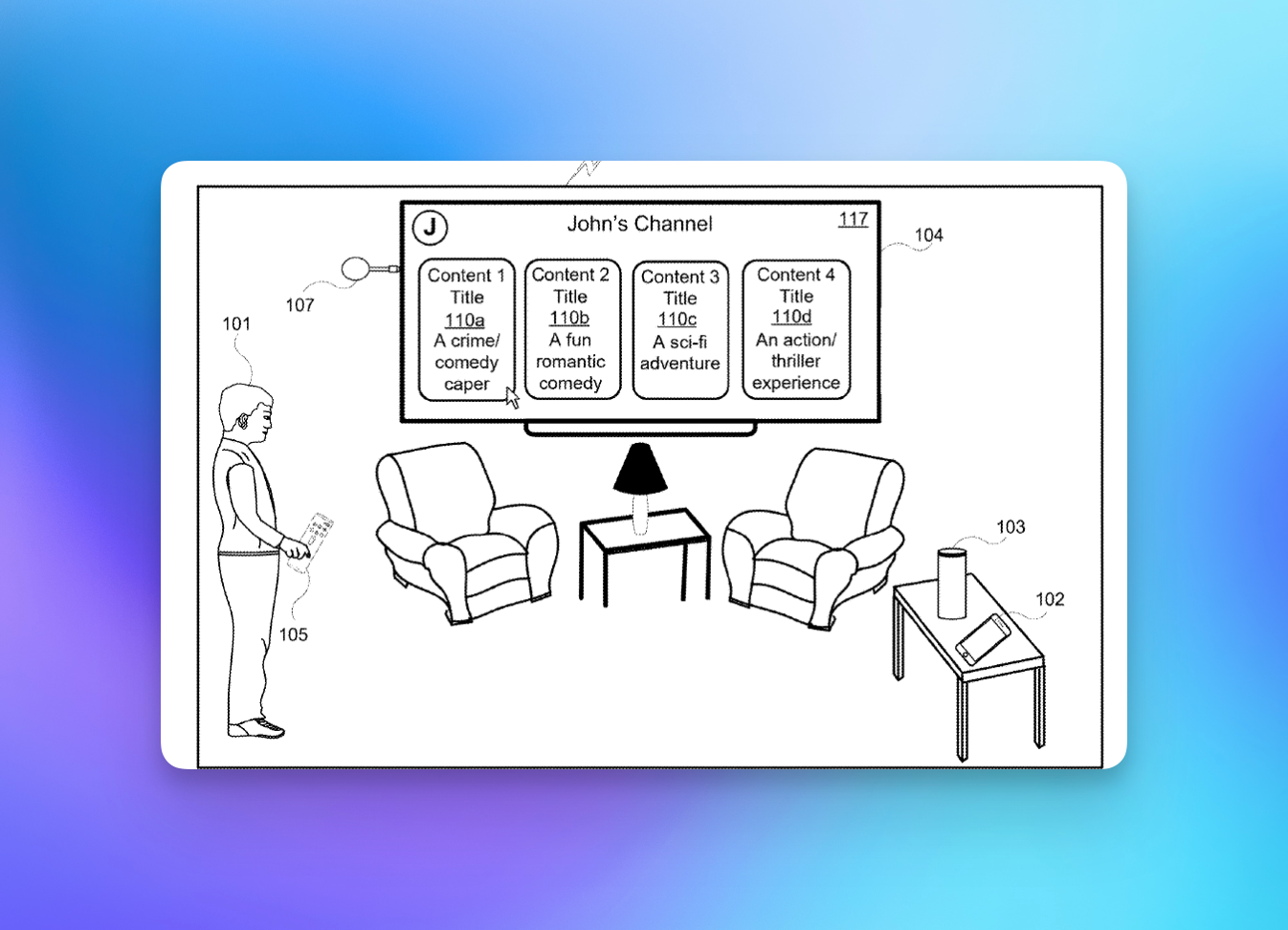
Google has filed for a patent that would use the information it knows about you to create an AI-generated TV channel full of personalized “shows” starring you and featuring customized advertisements. The patent is the latest signal of the AI video endgame: endless highly specific, customized content that is automatically generated based on the wealth of data companies and advertisers collect about you.
Apple Macs are very powerful machines. But not all developers port their games over to MacOS. That's why we tried out FX Steam Launcher, a program that enables Mac gamers to run native SteamOS in a virtualization window! So let's try it out, and see how it scales across different generations of Apple Silicon...
Discuss on the forum: https://linustechtips.com/topic/1644698-mac-gaming-is-solved-but-not-by-apple/
Check out our Channel Partners:
Secretlab
- Grab a TITAN Evo ergonomic gaming chair: https://lmg.gg/secretlabltt
- Grab an ATLAS ergonomic office chair: https://lmg.gg/secretlablttatlas
PIA
- Get the VPN of our choice: https://www.piavpn.com/ltt
dbrand
- Buy a "Circuit" series skin for your device: https://dbrand.com/pcb
► SHOP LTT PRODUCTS: https://lttstore.com
► GET EXCLUSIVE CONTENT ON FLOATPLANE: https://lmg.gg/lttfloatplane
► DIVE DEEPER ON THE LTT LABS WEBSITE: https://lmg.gg/labs
► SPONSORS, AFFILIATES, AND PARTNERS: https://lmg.gg/partners
Purchases made through some store links may provide some compensation to Linus Media Group. Affiliate links powered in part by https://affilimate.com/?aid=ghz1izbpb
Linus Sebastian is an investor in Framework Computer, Inc and HexOS by Eshtek.
CHAPTERS
---------------------------------------------------
0:00 Why we lyin
1:24 Is this new tech?
2:50 ITS WORKING!!!
3:03 Portal 2
3:56 Risk of Rain 2
5:50 Tape to Tape
8:20 M2 Air
10:47 Neo
13:30 M6
16:27 Takeaways
There is a hacking tool called ARTEX that is causing havoc around the world. It lets a hacker plug in their LLM of choice, and ARTEX will then spin up a bunch of AI subagents focused on different aspects of hacking, such as scoping out a target or stealing data. This tool can complete an entire hack of a target in just a few hours. The original author of ARTEX took down the tool in October after it became clear that bad people were using it. But, as I write below, ARTEX is free. Several people are still distributing it on GitHub. I spoke to them about it, asked them why, and for their thoughts about requests to take the tool down.
And as I’m writing this, NVIDIA just said it has reinstated Jensen Huang as President, CEO, and Board Director. Hahahahahahahahahha.
A big thanks to Henson for sponsoring this video. Check them out at http://hensonshaving.com/smarter (Make sure the 100 pack is in your cart to get them for free.)
Please consider supporting Smarter Every Day on Patreon:
http://www.patreon.com/smartereveryday
2nd Channel Video: https://youtu.be/IoNLxv2DEPM
Click here if you're interested in subscribing: http://bit.ly/Subscribe2SED
⇊ Click below for more links! ⇊
~~~~~~~~~~~~~~~~~~~~~~~~~~~~
GET SMARTER SECTION
https://windbornesystems.com/
~~~~~~~~~~~~~~~~~~~~~~~~~~~~
Ambiance, audio and musicy things by: Gordon McGladdery
https://www.ashellinthepit.com/
http://ashellinthepit.bandcamp.com/
If you feel like this video was worth your time and added value to your life, please SHARE THE VIDEO!
If you REALLY liked it, feel free to pitch a few dollars Smarter Every Day by becoming a Patron.
http://www.patreon.com/smartereveryday
ARTEX, an open source framework that makes it easy for AI agents to hack companies at superspeed, is causing havoc. People using the tool appear to include Chinese hackers breaking into targets for espionage, and financially-motivated hackers too. Earlier this month, the FBI published a warning to potential targets, and said hackers using ARTEX have targeted government, healthcare, telecommunications, legal, defense, financial services, and semiconductor sectors globally.
ARTEX is written in Go, and all someone needs to do is connect their preferred LLM — from Anthropic, DeepSeek, or whoever — and ARTEX then creates a bunch of agents that are designed to focus on different hacking tasks. There is something qualitatively different about ARTEX when compared to other hacking tools. As the FBI explains, it uses agentic AI to automate much of the hacking process “at machine speed.” This can be reconnaissance — the scoping out of a target to understand their infrastructure — right up to actually hacking a target and stealing their data. An AI agent doesn’t need to sleep, eat, or commute home. ARTEX can complete an entire hack in just a few hours from start to finish, the FBI says. With a tool like ARTEX, a hacker can set up the tool and let it rip. As Google’s threat intelligence arm has noted, hackers are using other similar multi-agent frameworks like CAIRN, CyberStrikeAI, and PentAGI too.
💡
Do you know anything else about ARTEX or related breaches? I would love to hear from you. Using a non-work device, you can message me securely on Signal at joseph.404 or send me an email at joseph@404media.co.
The original author of ARTEX, who goes by Autumn-27 and writes in Chinese, took the tool off of GitHub in October. A message left on their GitHub says, “It has come to my attention that the ARTEX tool has recently been misused by malicious actors to carry out cyberattacks. As the creator of ARTEX, I wish to make the following formal statement.” They go on to say they are not associated with these attacks, that malicious use of the tool runs “entirely counter to my original intent,” and that they are moving ARTEX into a closed-source model and will no longer update it.
 Login