Num espaço de duas semanas, a grande rede varejista Casas Bahia e a gigante petroquímica Braskem anunciaram que entrarão em recuperação judicial ou extrajudicial. Querem repactuar suas dívidas com bancos e fornecedores. Uma deve R$ 17,3 bilhões, a outra renegociará um espeto em dólares equivalente a R$ 56,5 bilhões. A economia brasileira está doente.
Leia mais (08/25/2026 - 23h00)
O Canadá é o destino de 14% do valor total das exportações americanas de bens, uns US$ 350 bilhões por ano. Fica apenas atrás do México, que compra US$ 380 bilhões dos Estados Unidos. Para começar, pois o assunto vai além disso, trata-se de muito dinheiro. Mas Donald Trump e cia. barbarizam o Canadá.
Leia mais (08/25/2026 - 20h30)
✅ Simplifique as finanças da sua empresa com a Contabilizei: https://www.contabilizei.com.br/profissionais-de-ti/?utm_campaign=influenciadores-tecnologia&utm_source=diolinux&utm_medium=influenciadores&utm_content=youtube-insert-20260910
💲 Use o cupom *DIOLINUX_1M* para testar os serviços por 1 mês completamente de graça!
🏠🧪 Onde comprar o Umbrel PRO: https://a.umbrel.com/diolinux/umbrel-pro
Transformar computadores velhos em servidores caseiros sempre foi uma ótima opção, mas a complexidade do Linux e dos containers afasta quem busca privacidade e praticidade, mas não tem muito conhecimento técnico.
O Umbrel PRO surge como uma solução de servidor doméstico plug and play, trazendo o sistema Umbrel OS pré-instalado em um hardware minimalista, silencioso e potente.
Neste vídeo, analisamos o unboxing, o setup inicial em menos de um minuto, a expansão de armazenamento com até 4 SSDs NVMe e as especificações técnicas com o processador Intel Core i3 N300 e 16GB de RAM. Veja se a conveniência desse homelab compacto justifica o preço e como ele se compara com a instalação gratuita do Umbrel OS em PCs antigos.
🔴 Seja Membro: https://youtube.com/diolinux/join
🤔 Dúvidas sobre ser membro? Confira o FAQ: https://diolinux.com.br/play
▶️ Inscreva-se no @diolinuxlabs: https://www.youtube.com/@Diolinuxlabs
📩 Conteúdo do Diolinux sem Algoritmo: http://diolinux.com.br/newsletter
🎤 Conheça o nosso Podcast: https://diolinux.com.br/diocast
📬 Contato comercial: https://diolinux.com.br/contato
💙 Nossas redes sociais e mais: https://diolinux.com.br/links
🛒 Diolinux Ofertas: https://diolinux.com.br/ofertas
📎 Fontes e Links referentes ao conteúdo:
‣ Como instalar o Umbrel OS em qualquer hardwarel: https://youtu.be/ajyjvgDwjVY?si=QuH58zwMBftjebS-
‣ Umbrel PRO: https://umbrel.com/umbrel-pro
‣ Umbrel Home: https://umbrel.com/umbrel-home
00:00 O servidor doméstico mais fácil do mundo?
01:12 O que é o Umbrel OS e o Hardware Dedicado
01:42 Unboxing e Design Minimalista
02:10 Expansão de Armazenamento: SSDs NVMe sem parafusos
02:39 Setup Inicial: Menos de 5 minutos mesmo?
03:03 Tive um susto no primeiro boot! (Erro de SSD)
03:42 Como simplificar a contabilidade do seu CNPJ
04:35 Explorando a App Store do Umbrel (IA, Bitcoin e Apps)
05:41 Gerenciador de Arquivos e Nuvem Pessoal
06:28 Widgets e Monitoramento de Hardware
07:30 Configurações Avançadas e Acesso via IP
08:08 Como conectar o Umbrel Pro via Wi-Fi
08:58 Redundância e Segurança de Dados (Fail Safe)
10:00 Terminal Linux e Opções de Rede
10:40 Acesso Remoto seguro via rede Tor
11:18 Substituindo o Google Drive com NextCloud
12:20 Apps Mobile e Sincronização Desktop
13:12 Vale a pena? Especificações e Preço do Umbrel Pro
14:57 Como ter essa experiência sem gastar nada!
Pontos chave do vídeo:
‣ Apresentação do Umbrel PRO e a proposta de um servidor plug and play
‣ Design compacto, funcionamento silencioso e expansão para 4 SSDs NVMe
‣ Como fazer o setup em 30 segundos conectado ao roteador
‣ Primeiro acesso, criação de usuário e formatação via interface “umbrel.local”
‣ Teste do sistema Umbrel OS, atualização simplificada e experiência de uso
‣ Análise das especificações técnicas (Intel i3 N300, 16GB RAM, porta 2.5GbE)
‣ Preço, comparativo com o Umbrel Home e conclusões sobre o custo-benefício
📹 Produção:
Roteiro e Apresentação: Dionatan Simioni
Edição e efeitos: Willian Zanella
Thumbnail: @adrielfilipetech
Learn how to trace a pencil sketch into a colorful vector illustration with clean lines and shading details.
If you want to follow along with what I'm doing in the tutorial then you can download a copy of the pencil sketch here: https://cloud.logosbynick.com/index.php/s/jtAZZgaWjNrb7RT
Want to learn more about how Inkscape works? Check out the Inkscape Master Class - a comprehensive series of over 80 videos where I go over every tool, feature and function in Inkscape and explain what it is, how it works, and why it's useful: https://logosbynick.com/inkscape/
Join my mailing list and get 200+ free design templates: https://join.logosbynick.com/
🔗 RESOURCE LINKS
Hire me to design your logo: https://logosbynick.com/
Get my premium logo templates: https://logosbynick.com/design-templates/
Upgrade to the latest version of Inkscape here: https://inkscape.org/release/
Lula tem intensificado o discurso sobre soberania mineral: nos bastidores da corrida eleitoral e da tensão comercial com os EUA, o presidente afirma que o Brasil não vai apenas extrair terras-raras e minerais críticos, mas processá-los internamente — "o que nós queremos é colocar nossas meninas e meninos para estudar como nós vamos explorar esse minério, como vamos produzir celulares, chips, baterias elétricas e tudo o que for produzido pelos minerais críticos e terras raras".
Neste episódio de CONJUNTURA, analisamos o que está por trás dessa retórica: a disputa geopolítica por tecnologia e defesa, o histórico brasileiro de exportar riqueza mineral sem agregar valor, e o que isso significa para o debate de tecnopolítica no país.
👥 Apresentadores
Sérgio Amadeu é sociólogo, professor da UFABC e pesquisador do CNPq, com atuação destacada na defesa da democratização da comunicação e da soberania tecnológica. Autor de livros e artigos, é referência em debates sobre privacidade, software livre e cultura digital.
Gabriel de Moraes é mestrando e pesquisador do Laboratório de Tecnologias Livres da UFABC (LabLivre), integra a equipe do Podcast Tecnopolítica e coordena o Grupo Avançado de Tecnologias para Movimentos Sociais (GATMOB-UFABC).
📌 Equipe
Coordenação e autoria dos podcasts: Sérgio Amadeu da Silveira
Criação de arte e edição: Tutti Marketing
Conteúdos e divulgação: Tutti Marketing e Gabriel Boscardim de Moraes
🔗 ACESSE OS CURSOS NO PORTAL DO TECNOPOLÍTICA: https://tecnopolitica.blog.br/
Instagram: https://www.instagram.com/podtecnopolitica/
In WooCommerce 11.1 and 11.2, we are focusing on performance optimizations for larger product catalogs. While this work prioritizes backward compatibility, some of the components involved were designed years ago and are structurally incapable of supporting the required performance improvements — the changes below outline what’s affected for extension developers and stores with customizations.
As the product data stores now skip these calls when the stored value already matches, the optimization reduces per-save SQL count by up to 45%.
While technically, the contracts are preserved, changed set_object_terms hook invocation frequency can cause side effects. To verify your extensions and customizations for side effects this change could potentially cause, consider using AI tooling of your choice with the following prompt:
Search the active plugins, mu-plugins, and theme's functions.php for add_action('set_object_terms', ...) callbacks. For each match, check if the callback assumes it fires on every product save regardless of whether the product type changed. If so, the callback needs to be moved to a more appropriate hook (e.g., woocommerce_update_product or save_post_product).
Previously, when you reordered products under Products -> All Products -> Sorting, the complete catalog was reindexed. The new algorithm is designed to work with large catalogs and implements faster re-indexing and smarter (range-based) reordering.
The algorithm replacement required redefining customization and deprecating old hooks according to this table:
Using deprecated hooks will cause a fallback to the old unoptimized algorithm. Please reference the second PR for details.
Hook
Status
Use-case
woocommerce_after_single_product_ordering
Deprecated
Fired per product during catalog reindexing
woocommerce_after_product_ordering
Deprecated
Fired once after reordering is completed.
clean_post_cache
Unchanged
Fires per affected product on both legacy and fast paths.
Depending on the exact usage of the deprecated hooks, please consider using clean_post_cache, wp_ajax_woocommerce_product_ordering, woocommerce_product_ordering_process_reindexed_products, and woocommerce_product_ordering_process_moved_products as primitives for replicating the original behaviour.
Tarlov occupies the hot seat on a Fox News panel of diehard conservatives, arguing for liberal values and rousing the ire of the President, who has encouraged Fox to fire her.
This interview is drawn from The New Yorker Radio Hour, a weekly radio show and podcast hosted by David Remnick. For more, follow The New Yorker Radio Hour wherever you get your podcasts. http://swap.fm/l/tny-radiohour-eBFv3Y
Subscribe to the New Yorker channel on YouTube so that you never miss an episode:
http://bit.ly/newyorkeryoutubesub
🎁 Regístrate en Mintos y consigue un bonus de hasta 500 € por invertir a partir de 1500 € con este enlace y el código INVEST26. Sujeto a condiciones: https://bit.ly/mintos-visualpolitik
Invertir conlleva riesgos, puedes perder parte o la totalidad del dinero invertido. Rentabilidades pasadas no garantizan resultados futuros. #publi
🎓 Plazas abiertas para el Máster Ejecutivo en Análisis Financiero y Gestión Patrimonial. Reserva tu plaza ahora, entra en el proceso de admisión y da el siguiente paso en tu carrera en finanzas. 👉 Reserva aquí: https://bit.ly/3TPTkJr
¡Suscríbete a VisualPolitik para ver más vídeos como este!
🙌 Descubre la cuenta infantil de Trade Republic: https://trade.re/vp_csaperk
“It's a tiny cave but you have a record and a fossilisation of something unique, which are the very last moment of the Neanderthal populations”, says palaeoanthropologist Ludovic Slimak.In our latest interview, we explore the overlap between these two human species, what may have led to the Neanderthals' disappearance, and what Grotte Mandrin in France's Rhône Valley can reveal about our deep past.
Tap the link to watch the full interview - https://youtu.be/KXTZt8LG0Lk
Thanks to AMD for being a great partner and sponsoring this series! Check out their latest offerings at https://lmg.gg/f6PMg
Go to https://bit.ly/4gx31UP to enter the sweepstakes to win an AMD RYZEN™ 7 9800X3D CPU and a GIGABYTE Gaming OC RADEON™ RX 9070 XT GPU!
It's that time again for another $5000 ULTIMATE AMD Upgrade! This time for our writer Jordan. What do you buy for the man that D.I.Y.s everything? More to D.I.Y.? Furniture for a proper dining room instead of a workshop? Nah to the last one, he chose a new Linux PC instead... That we have to put together so strap in!
Discuss on the forum: https://linustechtips.com/topic/1642137-how-do-you-upgrade-a-lifelong-tech-amd-5000-ultimate-tech-upgrade/
Canon EOS R50 V Mirrorless Camera: https://geni.us/LxmwOWH
Canon Stereo Microphone DME1D: https://geni.us/1Dzszq
Smallrig R50V Camera Cage: https://geni.us/AS8E9
Busy Bee Tools 8" Bench Top Jointer Planer Combo BBJP8: https://geni.us/JiFo
Jackery Solar Generator 1000 v2: https://prsm2.com/y_b17fqn_
Check out our Channel Partners:
Secretlab - Grab a TITAN Evo ergonomic gaming chair: https://lmg.gg/secretlabltt
PIA - Get the VPN of our choice: https://www.piavpn.com/ltt
dbrand - Buy a "Circuit" series skin for your device: https://dbrand.com/pcb
► SHOP LTT PRODUCTS: https://lttstore.com
► GET EXCLUSIVE CONTENT ON FLOATPLANE: https://lmg.gg/lttfloatplane
► DIVE DEEPER ON THE LTT LABS WEBSITE: https://lmg.gg/labs
► SPONSORS, AFFILIATES, AND PARTNERS: https://lmg.gg/partners
Purchases made through some store links may provide some compensation to Linus Media Group. Affiliate links powered in part by https://affilimate.com/?aid=ghz1izbpb
Linus Sebastian is an investor in Framework Computer, Inc and HexOS by Eshtek.
CHAPTERS
---------------------------------------------------
0:00 Intro
1:17 Sweepstakes
1:57 An LTT Writer's habitat
4:25 Let's checkout the upgrade
6:18 Planer / Jointer
9:29 I wanna start PC Building
11:04 Our parts selection
12:14 What about airflow?
14:45 Reece Update
16:11 Back to PC Building!
17:58 Way to go Linus
20:33 A cromulent PSU install
22:05 ??? More on Floatplane
22:45 Wrapping up the build
25:38 Cyberpunk 2077
26:11 Jordan's JDM whip
28:03 Star Trek vs. Star Wars
28:58 Conclusion
29:47 Outro
En route to Cornwall for a forthcoming episode of Unlocked, Phin swung by The Art Barn, a kinetic structure designed by Thomas Randall-Page of the new architecture practice, THING. The barn is the archive and studio for Thomas' father, the sculptor Peter Randall-Page. Sequestered in the woods near Peter’s home in Devon, the studio chimes with the wide material vocabulary of Peter’s practice and calls upon Peter and Thomas's knowledge of local materials and expertise. In it, sliding doors, a window that pivots and a balcony that folds open “like a gadget from Wallace and Gromit" give this barn its unique character.
Film by Phineas Harper
https://www.thing-studio.co.uk/
Never miss a new film, subscribe here: https://bit.ly/36I7z8y
Follow us on Instagram: https://www.instagram.com/themodernhouse/ & https://www.instagram.com/inigo.house/
Selling design-led homes in the UK: https://www.themodernhouse.com
Selling historic homes in the UK: https://www.inigo.com/
Like us on Facebook: https://bit.ly/34BKO3x & https://www.facebook.com/inigo.house
Home and interior inspiration, delivered to your inbox: https://www.themodernhouse.com/newsletter/ & https://www.inigo.com/#newsletter/
Listen to our latest podcast, How My Garden Grows: https://podcasts.apple.com/gb/podcast/how-my-garden-grows/id1837703535
Best interiors Instagram accounts (Vogue)
Best homes accounts (Guardian)
Ultimate interiors accounts (Telegraph)
“Click this link https://boot.dev/?promo=SABINE and use my code SABINE to get 25% off your first payment for boot.dev.”
Quantum computing was supposed to be the next big thing, and for years the companies building it kept promising commercial payoffs were just around the corner and possible already with small, noisy devices (NISQs). Google, IBM, IonQ, they all gave dates. None of them delivered. So why is the industry more optimistic today than ever? Let's take a look.
👕T-shirts, mugs, posters and more: ➜ https://sabines-store.dashery.com/
💌 Support me on Donorbox ➜ https://donorbox.org/swtg
👉 Transcript with links to references on Patreon ➜ https://www.patreon.com/Sabine
📝 Transcripts and written news on Substack ➜ https://sciencewtg.substack.com/
📩 Free weekly science newsletter ➜ https://sabinehossenfelder.com/newsletter/
👂 Audio only podcast ➜ https://open.spotify.com/show/0MkNfXlKnMPEUMEeKQYmYC
🔗 Join this channel to get access to perks ➜
https://www.youtube.com/channel/UC1yNl2E66ZzKApQdRuTQ4tw/join
📚 Buy my book ➜ https://amzn.to/3HSAWJW
Season 10, Episode 15. October 29th, 2023. John Oliver covers the impending presidential runoff election in Argentina and focuses on the most bizarre candidate in the running: Javier Milei. Then, Oliver does a deep dive into the chocolate industry, how its massive profits still leave many cocoa farmers in dire poverty, and plenty of other facts to make Halloween a little less fun.
Subscribe to the #lastweektonight YouTube channel for more almost news as it almost happens: www.youtube.com/lastweektonight
Or find us on your favorite social media platform we may or may not have discussed at length on the show:
Go to https://ground.news/startalk to stay fully informed on the latest Space and Science news. Save 40% off through our link for unlimited access to the Vantage plan this month.
Why are bugs so weird? Neil deGrasse Tyson and Negin Farsad sit down with entomologist, Jessica Ware, to dig into the extraordinary world of bugs, insects the size of navel oranges, how they invented flying and so much more.
What actually is a bug? Learn how the way an insect eats determines whether they are a bug or not. Jessica traces insects back 400 million years to their single common ancestor. Discover how dragonflies were the original flying design for living things. Why are insects so successful on Earth? They predate dinosaurs by hundreds of millions of years, were the first animals to fly, and have had enough time to fill every ecological niche on the planet.
Learn about dragonfly eyes and how their methods for mating impact their vision. What do dragonfly brains actually look like and what can they remember? Would territorial dragonflies have larger brains than non-territorial ones? Do migratory insects develop bigger brains to navigate? Is there a single common ancestor for all insects? We talk about the species unique to New York, cockroaches that only reluctantly share our spaces, and how warming weather will make our future more buggy. What would actually happen if we eliminated mosquitoes entirely? Jessica walks through why wiping out the three most dangerous species would be a net positive for humans, while the things that eat mosquitoes would largely survive.
The episode closes on the alarming collapse of insect populations worldwide. We break down all the ways that humans impact insects from light pollution disrupting firefly mating, urbanization destroying habitat, and the sobering reality that all life on land came after insects and still depends on them. Plus: what did bed bugs feed on before beds existed, and just how big can an insect actually get?
Thanks to our Patrons Farouk, David Arnold, Michael Gugel, Forbidjon, Lech Kaniuk, Jay C, Taylor -, Colton Harward, Patrick Duncan, Jimmy, William R. Turk IV, Melisa Benard, Bob Woitas, Louie W., Mohd Amri, Daniel Rodriguez, Michael Davison, Keith Knight, Lincoln, Trevor Forbess, Lisa Terry, Joseph Diaz, Kylrean, Steve, Steve, Lee T., Zilgaro, DJ Lenny Ducano, Jens Lundvang, Brian Moore, Richard Dressner, Cory Hartman, Joshie Versace, Leigh Miller, Tonya, aaron bremner, BeatBakker, Mark, Joe Brandt, Khalled Alves, David Eddy, Kai Shire, Ross Mackenzie, PreserveCommunity, Niko Schultz, Dave Baxter, Keith Spillane, Jessica Whitney, Brandon Doyle, Zach Free, Connie Tran, Daniel Haynes, Darryl Barotn, Aila Rousu, Joshua Dickerson, Red, XEnterprise, Ahmad Al Khalifa, Gaetan Nicodeme, and Vincent Bauer for supporting us this week.
Timestamps:
00:00 - Introduction: Jessica Ware
04:58 - What Are Bugs?
08:35 - The OG flyers
14:46 - The Origins of Insects
20:49 - Manhat-ant & Insects in the City
28:28 - Climate Change Impacts on Insects
37:46 - Getting Rid of Mosquitos & Lantern Flies
44:54 - Lice & Bedbugs
50:51 - Smallest & Largest Bugs
Get the NEW StarTalk book, 'Lost in Space: 5,000 Facts for Navigating the Universe' on Amazon: https://amzn.to/4cCD19e
Check out our second channel, @StarTalkPlus
Support us on Patreon: https://www.patreon.com/startalkradio
FOLLOW or SUBSCRIBE to StarTalk:
Twitter: http://twitter.com/startalkradio
Facebook: https://www.facebook.com/StarTalk
Instagram: https://www.instagram.com/startalk
About StarTalk:
Science meets pop culture on StarTalk! Astrophysicist & Hayden Planetarium director Neil deGrasse Tyson, his comic co-hosts, guest celebrities & scientists discuss astronomy, physics, and everything else about life in the universe. Keep Looking Up!
STARTALK is a registered U.S. trademark of Curved Light Productions. Curved Light Productions also maintains rights in the A/legs design logo, STARTALK, STARTALK+, STARTALK PLUS in the U.S. and various countries throughout the world, and these and all other associated logos, marks, and trade dress are the property of Curved Light Productions.
This video, including all audio, video, graphics, and accompanying materials, is the exclusive property of Curved Light Productions. No part of this video may be reproduced, distributed, publicly performed, transmitted, or used to create derivative works, in whole or in part, in any medium now known or hereafter devised, without the prior express written permission of Curved Light Productions. Unauthorized use, including reuploading, re-editing, or incorporation into third-party content, is a violation of United States and international copyright law and will be enforced.
For licensing and permissions inquiries: licensing@startalkmedia.com
La primera vez que Karen María León Alfonso vio a su padre tenía 16 años. Miguel Díaz Bauzá llevaba meses preso en la una cárcel de la Seguridad del Estado de Santa Clara y ella llevaba casi toda su vida sin verlo.
Miguel había salido de Cuba en 1980, cuando Karen tenía apenas un año y medio. Después, su madre biológica cayó presa y ella fue adoptada por una familia a la que, dice, amó y respetó hasta el último día de sus vidas. Ellos le dieron sus apellidos y nunca le ocultaron que tenía otro padre y otra madre.
Una tarde alguien le señaló la pantalla del televisor y le dijo: «¿Tú quieres conocer a tu papá? Míralo ahí».
En el noticiero aparecían las imágenes de Miguel y de otros hombres que habían llegado con él a costas cubanas. «Decían cosas que no eran agradables sobre él y sus compañeros. Saben cómo es aquí la política», dice Karen a El Estornudo.
Miguel había desembarcado en Cuba en 1994 con un grupo procedente de Estados Unidos para organizar un levantamiento contra el régimen de Fidel Castro. Lo acompañaban entonces Armando Sosa Fortuny, Jesús Rojas Pineda, José Ramón Falcón Gómez, Pedro Visao Peña y Lázaro González Caraballo.
Fue detenido el 16 de octubre de aquel año y condenado luego a 25 años de prisión por varios delitos contra la seguridad del Estado. Tenía 51 años.
Un mes después de aquel noticiero, un hermano de Miguel llegó a casa de Karen para pedir permiso a sus padres adoptivos para llevarla a verlo. Miguel lo había pedido.
Fueron a Santa Clara. La llevaron a una pequeña sala de la policía política donde había solamente «un sofá, un aire acondicionado y una puerta».
Karen y su padre / Foto de cortesía
Lo primero que Karen recuerda del encuentro es el olor de su padre. Después recuerda al «hombre imponente» que entró. «Era grande y fuerte, y sin nadie presentarnos se me vino encima me abrazó y me empezó a besar. Me llamaba “mondongo”».
No fue un encuentro sencillo. «Realmente, fue un momento incómodo porque yo no conocía a esa persona que me abrazaba y me besaba».
Aquel fue el único encuentro que tuvieron en Santa Clara. Después del juicio, Miguel fue trasladado a una prisión de Camagüey para cumplir su condena y la relación quedó reducida, durante años, a las cartas.
Karen no tuvo entonces una infancia compartida que recuperar ni recuerdos de un padre que hubiera estado presente en su crecimiento. Tuvo que conocerlo al revés: primero vio al hombre acusado en la televisión nacional; después, al preso y, poco a poco, al padre.
En 2001, Miguel fue trasladado nuevamente a Villa Clara. Desde entonces, Karen es la que se ocupa de todas sus cosas.
Han pasado más de tres décadas desde aquel primer encuentro. La historia de Miguel se ha convertido en una de las más largas del presidio político cubano: 32 años encarcelado.
Karen aclara que siempre hablará «con la verdad» y subraya que Miguel es su padre biológico, pero que guarda en su «corazón el espacio de la palabra “papá”» para quien la adoptó. Aun así, explica que la relación entre ambos «se ha construido siempre desde el respeto y la admiración, con un cariño que ha crecido con el pasar de los años».
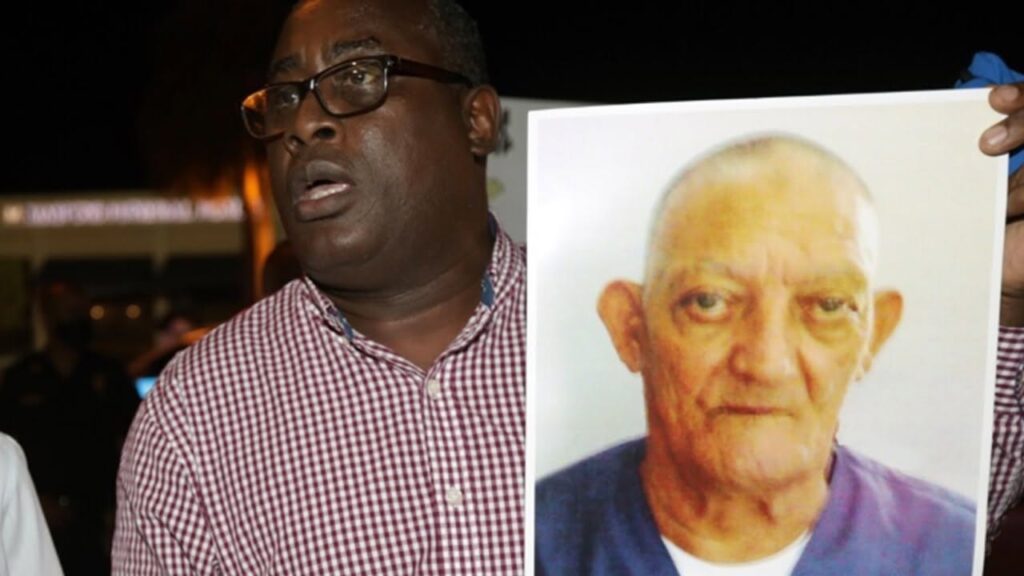
El expreso político Jorge Luis García Pérez (Antúnez), sostiene una foto de Miguel Díaz Bauzá / Foto: Roberto Koltun/Facebook.
Los recuerdos con él son muchos, dice, aunque casi todos se han construido con rejas detrás. «No es muy placentero contarlos, pues todos son en prisiones y con un preso de su estirpe… ya te podrás imaginar».
Miguel, cuenta Karen, nunca ha dejado de ser fiel a sí mismo. «Él no dice malas palabras ni le gusta que las digan. Es muy correcto a la hora de dirigirse a cualquier persona. No tiene malas costumbres ni malos hábitos. Es de los hombres del siglo pasado, donde la educación era clave».
Según cuenta Karen, quienes compartieron prisión con él «lo describen como un hombre incómodo para las autoridades carcelarias». «Es un dolor de cabeza. No se le queda callado a nadie cuando de violaciones o de abuso se trata, contra él o contra cualquier preso».
También busca a los más jóvenes. «Le gusta darles consejos, sobre todo para que no vuelvan a caer en prisión».
Su manera de resistir, según Karen, tiene que ver con sus convicciones. «Su resistencia se la debe a sus principios y a su convicción sobre la justeza de su causa».
En la prisión de Camagüey, Miguel protagonizó un episodio que terminó alargando su condena. En 1999 participó en una protesta por las condiciones y los abusos contra los presos y fue condenado por amotinamiento a otros 20 años. Las dos causas se acumularon en una sola sanción de 36 años de privación de libertad, la que cumple actualmente. El 15 de octubre de 2030 terminaría la condena del preso político más longevo de la isla.
Tras ser juzgado por el amotinamiento, estuvo nueve años sin poder recibir visitas.
Los 32 años de prisión también han pasado factura a su salud. Miguel padece hipertensión, diabetes y problemas renales, y, según su familia, las condiciones del penal dificultan que pueda mantener adecuadamente sus tratamientos. «También tengo vitiligo, que me ha caído después de viejo, no sé si es por el estrés», declaró Bauzá en una pasada entrevista.
Miguel Díaz Bauzá / Foto de cortesía
La furia por las injusticias
Karen conserva sus propias escenas sobre la resistencia de su padre. Una ocurrió en el penal conocido como «el Pre», en Santa Clara.
Ella vive a unos 60 kilómetros y aquel día llegó un poco más tarde de lo habitual, cuando los demás familiares ya habían entrado. Le dijeron que tendría que esperar hasta el horario de la tarde. Pero Miguel se enteró de que ella estaba afuera.
«Yo no sé de qué forma él se enteró que yo estaba ahí ni lo que él formó allá dentro. Pero unos 20 o 30 minutos después vino un oficial corriendo, nos preguntó si éramos la familia de Bauzá y sin revisarnos nos entró al penal».
Cuando lo vio, estaba furioso. «Tenía la respiración exaltada y estaba rojo como un tomate». Karen intentó calmarlo porque había niñas presentes. No funcionó.
Miguel esperó el momento oportuno y, «con las manos detrás y hablando casi en un susurro», enfrentó al guardia. Karen tuvo que intervenir.
«Como único se calmó fue cuando lo amenacé con irme y no volver nunca más». Ella sabe que fue dura. También dice que sabe por qué lo hizo.
Miguel estaba reclamando lo que consideraba una injusticia: que una mujer que viajaba desde lejos con dos niñas pequeñas tuviera que regresar a casa sin siquiera poder entrar a verlo.
No fue la única vez.
En otra visita, Karen llegó temprano. Pero una funcionaria le prohibió entrar porque llevaba una saya y, según le dijeron, no estaba permitida en el penal.
Karen intentó demostrar que debajo llevaba varias prendas. No fue suficiente.
«Le di todo a mis niñas y les dije que entraran ellas y yo las esperaba afuera». Otra vez, al rato, un oficial vino a buscarla y la dejó entrar. «Ese día la que estaba que “bufeaba” era yo».
Son escenas pequeñas frente a los 32 años de prisión. Pero en la memoria de Karen cuentan porque dicen algo del hombre al que ha aprendido a llamar padre.
Unas horas de libertad
Cuando Miguel recibe un pase y puede salir del centro penitenciario «Campamento la 2», en Remedios, Villa Clara, donde se encuentra recluido actualmente, el tiempo cambia.
Entonces no está solamente el preso político ni el hombre que lleva décadas enfrentado a las autoridades. Aparece el abuelo.
Tiene dos hijos, cinco nietos y tres bisnietos.
Miguel Díaz Bauzá y sus nietos / Foto de cortesía
«Cuando sale de pase, a él lo que le gusta es pasar el tiempo con sus nietos y bisnietos. Es un niño más en la casa a la hora de jugar con ellos».
Después cocina. «Cuando no está con los niños se pasa todo el tiempo cocinando, le fascina».
Esos momentos permiten asomarse a una vida que pudo haber sido otra. Una vida de padre, abuelo y bisabuelo que no transcurrió enteramente dentro de una prisión.
Cuando hablan, los temas también son otros. «Nos cuenta cómo fue su vida en Estados Unidos. Como fueron esos pocos años que vivimos juntos. Yo era un bebé y no me acuerdo de nada de esa época. Hablamos de cosas de familia, de objetivos, metas».
Y hay algo que Karen dice admirar especialmente. «Mi papá es un hombre de una convicción muy fuerte y profunda».
Dos lágrimas por un pueblo y un país que ya no existe
Caibarién, su pueblo natal, fue el lugar que Miguel dejó en 1980 y al que regresó décadas después, durante uno de sus pases.
«No dijo nada al llegar. Se paró. Le corrieron dos lagrimones por el rostro. Contuvo el aire y seguimos caminando».
Ya en casa, Karen le preguntó si había llorado de nostalgia. La respuesta fue otra.
«Me dijo que le dio mucho dolor ver que el pueblo esplendoroso, la llamada Villa Blanca que dejó atrás, se había deteriorado tanto. Expresó que el lugar se podía comparar con un bombardeo de cualquier ciudad de la Segunda Guerra Mundial».
Para entonces, el hombre que había salido de Cuba más de cuatro décadas atrás podía comparar dos fotografías del mismo lugar: la que conservaba en la memoria y la que encontraba frente a sus ojos, «destruido por el comunismo y la desidia», expresó.
Miguel Díaz Bauzá en uno de sus días de pase / Foto de cortesía
Para Karen, también había una prisión nueva que observar: la del país entero. La situación de las cárceles se suma a la situación del país y a la imagen de Caibarién que Miguel encontró al regresar.
Pero, pese a todo, cuando sale de pase no parece buscar grandes cosas.
Busca tiempo.
Tiempo para hablar con su hija y los niños de casa.
Después de 32 años de prisión, esto es lo que Miguel quiere:
«Él tiene actualmente 83 años y termina su sanción en el 2030. Él solo quiere vivir en libertad, al lado de sus nietos y bisnietos. Vivir en un país democrático, donde cualquiera pueda pensar y actuar diferente en términos de política, y eso no sea un delito. Quiere terminar los días que le quedan al lado de su familia, en su isla, pero también aspira a poder vivir en una nueva Cuba donde la palabra comunismo o comunista no exista».
Karen no puede recuperar los años que no ha estado cerca de su padre. Tampoco puede inventarse recuerdos que no tiene. Puede contar, en cambio, lo que sí construyeron: una relación cercana y sostenida durante años por cartas y visitas y que, con el tiempo, encontró otra forma de existir cada vez que Miguel cruza la puerta de la casa al salir de la cárcel.
Entonces el preso desaparece por unas horas.
Y está presente el padre que pregunta por su hija.
Y una familia que, después de más de tres décadas, todavía espera que Miguel pueda quedarse.
Defense Secretary Pete Hegseth, front left, and senior U.S. military leaders listen to President Donald Trump speak at Marine Corps Base Quantico in Virginia in 2025. Evan Vucci/AP Photo
Shortly after taking office last year, Defense Secretary Pete Hegseth polled the nation’s top commanders about cutting a program designed to protect civilians during U.S. military operations.
Hegseth had bet senior officers would endorse his view that focusing on civilian security was “woke” and out of step with “maximum lethality,” current and former defense officials told ProPublica.
Instead, every commander rebuffed the idea.
The poll from early 2025, which has not been previously reported, cemented top-level military support for Civilian Harm Mitigation and Response, a relatively new program adopted after years of heavy civilian tolls in Iraq, Afghanistan and elsewhere. As part of its mission, CHMR (pronounced “chimmer”) stationed personnel within major regional commands. Officials tried to develop a picture of life on the ground in combat zones to aid decision-making on military strikes and avoid or minimize civilian harm.
In the poll, Hegseth gave commanders three options: cut 65% of staff but keep the effort operational, continue with only a small centralized office in Washington, or eliminate the program.
Nine commanders chose the first option to preserve the enterprise as much as possible, according to a memo reviewed by ProPublica. Leaders of two commands, one overseeing the nuclear arsenal and the other focused on cyber threats, declined all three options, asking to maintain the full program.
Leaders at U.S. Central Command, the Tampa, Florida-based center that oversees military action in the Middle East, pressed to keep its full CHMR staff of 16. Eliminating or scaling back the effort would “result in decreased efficiency of U.S. lethal operations due to an increased risk of target misidentification and reduced battlespace awareness,” a memo reviewed by ProPublica said.
Retired Army Gen. Erik Kurilla, who was then in charge of Central Command, and several other senior officers directly involved in combat operations had appealed to Hegseth to keep the program. They explained that it was a valuable tool, another retired general said — but “that intent was overridden.”
Hegseth gutted the effort, leaving only a handful of people to carry out the mission. It was stripped of almost all of its funding, even as the U.S. launched new campaigns in Somalia, Yemen and Iran. One official summed up the Hegseth approach as: “Bombs away!”
Hegseth’s early exchanges with the generals made clear that the civilian harm program had no future in his reimagined “Department of War.”
But now, after U.S. missile strikes have killed hundreds of civilians in Iran and Yemen, episodes that drew global criticism and questions from Congress, the program could soon be partially revived.
The about-face would mark a rare reversal in a department that hasn’t tolerated dissent under Hegseth and President Donald Trump. Last year’s military memos detail a delicate pushback that may preserve at least the framework of the civilian security campaign.
Current and former defense officials described the evolution of the civilian security program on condition of anonymity for fear of retaliation from the Trump administration.
The Pentagon did not respond to requests for comment about the poll or the program’s revival.
Casualties, Outrage
The first major military operation of Hegseth’s tenure — an air campaign in Yemen in the spring of 2025 — killed 153 civilians and wounded 243 others. The majority of the deaths came from just two strikes, ranking them among the deadliest for civilians the Pentagon has acknowledged in modern warfare, said Airwars, a British watchdog that tracks civilian harm from military operations. The toll was confirmed in the Pentagon’s 2025 annual report for civilian casualties, The Washington Post first reported.
By the time the U.S. began attacking Iran the next year, the Pentagon’s civilian protection program was down from a little under 200 people to around two dozen, some working only part time, the current and former defense officials said. Central Command, which said it needed a minimum of nine of its 16 staffers to function, was left with one person.
On the first day of the U.S. and Israel’s war on Iran, a U.S. airstrike hit a school in Minab, a city near the Strait of Hormuz, killing more than 100 children and igniting international outrage.
The Shajarat al-Tayyiba Primary School is in ruins in Minab, Iran, on March 31.Hamid Vakili/Anadolu via Getty Images
Hegseth and the commander in charge of the Iran operation, Adm. Brad Cooper, were questioned about the strike before Congress. Hegseth said the U.S. does not target civilians and would investigate. Early reports on that investigation, yet to be publicly released, have said outdated U.S. intelligence led to the attack on the school.
Democratic senators and humanitarian groups questioned whether the cuts to the civilian protection personnel also contributed to the school tragedy.
In a letter to Hegseth in April, 11 senators said the school strike, as well as other deadly attacks on civilians in Iran, reflected “the administration’s broader disregard for the strategic, legal, and moral imperative to minimize civilian harm,” noting the dismantling of civilian harm reduction efforts. “This is a concerning pattern and raises questions about whether the administration is upholding international law and the laws of war,” it said.
Previously, a Pentagon spokesperson declined to answer questions from ProPublica about the letter, saying it would “respond directly” to Congress.
Concerns were voiced by military leaders before Hegseth largely eliminated the operation. One exception is the Department of the Army, headed by a civilian appointee, which agreed with getting rid of CHMR entirely.
Leaders at Central Command told Hegseth’s top staff in a memo that CHMR “enhanced our precision and accuracy, making us more lethal.” The memo added, “The operational and strategic value of this work is widely recognized.”
At the same time, the Joint Staff echoed the commanders’ sentiment. According to correspondence reviewed by ProPublica, the Joint Staff disagreed with the Army acting secretary, who said in a February 2025 memo that the program was redundant and recommended Congress repeal the law that set it in motion.
As pressure has built from both Congress and within the military to restore the program, the Defense Department appears to have backpedaled.
In April, Elbridge Colby, the Defense Department’s under secretary of policy, sent a follow-up memo about the civilian protection enterprise to Hegseth. This time, there was only one proposal on the table: reboot the program, albeit at reduced staff levels with 70 full-time people.
In that memo, Colby wrote that maintaining 35% of CHMR would address investigations into civilian harm, reports to Congress and payments to those harmed.
The same commanders Hegseth polled earlier endorsed the move, several defense officials told ProPublica.
The proposal would allow all regional commands to reconstitute their civilian harm reduction staff, and the Virginia-based Civilian Protection Center of Excellence for training, data and research would move from under the Army to the Joint Staff. The move, officials say, gives the mission more heft and eases collaboration with the Navy and Air Force, which are at the forefront of the administration’s campaigns.
“If not for the combatant commanders,” one defense official said, the program would be “dead.”
The harm mitigation effort makes up a tiny fraction of the Defense Department’s billions in spending. The center near the Pentagon had an annual budget of $7 million, officials said, with the cross-command total for all civilian security work estimated at around $80 million before the cuts. Officials expect a refashioned program to operate on a smaller budget.
Military leaders steeped in lessons learned from the post-9/11 “forever wars” repeatedly have affirmed harm mitigation as an asset on the battlefield. Civilian casualties undermine U.S. objectives and help boost insurgent recruiting, analysts say.
The Pentagon had formalized CHMR in 2022, detailing steps to protect noncombatants and investigate reports of casualties. Commanders had publicly championed the program in congressional testimony and defense journals. The current head of European Command, Gen. Alexus Grynkewich, co-wrote a paper calling it a “watershed” development.
In some cases the staff acted as a “red team” pushing back on strikes and the possible collateral damage. The center of excellence focused on institutionalizing best practices, training service members and collecting data on civilian harm.
Those efforts and “operational effectiveness are the same thing,” one retired general told ProPublica. “They’re two sides of the same coin.”

 Login
Login