My family loves learning with KiwiCo, and I think yours will too. Get 50% off your first monthly crate at https://www.kiwico.com/stefan with code STEFAN
580,000,000 years ago the first animals evolved during a time period called the Ediacaran. Who were these creatures? Why did they keep Charles Darwin up at tnight? And what can we possibly learn about animals that lived so long ago?
Huge thanks to my generous patrons
https://www.patreon.com/stefanmilo
Watch my videos Ad free only on Nebula
https://go.nebula.tv/stefanmilo
Check out Manta Sleep and use code digitwithraven for 10% off your order: https://tinyurl.com/digitwithraven
👉🏼 Get early access and help support the channel here: https://www.patreon.com/digitwithraven
A new report coming out of the archaeological site of Iskandar Tepa suggests that there might have been an ancient Greek Military camp on this hill! This is such a great reminder of just how far Alexander the Great's empire spread, and what happened after it was divided into various parts -- especially the Seleucid Empire and the Greco-Bactrian Kingdom. The archaeology of Central Asia is also something that deserves a lot more mainstream attention, and this site is a great entry into how geophysical survey can uncover so much more in the archaeological record!
It’s rare nowadays that I have those lightbulb moments when making, throwing or trimming pottery, as in I suddenly learn or figure out a new technique that might make some particular process easier. Yet, recently, I’ve been trying to find new, faster ways of hollowing out the thick wads of clay that are often on the bottoms of my bowls, the foot-rings.
These are a huge time sink in terms of turning my pots and so, lately, I’ve switched from using a looped steel turning tool to gradually carve away from the centre outwards, to using a exceedingly sharp tungsten carbide trimmer to gouge out a channel of material that then shears away a central portion of clay. It’s tricky and it requires a lot of control but after trimming through my latest batch of medium angular bowls and focusing on this technique, I’m relishing in the few seconds it saves for each piece.
Yes, seconds, but twice that by hundreds of bowls throughout the year and it adds up, and I’m all about increasing my efficiency making this particular shape as truthfully, they were taking me far too long.
I’ve cut down the trimming time from about 10-12 minutes to about 5-6 minutes, twice as fast isn’t bad, but it’s taken coming extremely familiar with this shape, that’s where the confidence in turning quickly really comes from, I think.
Anyhow! My YouTube video this weekend explores this specific technique in more detail. There’s not much to it honestly, but it’s a small revelation that I’m quite happy about. It’s the small things.
You can find a link to the longer video via the Linktree in my profile’s biography.
👉 Grab your free seat to the GPT 6 Astra Crash Course:
https://links.outskill.com/THACSEP4
🔐 100% Discount for the first 1000 people
💥 Master GPT 6 Astra, Build Powerful AI Agent Workflows & Unlock the Astra Power Playbook, All for Free!
🎁 Bonuses worth $5100+ if you join and attend
It’s rare nowadays that I have those lightbulb moments when making, throwing or trimming pottery, as in I suddenly learn or figure out a new technique that might make some particular process easier. Yet, recently, I’ve been trying to find new, faster ways of hollowing out the thick wads of clay that are often on the bottoms of my bowls, the foot-rings.
These are a huge time sink in terms of turning my pots and so, lately, I’ve switched from using a looped steel turning tool to gradually carve away from the centre outwards, to using a exceedingly sharp tungsten carbide trimmer to gouge out a channel of material that then shears away a central portion of clay. It’s tricky and it requires a lot of control but after trimming through my latest batch of medium angular bowls and focusing on this technique, I’m relishing in the few seconds it saves for each piece.
Yes, seconds, but twice that by hundreds of bowls throughout the year and it adds up, and I’m all about increasing my efficiency making this particular shape as truthfully, they were taking me far too long.
I’ve cut down the trimming time from about 10-12 minutes to about 5-6 minutes, twice as fast isn’t bad, but it’s taken coming extremely familiar with this shape, that’s where the confidence in turning quickly really comes from, I think.
Anyhow! My video this weekend explores this specific technique in more detail. There’s not much to it honestly, but it’s a small revelation that I’m quite happy about. It’s the small things.
SONG: Kyle Preston - The Pull of the Deep
📖 • ORDER MY BOOK: https://geni.us/bymyhands
🏺 • You may also be interested in my 'A Beginner's Guide' series, which you can find here: https://www.youtube.com/playlist?list=PL2WJhtTF0eGhQwf8g2LHcom_KrvJpH_JT
The Hartley & Noble batt system I use, (not an ad): https://hartleyandnoble.co.uk/product/over-the-wheel-russian-doll-batt-system-no-batt-pins/
Timecodes:
0:00 - Introduction
3:07 - The "old" technique
3:39 - My new technique
5:13 - Cutting the chaff, tips for working more efficiently
9:34 - Unedited making
14:49 - Talking about timings
15:32 - Clean up
•
Find out much more via the link below!
https://linktr.ee/floriangadsby
•
Get in touch here: https://www.floriangadsby.com/contact
Sign up to my newsletter here: https://www.floriangadsby.com/newsletter
María de los Remedios Alicia Rodriga Varo y Uranga known as Remedios Varo (1908-1963) was born in northern Spain and grew up in a home with a staunch Catholic mother and a free-spirited father who was a hydraulic engineer. It was he who taught her to draw and supported her desire to become an artist.
She was only 15 years old when she enrolled at the Academy of Fine Arts in Madrid, and during the 1920s, she was influenced by the city’s artistic avant-garde, including Lorca, Buñuel, and Dalí. The increasing unrest in Spain in the 1930s led her to travel to Paris, where she became involved in surrealist circles. When the Nazis invaded Paris, she had to flee to Marseille and was among the artists rescued from France in 1941 with the help of Peggy Guggenheim and Helena Rubinstein, among others.
Varo settled in Mexico City with her partner, the surrealist poet Benjamin Péret, and became part of a vibrant community of Mexican and European artists who drew inspiration from Mexico’s culture and geography. In the early years, she had to support herself and Péret through odd jobs, e.g., creating illustrations for advertising campaigns.
It was not until 1949 that she was able to seriously engage in painting, and a few years later, her marriage to the Austrian emigrant Walter Gruen meant she no longer had to worry about finances. Her closest friends – and collaborators – became the British artist Leonora Carrington and the Hungarian photojournalist Kati Horna. They were so close that they were referred to as “the three witches.”
Remedios Varo achieved enormous success with her paintings, but since each one took a long time to make, her output was limited, and people had to join a waiting list for her works. She died suddenly of a heart attack at the age of only 54. André Breton, who is considered the spiritual father figure of surrealism, paid tribute to her with the words: “The sorceress has left us too soon.”ª
Olga Ravn and Samanta Schweblin were interviewed by Nanna Dahm. Maria Magdalena Campos-Pons, Alejandro Cardenas, and Gabriel de la Mora were interviewed by Marc-Christoph Wagner. All conversations took place between June and August 2026.
Camera: Jarl Therkelsen Kaldan (Alejandro Cardenas & Olga Ravn), Odette Peralta (Gabriel de la Mora), Olivia Newport (Samanta Schweblin), Sean Hanley (Maria Magdalena Campos-Pons)
Edit: Nanna Dahm & Jarl Therkelsen Kaldan
Produced by: Nanna Dahm & Marc-Christoph Wagner
Copyright: Louisiana Museum of Modern Art, 2026
Louisiana Channel is supported by Den A.P. Møllerske Støttefond.
Subscribe to our channel for more videos: https://www.youtube.com/thelouisianachannel
SIGN UP FOR OUR NEWSLETTER:
https://channel.louisiana.dk/newsletter
FOLLOW US HERE:
Website: http://channel.louisiana.dk
Instagram: http://www.instagram.com/louisianachannel
Facebook: https://www.facebook.com/LouisianaChannel
Curso de mandarim completo: https://mestresdomandarim.com.br
Se inscreva no canal: https://www.youtube.com/channel/UCprD...
Quem sou eu?
Karina Cunha é tradutora profissional e professora de mandarim. Com 15 anos de vivência na China, adquiriu nível máximo (6) no teste HSK. Voltou para o Brasil em 2012 após se formar em administração e desde então trabalha diariamente em contato com a língua chinesa.
Hoje, séculos depois, nossa luta ainda é a mesma: Arapoti, território quilombola, proprietário holandês.
Predam nossa terra, maltratam nosso povo e tentam destruir nossas instituições.
Mas sempre têm, como nas senzalas, a voz da liberdade, que enfrenta, custe o que custar!
A internet é campo fértil, mas se ficar na mão só dos poderosos, com certeza vai virar deserto.
É preciso regulamentar as Big Techs e garantir que as imagens, palavras, ideias da população brasileira circulem com liberdade e autonomia na internet, e que os nossos ideais de liberdade e justiça encontrem lugar nas ruas e nas redes.
🇧🇷
Um velejador local me liga e recomenda ancorar para esperar a passagem do vento forte. Até então, eu não achava que o vento que está previsto fosse um problema. 35 nós de popa, já peguei muito mais que isso. Eu não pedi a opinião dele, mas aqui está ela, se espalhando nos meus pensamentos como mofo. Os medos são muito contagiosos. Devo acreditar na opinião de um local ou seguir minha intuição? Há semanas arrasto o cansaço. Quando a gente se deixa exaurir, a gente dá crédito pra qualquer fala que cair do céu, absorve a insegurança dos outros como se ela fosse um presente. "Obrigada por me ajudar a duvidar ainda mais de mim” eu pensei ao desligar. Como saber em quem confiar quando desconfiamos de nós mesmas?
🇫🇷
Un skipper local m'appelle et me conseille de mouiller pour laisser passer le coup de vent. Jusque-là, je ne pensais pas que le vent annoncé poserait problème. 35 nœuds portant, j'ai déjà affronté bien pire. Je n'ai pas demandé son avis, mais le voilà qui s'insinue dans mes pensées comme de la moisissure. Les peurs sont tellement contagieuses. Dois-je me fier à l'opinion d'un local ou suivre mon intuition ? Cela fait des semaines que je traîne cette fatigue. Quand on se laisse épuiser, on donne du crédit à la moindre parole tombée du ciel, on absorbe l'insécurité des autres comme un cadeau. « Merci de m'aider à douter encore un peu plus de moi », ai-je pensé en raccrochant. Comment savoir à qui faire confiance quand on n'a plus confiance en soi-même ?
🇬🇧
A local sailor calls to suggest I drop anchor and ride out the gale. Up to that moment, I hadn't thought the forecast would be an issue. 35 knots downwind—I’ve handled far worse. I never asked for his opinion, yet here it is, creeping through my thoughts like mold. Fear is wildly contagious. Should I trust a local's take or go with my gut? I’ve been dragging this deep fatigue for weeks. When you push yourself to the point of exhaustion, you end up buying into any random advice out of nowhere, soaking up other people’s anxiety as if it were a gift. "Thanks for helping me doubt myself even more," I thought as I hung up. How do you know who to trust when you can’t even trust yourself?
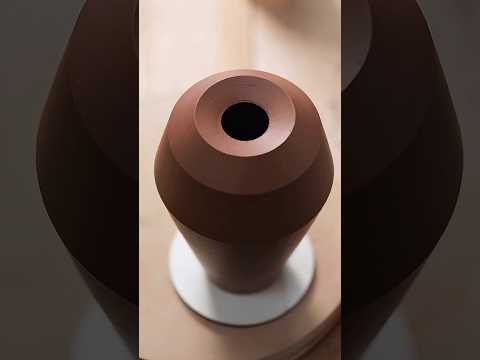
This is an easy shape to trim, provided you weigh the object in your hand before beginning in order to get a better understanding of where clay needs to be carved away from. The thing is, these pots aren’t inherently thick or weighty to begin with, they’re balanced, but they’re also not thrown to absolute perfection in terms of finesse, mainly as I know that much of my refinement comes at the leather hard stage, when this piece is trimmed/turned, which is the process this video shows.
There’s a lot of opinions when it comes to the above. There’s a view where every pot should be thrown in an exacting manner, whereupon no trimming is required, perhaps that’s a Western view, as in the East, it’s quite common practice to throw vessels more heavily and then remove much of the excess and do the final shaping once the clay has hardened up. Whether that’s because this is a difference between materials, say how porcelain and stoneware need to be treated, or rather an approach as a whole, is up for debate, but provided neither takes excessively long and the pots you end up with are to your liking, then I don’t see a problem with trimming being a core part of your work.
Ultimately, it’s the shapes I make that have dictated that to some degree. Harsh angles, narrow feet, flat planes and sharpness’s, aren’t qualities that lend themselves particularly well to simply being “thrown”. These are features that are often easier to set in stone when the clay has stiffened up and holds its shape better.
Anyway, nowadays it’s the process I look forward to most. It’s when I can be exacting and precise and I honestly relish in motions of carving away clay, hollowing out foot-rings and refining clay that’s from the ground into objects that are covetable and precious—sort of the polar opposite of whence they came.

 Login